BABY
Sterilizing Baby Bottles: When It Matters—and the Easiest Ways to Do It
Keep your baby’s feeding gear spic-and-span…and safe!

Written by
Happiest Baby Staff
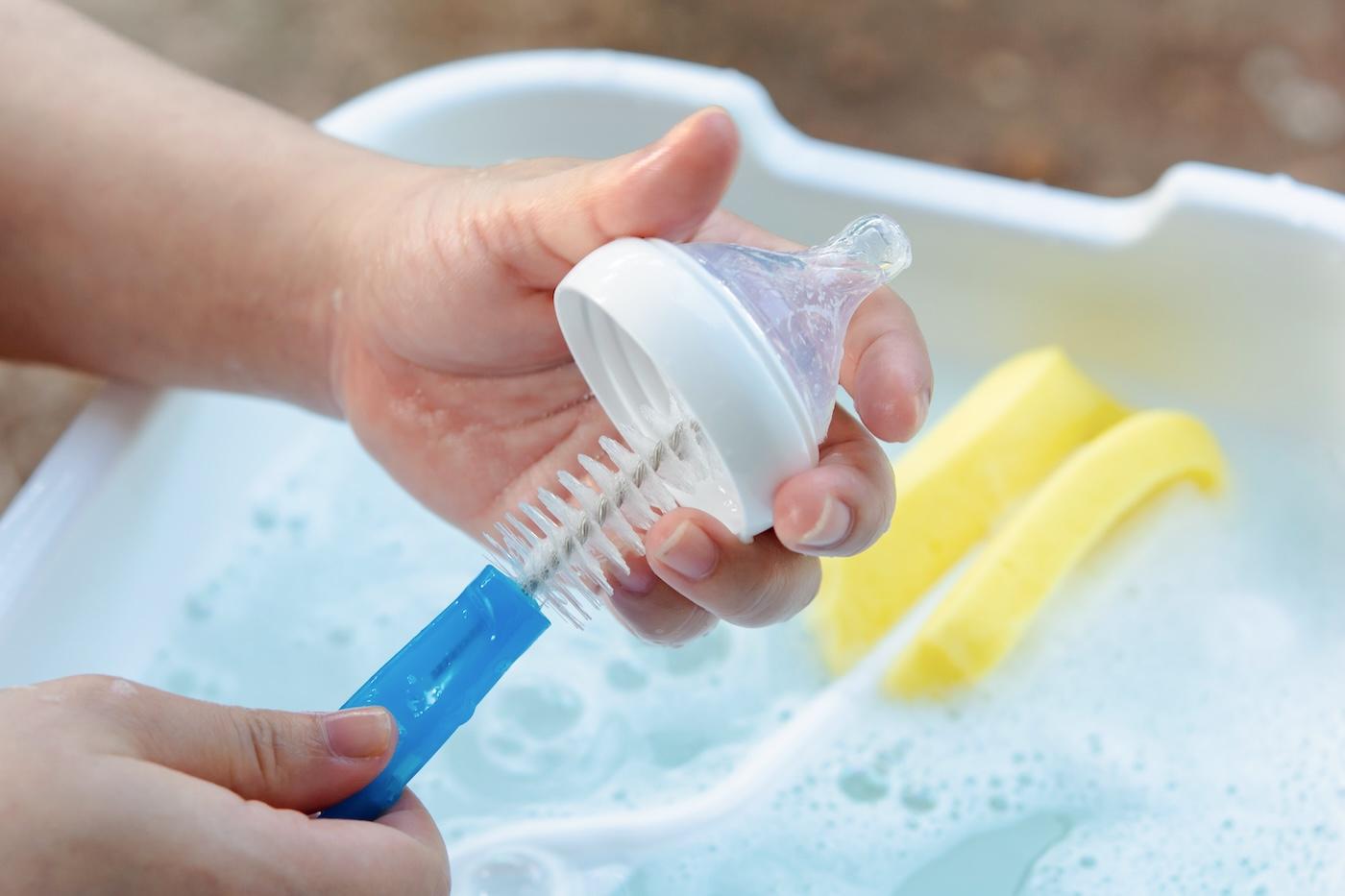
Between feedings, burping, diaper changes, and (maybe?) a few minutes of sleep, baby bottle care can feel like one more big item on an already full plate. The good news: You don’t have to sterilize everything, all the time to keep your baby safe. What you do need is a reliable routine for cleaning bottles after each feed—and a plan for sanitizing/sterilizing when extra germ removal is especially important.
Why do you need to sterilize baby bottles?
Newborns and young infants are more vulnerable to infections because their immune systems are still developing. That’s why extra germ removal can be reassuring in the earliest weeks—particularly if your baby was premature or has health concerns.
There’s also a practical reason: bottles and nipples have lots of small parts and crevices where milk residue can cling. If bottles aren’t cleaned thoroughly, germs can grow more easily.
What’s the difference between sterilizing, cleaning, and sanitizing?
These terms get used interchangeably, but they’re not the same:
- Cleaning removes milk residue and germs using soap and water (or a dishwasher). This is your everyday, after-each-feed step.
- Sanitizing kills more germs after cleaning, using heat (boiling/steam/dishwasher sanitize cycle) or a properly diluted bleach solution. The CDC uses “sanitize” for this extra step.)
- Sterilizing is often the word families use at home to mean sanitizing. In strict medical terms, sterilization is a higher bar, but for everyday bottle care, “sanitize/sterilize” usually refers to the CDC-style extra germ-removal step after cleaning.
How often do you need to sterilize baby bottles?
A simple rule of thumb: clean after every feeding—and sanitize at least daily when your baby is most vulnerable.
The CDC recommends daily sanitizing (or more often) if your baby:
- Is younger than 2 months
- Was born prematurely
- Has a weakened immune system
For older, healthy babies, daily sanitizing may not be necessary if bottles are cleaned carefully after each use.
But don’t skip the basics: If your baby doesn’t finish their bottle within 2 hours, toss the leftovers. And after feeding begins, prepared formula should be used within 1 hour. (Learn more about how to safely prepare and store formula!)
How to Sterilize Bottles
Before you sanitize/sterilize bottles, always clean them first. Take the bottles apart, wash with soap and hot water (ideally in a clean basin—not directly in the sink), rinse, and air-dry.
How to Sterilize Bottles on the Stovetop
Boiling is a classic, inexpensive, and effective way to sanitize baby bottles:
- Put disassembled bottle parts in a pot and cover with water.
- Bring to a boil.
- Boil for 5 minutes.
- Remove with clean tongs and place items on a clean surface to air-dry thoroughly.
Quick safety note: Let everything cool before reassembling, and keep hot items away from little hands.
How to Use an Electric Steam Sterilizer
Steam sterilizers (countertop plug-in units) are convenient when you’re sanitizing frequently:
- Place clean, disassembled bottle parts inside.
- Follow the manufacturer’s directions for cycle time, cooling, and drying.
Whatever method you use, aim for complete air-drying—moisture can invite germs and mold.
How to Sanitize Bottles in the Microwave
Microwave sanitizing works by creating steam, usually via a microwave sterilizer container or steam bag.
- Put clean, disassembled items into the microwave steam system.
- Follow the manufacturer’s instructions for sanitizing, cooling, and drying.
Important: While the microwave can give you a sanitizing shortcut, you should not use it to warm your baby’s formula or breastmilk—microwaves can heat unevenly and create hot spots that could burn your little one’s mouth.
How to Clean and Sanitize Bottles While Traveling
On the road, the goal is the same: Clean well, then add an extra sanitizing step when needed—especially if your baby is under 2 months or medically fragile.
Practical travel options:
- Bring microwave steam bags if you’ll have access to a microwave (hotel, family, rental). Use according to package directions.
- Boil in a pot if you have a kitchenette. Five minutes at a rolling boil does the trick.
- Use a bleach-solution method when boiling/steam/dishwasher aren’t possible. The CDC’s recipe: 2 teaspoons of unscented bleach per gallon (16 cups) of water, soak items at least 2 minutes, remove with clean hands/tongs, and do not rinse—air-dry instead.
One more travel-friendly best practice: If you’re using powdered infant formula, the World Health Organization (WHO) notes that cleaning and sterilizing feeding equipment is an important prerequisite for safe preparation.
More on Bottle Feeding:
- The Benefits of Paced Bottle Feeding
- Your Guide to Supplementing Breastmilk With Formula
- Formula Storage and Preparation 101
- How to Choose a Formula for Your Baby
***
REFERENCES- Centers for Disease Control & Prevention: How to Clean, Sanitize, and Store Infant Feeding Items
- Centers for Disease Control & Prevention: Infant Formula Preparation and Storage
- The American Academy of Family Physicians: Preparing for Parenthood: How to Clean Baby Bottles
- The American Academy of Pediatrics: How to Sterilize and Warm Baby Bottles Safely
- World Health Organization: Safe Preparation, Storage and Handling of Powdered Infant Formula Guidelines
Disclaimer: The information on our site is NOT medical advice for any specific person or condition. It is only meant as general information. If you have any medical questions and concerns about your child or yourself, please contact your health provider.

SHARE THIS ARTICLE