PARENTS
Is Fake Grass Safe for Kids?
What parents should know about artificial turf.

Written by
Happiest Baby Staff
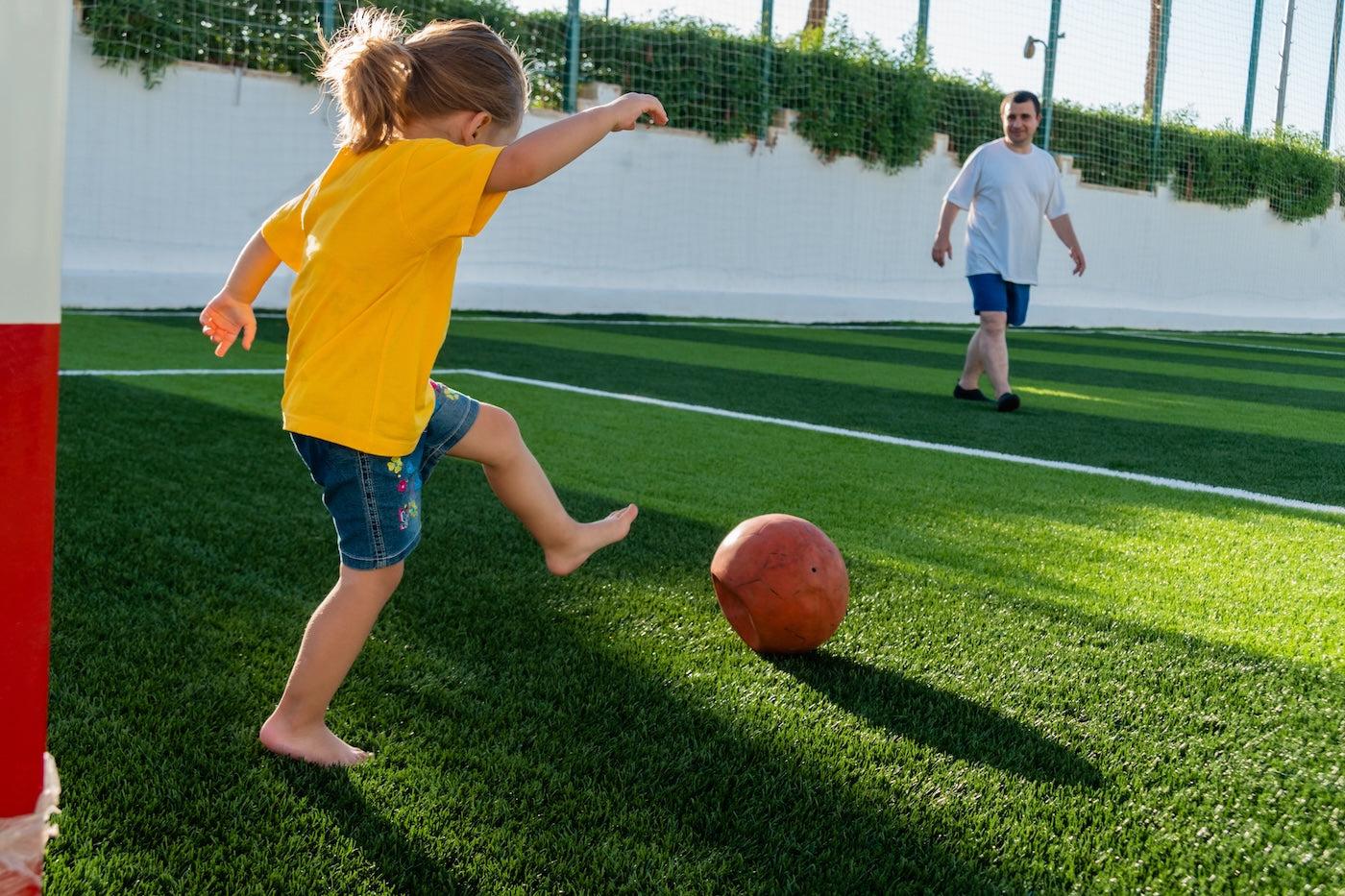
In recent years, artificial turf—once reserved for pro sports stadiums—has rolled into our everyday spaces: schoolyards, city parks, suburban backyards, and even daycare play zones. With its lush, always-green look and low-maintenance appeal, it’s no wonder many families, cities, and school districts are considering swapping soil and seeds for synthetic blades. But is this plastic “grass” truly safe for your little one?
What is artificial turf?
Artificial grass is made from plastic fibers designed to mimic the look and feel of real grass. Beneath the blades lies “infill”—a layer of material added for cushioning. Traditionally, this infill has been made from crumb rubber, which comes from recycled car tires. Some newer versions use sand, cork, or other organic materials. But no matter the style, fake grass is still made of synthetic materials, and that raises important questions about long-term exposure—especially for babies and kids, who are closer to the ground and more likely to put hands (and toys!) in their mouths.
Chemical Concerns: PFAS and More
A growing body of research is sounding the alarm about the presence of PFAS—a group of nearly indestructible chemicals often called “forever chemicals”—in artificial turf materials. PFAS have been linked to serious health issues, including low birth weight, developmental delays, immune system disruption, and certain cancers.
A 2025 New York Times investigation reported that some turf manufacturers previously used PFAS in the top-layer yarn of their products. One major supplier, Polyloom (a division of TenCate), stated it had “removed PFAS out of an abundance of caution” and now uses a non-PFAS proprietary material. While that may sound reassuring, parents should know that PFAS testing and transparency in this industry remain inconsistent—and the Environmental Protection Agency has stated that there is no safe level of exposure for certain types of PFAS.
The Environmental Working Group (EWG)—a nonprofit known for its research into toxic chemicals—has raised serious red flags about artificial turf and children’s health. In a 2019 report, the EWG confirmed that PFAS have been found in both the blades and backing of synthetic turf. According to their findings, children may be exposed to these harmful chemicals through direct contact, inhalation of dust, or ingestion of turf particles that cling to hands, shoes, or toys during play.
EWG experts caution that young children are especially vulnerable to PFAS exposure due to their smaller body size and developmental stage. They recommend limiting barefoot play on turf, encouraging thorough handwashing afterward, and minimizing the amount of turf debris brought indoors.
In 2023, the EWG supported California’s Assembly Bill 1423, which would have banned PFAS in artificial turf. While the bill passed the state legislature, it was vetoed by the governor. Nonetheless, EWG continues to push for policies that eliminate PFAS use—especially in products designed for children source: EWG.
Tire Trouble: What’s in infill?
Traditional artificial turf fields and playgrounds use crumb rubber infill made from old tires—a material known to contain heavy metals, volatile organic compounds (VOCs), and other potential carcinogens. When kids run, roll, or dig on these surfaces, tiny bits of the infill can stick to skin, shoes, or even get inhaled. And since crumb rubber gets hotter than asphalt in the sun, children may be exposed to excessive heat, which increases the risk of heat stress or burns.
Some newer turf products have switched to organic infill materials (like cork or olive pits), but these options are far from the norm. Unless you know exactly what kind of turf you're dealing with, it’s hard to say what substances your child might be exposed to.
Microplastics and Environmental Impact
Even without crumb rubber, artificial grass still sheds tiny plastic particles over time. These microplastics contribute to pollution in waterways and soil. In one Mediterranean Sea study, turf fibers made up over 15% of plastic fragments collected. The full health impact of these particles—particularly in early childhood—is still being studied, but researchers are concerned about the long-term implications of chronic, low-level exposure.
The Research Gap
A key challenge? There’s limited research on the long-term health effects of artificial turf, especially for young children. Experts like Dr. Vasilis Vasiliou at the Yale School of Public Health argue that the science isn’t settled—not because it’s risk-free, but because human studies haven’t caught up yet. “The exposure exists—the danger exists,” he told The New York Times.
So…is fake grass safe for kids?
There’s no simple yes or no. Here’s what we do know:
- PFAS and other harmful chemicals have been found in many turf products.
- Crumb rubber infill can release VOCs, heavy metals, and microplastics.
- Synthetic turf gets much hotter than natural grass, posing heat and burn risks.
- There’s a lack of long-term studies specifically on kids’ health and turf exposure.
- Transparency in turf manufacturing varies, making it tough for parents to assess risk.
Safer Choices for Families
If you’re considering turf—or already have it in your yard or play area—here are some steps to reduce risk:
- Ask about the materials. Does it contain PFAS or crumb rubber infill? Look for turf with organic infill or no infill at all.
- Limit time on hot days. Artificial grass can reach scorching temps, especially midday.
- Encourage hand-washing after play. This helps remove particles and reduce ingestion risk.
- Avoid barefoot play. Especially for babies and toddlers, shoes or socks may offer a layer of protection.
- Advocate for transparency. Push schools, parks, and municipalities to share turf material details—and favor safer alternatives.
And don’t forget: Good old-fashioned real grass, clover, or low-water native plant lawns remain the safest bets for families—chemical-free, cool underfoot, and perfect for barefoot adventures.
More on the Environment and Health:
- The Dark Side of Black Plastics: What Every Parent Should Know
- What to Know About Endocrine Disruptors (and How to Avoid Them!)
- Plastics to Avoid—and What to Use Instead!
***
REFERENCES
- Agency for Toxic Substances and Disease Registry: What Are PFAS?
- Centers for Disease Control and Prevention: Risk Factors for Heat-Related Illness—Infants and Children
- Environmental Protection Agency: PFAS Explained
- Environmental Working Group: Statement on Gov. Newsom’s Veto of Three Bills to Protect Public Health
- New York Times: Makers of Artificial Turf Grass Sue Lawmakers Over Health Risk Label, June 2025
- Universitat de Barcelona: Remains of Artificial Turf—An Important Source of Pollution in the Aquatic
- Environment Yale School of Medicine: Crumb Rubber Exposure: Assessment of the Impact on Children's Health
Disclaimer: The information on our site is NOT medical advice for any specific person or condition. It is only meant as general information. If you have any medical questions and concerns about your child or yourself, please contact your health provider.





SHARE THIS ARTICLE