PREGNANCY
Are Chia Seeds Safe to Eat During Pregnancy?
Read up on this popular yogurt- and oatmeal-topper.

Written by
Happiest Baby Staff
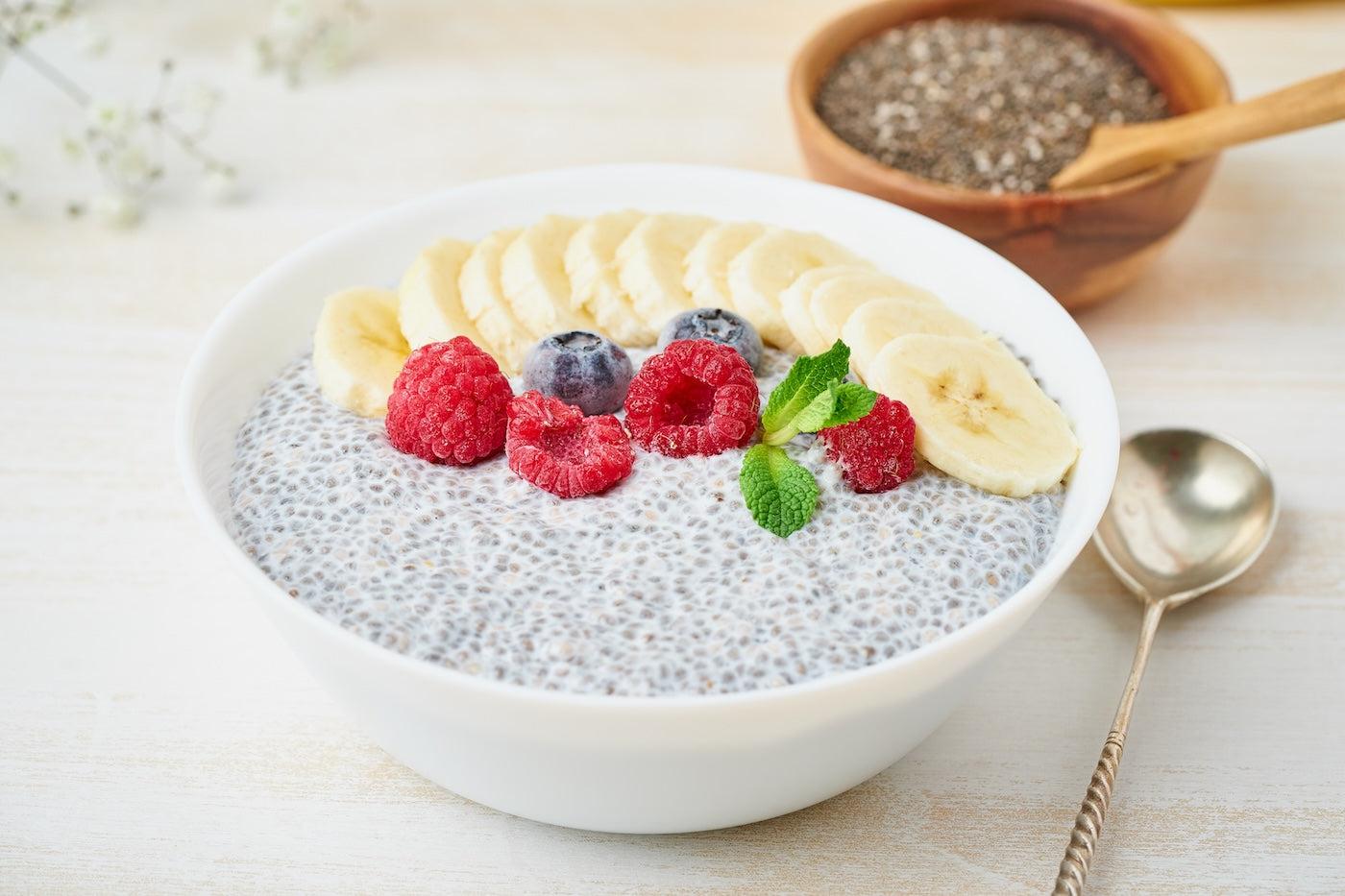
Chia seeds are tiny, nutrient-dense seeds that can fit into a healthy pregnancy diet when eaten in moderation and with plenty of fluids. They’re rich in fiber, plant-based omega-3 fatty acids (ALA), protein, and minerals like calcium and magnesium, all of which support overall health in pregnancy as part of a balanced diet!
Is chia safe to eat while pregnant?
Yes, you can eat chia seeds during pregnancy. For most pregnant people, chia seeds are safe when used as a food—sprinkled into yogurt, oatmeal, smoothies, or baked goods—rather than as a large, concentrated supplement.
The one thing to be aware of is that chia absorbs many times its weight in liquid. That means eating dry chia seeds and then drinking water can cause the seeds to swell and gel in the esophagus. So, just don’t pound a tablespoon of dry seeds—especially if you have swallowing issues!
And, as with any high-fiber food, large, sudden increases can cause gas, bloating, or even constipation if you’re not drinking enough water (constipation during pregnancy is common!). If you have concerns about digestion, swallowing difficulty, or how much chia is right for you, check in with your OB/GYN or a prenatal dietitian.
Benefits of Eating Chia Seeds During Pregnancy
- High in fiber: Helps ease constipation—a common pregnancy symptom. The American College of Obstetricians and Gynecologists recommend aiming for 25 grams of dietary fiber a day (an ounce of chia seeds will give you 9.8 grams!).
- Plant-based omega-3s (ALA): Omega-3 fatty acids, particularly DHA, are important during pregnancy for fetal brain and eye development. While most DHA and EPA in the diet come from fatty fish and fish-oil supplements, chia seeds are also a good source, dosing you with about 5 grams of ALAs in a 1-ounce serving.
- Rich in minerals: Delivers calcium, magnesium, and iron. Calcium and magnesium boost bone health, nerve and muscle function, while iron supports red blood cell production. Chia shouldn’t replace your prenatal vitamin or iron-rich foods, but it’s no doubt a nutritious add-on!
- Blood sugar support: Because chia is high in fiber and forms a gel when hydrated, it can support steadier digestion and may soften post-meal spikes.
- Heart health and blood pressure: There is emerging—but still limited—evidence that chia may have heart-related benefits. In one study of adults with type 2 diabetes, daily chia added to usual therapy lowered systolic blood pressure and improved some heart-health risk markers.
Potential Risks and Side Effects
- Digestive discomfort: Because chia is very high in fiber, going overboard can cause bloating, gas, cramping, diarrhea, or even constipation, particularly without adequate fluids. Start with a small amount, increase gradually, and make sure you’re swigging enough water.
- Choking or esophageal obstruction: Chia absorbs up to 27 times its weight in water, so if you were to eat a bunch of dry seeds, they could expand and make it difficult to swallow or breathe. Instead, eat chia in water, milk, yogurt, or another moist food and be extra careful if you have known esophageal issues.
- Allergy: Though rare, chia can provoke allergic reactions. Tread lightly if you have a known sensitivity, and seek help if you notice hives, swelling, trouble breathing, or similar.
When to Avoid or Limit Chia Seeds
- If you notice bloating, abdominal discomfort, or constipation after eating chia that doesn’t improve when you cut back or add water.
- If you have swallowing difficulties or known esophageal disorders.
- If you have a known seed allergy or develop allergy symptoms after eating chia.
- If your doctor has advised limiting high-fiber foods due to a specific digestive condition or procedure.
Bottom Line
Chia seeds can be a safe, nutritious addition to a pregnancy diet when eaten in moderation, fully mixed into moist foods, and paired with plenty of fluids. They contribute fiber, plant-based omega-3s (ALA), and minerals that support overall health. However, they are not a treatment for gestational diabetes or hypertension, shouldn’t be swallowed dry, and may not be appropriate for people with swallowing problems, certain digestive conditions, or seed allergies. As always, check with your OB/GYN if you’re unsure how chia fits into your pregnancy diet!
More on Healthy Eating in Pregnancy:
- Smoothie Add-Ins for a Healthier Pregnancy
- The Nutrients You Need When Pregnant
- Low-Carb Snacks for Gestational Diabetes
- Is Eating Fish During Pregnancy Safe?
***
REFERENCES
- Chia Seeds (Salvia hispanica L.): A Therapeutic Weapon in Metabolic Disorders, Food Science & Nutrition, Dec 2022
- Esophageal Impaction from Chia Seeds, Gastroenterology Insights
- American College of Obstetricians and Gynecologists: Lower Gastrointestinal Tract Disorders Clinical Update
- Mayo Clinic: High‑Fiber Foods and NutritionAmerican College of Obstetricians and Gynecologists: What Can Help With Constipation During Pregnancy
- Harvard Health: Chia Seed Benefits — What You Need to Know
- National Institutes of Health Office of Dietary Supplements: Omega‑3 Fatty Acids — Health Professional Fact Sheet
- Impact of Dietary Supplements on Nutrition and Health, Nutrition Reviews, 2025
- Nutrition Research Reports: Chia Seeds and Digestive Health — Review
- The Effect of Chia Seed on Blood Pressure, Body Composition, and Glycemic Control: A GRADE-Assessed Systematic Review and Dose-Response Meta-Analysis of Randomized Controlled Trials, Nutrition Reviews, March 2025
- Clinical Evidence on Dietary Supplementation With Chia Seed (Salvia hispanica L.): A Systematic Review and Meta-Analysis, Nutrition Reviews, 2018
- Dietary Supplementation Effects in Type 2 Diabetes, Diabetes Care, 2007
Disclaimer: The information on our site is NOT medical advice for any specific person or condition. It is only meant as general information. If you have any medical questions and concerns about your child or yourself, please contact your health provider.




SHARE THIS ARTICLE