PREGNANCY
Essential Oils During Pregnancy: Are They Safe?
They’re touted as “gentle” and “natural”—but are essential oils risky to use when you’re expecting?

Written by
Happiest Baby Staff
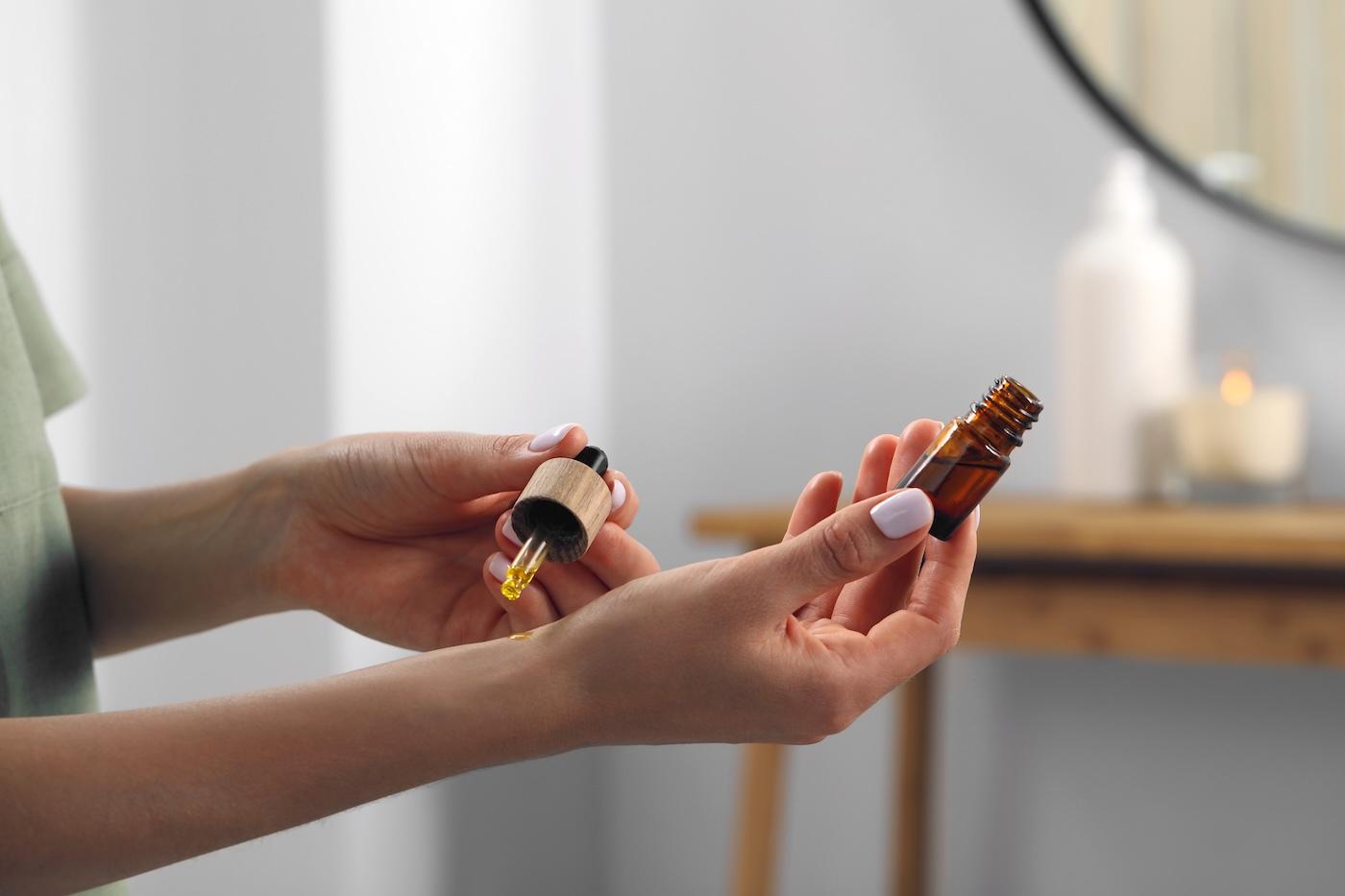
If you’re expecting, you may be on the hunt for gentle, “natural” ways to handle nausea, stress, headaches, sleep trouble…or any number of the tricky symptoms that come with pregnancy. Essential oils come up a lot—usually in the form of diffusers, bath products, massage blends, or wellness rollers.
The problem is there’s not enough high-quality research to say essential oils are broadly safe in pregnancy, and some uses (especially ingestion and undiluted skin use) carry real risk. That doesn’t mean you must avoid every scent forever—it means use extra caution, choose the lowest-risk method, and loop in your prenatal provider.
What is an essential oil?
Essential oils are highly concentrated plant extracts. A few drops can contain the equivalent of a large amount of plant material—so even though they’re “natural,” they can still be irritating, allergenic, or toxic depending on the oil, dose, and how it’s used.
Are essential oils safe to use during pregnancy?
When trying to figure out if essential oils are safe, pregnancy adds a few extra layers to consider:
- Heightened smell sensitivity (some scents can worsen nausea).
- More reactive skin (higher chance of irritation).
- More cautious risk-benefit decisions (because fetal safety data are limited).
Major medical sources emphasize that evidence is limited and recommend talking with your healthcare team—especially because safety depends on the specific oil, dose, and route (inhaled vs topical vs ingested).
But there’s one clear “no”: Do not ingest essential oils! Some essential oils can be poisonous when swallowed. If a product suggests adding essential oils to water, tea, or capsules, skip it unless your clinician specifically recommends it.
The Safest Ways to Use Essential Oils While Pregnant
If your OB or midwife is on board, the lowest-risk approaches are typically:
Passive Inhalation
Think: smelling a scented tissue/cotton ball briefly, then removing it if you feel queasy or headache-y. Start very small (even 1 drop) and up the amount only if you tolerate it well.
Diffusing (Carefully!)
Diffusers add fragrance to the air, but “more” isn’t better. Keep it gentle:
- Use in a well-ventilated area
- Run it for short periods
- Stop if you feel nauseated, headachy, wheezy, or irritated
General aromatherapy safety cautions apply: Essential oils can irritate airways for some people.
Topical Use Only When Properly Diluted
Direct skin application can cause irritation, allergic reactions, or sun sensitivity. The FDA notes that “natural” doesn’t automatically mean safe and gives examples of oils that can irritate or cause reactions.
If you’re using a topical blend:
- Never apply undiluted (“neat”) essential oils
- Use a carrier oil (like almond or coconut) and keep the concentration low
- Patch test first
- Avoid areas of broken/irritated skin
Essential Oils and Pregnancy: What the Research Shows
Most pregnancy data are not large, well-controlled human studies, which is why most clinicians are cautious about recommending essential oils. Plus, some mechanistic studies raise questions about hormone signaling.
Some examples of published research that suggest taking a thoughtful approach include:
- Placental cell research has found that several common essential oils (including tea tree, wintergreen, orange, ylang-ylang, niaouli) affected hormone-related markers in a human placental cell model.
- A feto-placental co-culture model study reported that certain oils (notably basil and fennel seed) altered steroid hormone production markers under experimental conditions.
- A clinical endocrinology case series + lab testing reported breast development in children with exposure to lavender-fragranced products that resolved after stopping exposure, alongside lab evidence of estrogenic/antiandrogenic activity in components tested. This is pediatric—not pregnancy—but it’s one reason many providers recommend avoiding heavy, chronic exposure.
Since we don’t have great pregnancy-outcome trials, the most evidence-based stance is minimize exposure, avoid ingestion, and prioritize proven pregnancy-safe treatments first.
Which essential oils should I avoid during pregnancy?
Because product quality varies and pregnancy data are limited, many reputable resources stop short of endorsing “safe lists.” A smarter approach is to steer clear of the highest-risk practices and red-flag oils/products.
Avoid:
- Ingesting essential oils
- Undiluted skin application and “hot” oils that commonly irritate skin
- Products making drug-like claims (“treat anxiety/depression,” “cure infections,” “induce labor”). Those claims change how products are regulated and should raise your skepticism.
- Any oil that causes uterine cramping, dizziness, shortness of breath, rash, or headache (stop and contact your provider)
If you’re specifically considering oils marketed to “start labor,” treat that as a bright red flag and talk with your OB/midwife first. Remember, “natural” does not equal risk-free!
Pregnancy-Safe Symptom Relief to Try Before Essential Oils
Before you reach for oils, consider options with stronger pregnancy safety data:
- Nausea: small frequent meals, ginger (as food/tea/candy), vitamin B6 (ask your provider), hydration. Learn more about coping with morning sickness —including these foods that may help pregnancy nausea.
- Sleep: consistent wind-down routine, light exercise if approved, magnesium only if recommended (don’t miss our Pregnancy Guide to Better Sleep!)
- Stress: prenatal yoga, pregnancy meditation, mindfulness apps, therapy support, brief walks (more on caring for your mental wellbeing).
Your prenatal team can tailor these to your medical history—especially if you have asthma, migraines, or sensitivities.
When to Call Your Provider or Poison Control
Stop using essential oils and seek help if you have:
- Rash, hives, burning skin, swelling
- Wheezing, chest tightness, shortness of breath
- Severe headache, dizziness, vomiting
- Any accidental ingestion
For poisoning concerns (including accidental swallowing), Poison Control provides guidance and notes that misuse can cause serious poisoning.
FAQ: Essential Oils While Pregnant
Can I use a diffuser during pregnancy?
Often, brief, low-level diffusion is less risky than topical or ingestion, but it can still trigger nausea or airway irritation. Keep it gentle, ventilate, and stop if you feel unwell.
Is it safe to put essential oils in a bath while pregnant?
It depends. Oils don’t mix evenly in water and can irritate skin. If you do it at all, use a properly formulated product and stop at the first sign of irritation. “Natural” doesn’t guarantee safety. (More on taking baths during pregnancy)
Are “pregnancy-safe” essential oil blends trustworthy?
Be cautious. Regulation depends on intended use and that “natural/organic” doesn’t automatically mean safe—especially for skin reactions.
What if I used essential oils before I knew I was pregnant?
In most cases, occasional low-level exposure isn’t a reason to panic! The best next step is to tell your prenatal provider what you used, how, and how often.
More on Pregnancy Safety:
- Is Eating Fish During Pregnancy Safe?
- Can I Have Caffeine During Pregnancy?
- Smoothie Add-Ins for a Healthier Pregnancy
- The Nutrients You Need While Pregnant
***
REFERENCESMayo Clinic Health System: Essential Oils and PregnancyNational Center for Complementary and Integrative Health: AromatherapyFood and Drug Administration: Aromatherapy Products and Regulation/SafetyOrganization of Teratology Information Specialists MotherToBaby: Essential Oils During Pregnancy DiscussionAmerica’s Poison Centers: Essential Oils Poisoning RiskPlacental Toxicity of Five Essential Oils and Their Potential Endocrine-Disrupting Effects, Current Issues in Molecular Biology, Jun 2022Essential Oils Disrupt Steroidogenesis in a Feto-Placental Co-Culture Model, Reproductive Toxicology, Dec 2019Lavender Products Associated With Premature Thelarche and Prepubertal Gynecomastia: Case Reports and Endocrine-Disrupting Chemical Activities, The Journal of Clinical Endocrinology & Metabolism, Nov 2019Disclaimer: The information on our site is NOT medical advice for any specific person or condition. It is only meant as general information. If you have any medical questions and concerns about your child or yourself, please contact your health provider.






SHARE THIS ARTICLE