BABY
Why Pediatricians Check for Clenched Fists at Baby Visits
Here’s what this reflex tells your doctor.

Written by
Happiest Baby Staff
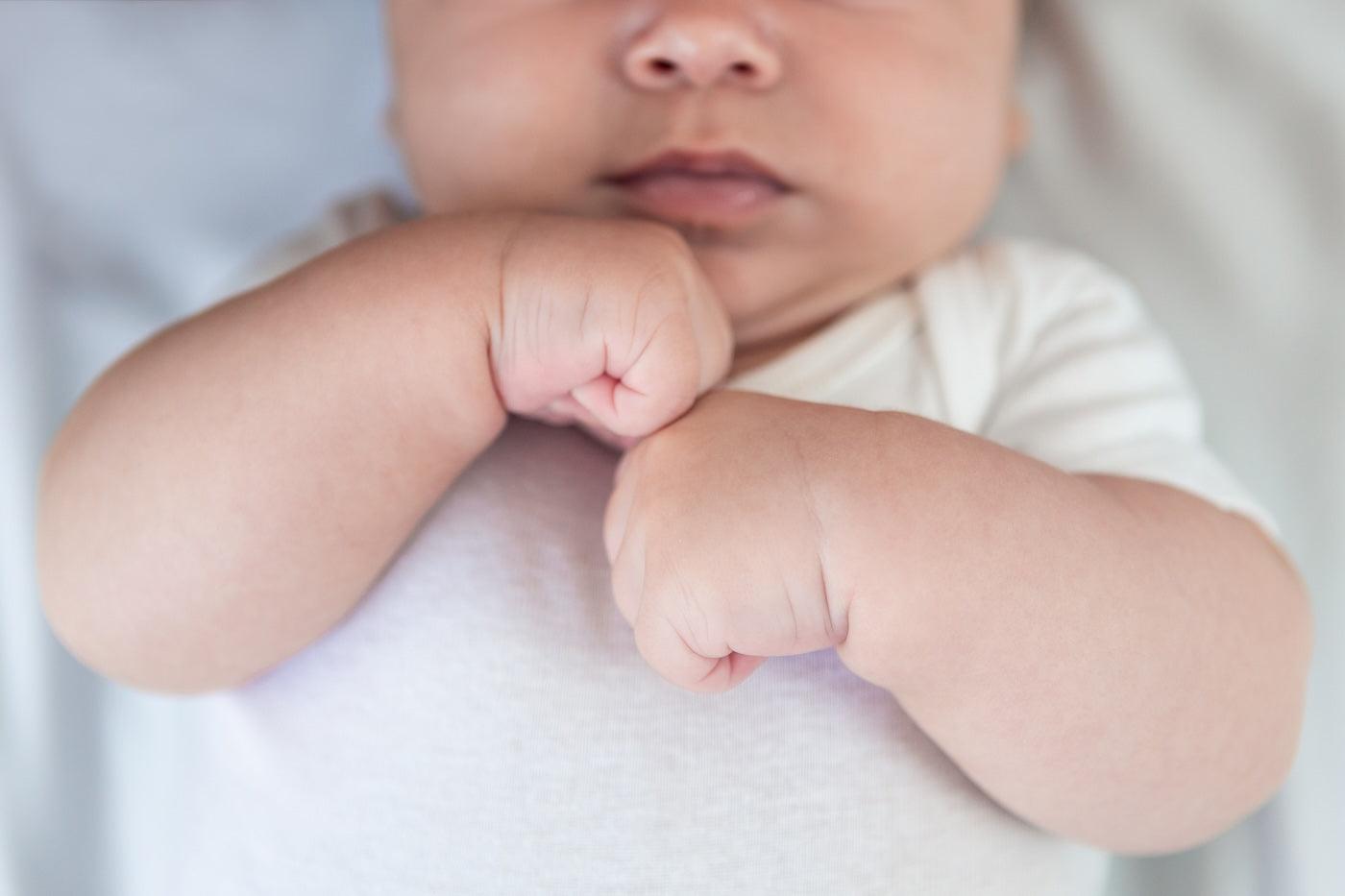
At every well-baby visit, your pediatrician checks for milestones you might not even realize are meaningful—like your baby's tiny clenched fists. But why do they matter so much?
Why do babies clench their fists?
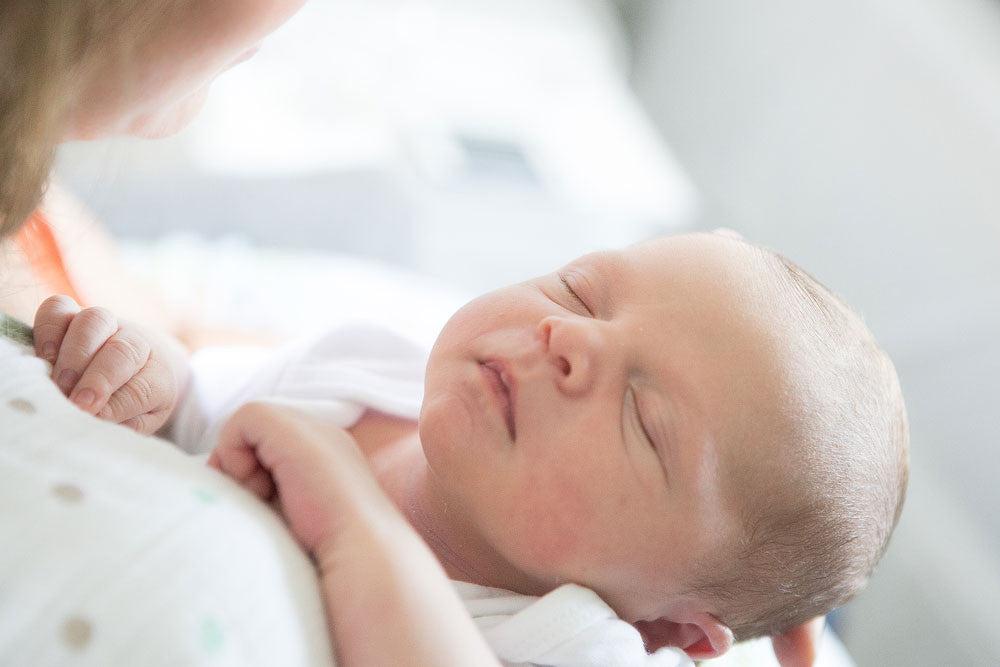
You may have noticed that your newborn's hands are always tightly balled into little fists. Lest you think they’re fixing for a brawl, know that this is a completely normal part of early infancy. Tight hand clenching is one of several automatic reflexes your baby is born with.
Known as the palmar grasp reflex, this instinctive behavior causes your baby to grasp tightly when something touches their palm. It’s a throwback to our earliest survival instincts and appears in utero, often visible in ultrasounds. This reflex is at its strongest in the first couple of months of life, and it’s what allows your newborn to grip your finger with surprising strength.
But the grasp isn’t voluntary—not yet. The clenched fists you see in your newborn are part of this reflexive behavior, rather than an intentional movement. As your baby's brain and muscles mature, they begin to gain control over their hands, and those tight tiny fists start to open.
What Clenched Fists Tell Your Pediatrician
At each well-baby visit, your pediatrician is looking for signs that your little one is progressing along expected developmental paths. Reflexes—including the palmar grasp—are a key part of this evaluation. They tell your provider whether your baby's nervous system is functioning as expected.
Here’s how the timeline of clenched fists typically unfolds:
- From birth to 2 months: It's totally normal for babies to have tightly clenched fists most of the time. This reflex helps babies self-soothe and is part of their natural neurological wiring.
- By 2 to 3 months: Babies usually begin to open and close their hands more regularly. You might notice your little one starting to bat at toys or bring their hands to their mouth.
- By 4 months: Most babies can intentionally grasp and release objects. Clenched fists become less common as voluntary hand control improves.
These shifts signal the maturation of your baby's motor skills. Pediatricians track this closely because it provides a valuable window into your baby’s neurological and muscular development.
When to Worry About Clenched Baby Fists
While clenched fists are expected in early infancy, if your baby continues to keep their hands tightly fisted beyond 6 months, it could be a sign that something’s off in their motor development.
Persistent clenched fists—especially when accompanied by stiff arms, limited mobility, or delays in other motor skills like rolling, reaching, or sitting—can sometimes be an early sign of neurological conditions, such as cerebral palsy.
This doesn’t mean you should panic if your baby occasionally clenches their fists after the 6-month mark. But if the behavior is consistent and paired with other developmental concerns, your pediatrician may recommend further evaluation with a neurologist or developmental pediatrician. Early identification allows for early intervention—which can make a big difference.
How to Support Your Baby’s Hand Development
Most babies move naturally from clenched fists to open hands and grasping as they grow. But there are gentle ways to encourage this progression:
- Tummy time: Giving your baby plenty of supervised tummy time strengthens the neck, shoulders, and arms—all of which help with hand control.
- Hand play: Open and massage your baby’s hands, and play simple games like “this little piggy” or “pat-a-cake.”
- Offer easy-to-grasp toys: Lightweight rattles or toys with soft textures help babies learn to reach, grasp, and eventually transfer items between hands.
And of course, continue offering lots of time for floor play and cuddling—your presence and attention are powerful tools for supporting all kinds of development.
The Takeaway on Tiny Fists
Those tiny clenched fists aren’t just adorable—they’re important developmental signposts. They give your pediatrician insight into your baby’s reflexes and neurological growth and help ensure that your little one is right on track. In most cases, fists that begin to relax by around 2 to 3 months and give way to purposeful grasping by 4 months are completely typical.
As always, if you’re unsure whether your baby’s progress is within the expected range, don’t hesitate to bring your questions to your pediatrician. There’s no such thing as a silly question when it comes to your baby’s health and development.
More on Baby Development:
- When Do Babies Point, Clap, and Wave?
- Baby Milestones to Have on Your Radar
- The Developmental Leap From 4 Days to 4 Months
- Baby Development Week by Week and Month by Month
***
REFERENCES
- American Academy of Pediatrics: Newborn Reflexes
- Brown Med-Peds Residency: Developmental Reflexes—A Disappearing Act
- DoveMed: Palmar Grasp Reflex—Exploring an Essential Infantile Reflex
- Centers for Disease Control and Prevention: Cerebral Palsy—About CP
Disclaimer: The information on our site is NOT medical advice for any specific person or condition. It is only meant as general information. If you have any medical questions and concerns about your child or yourself, please contact your health provider.




SHARE THIS ARTICLE