BABY
7 Brain-Boosting Foods for Babies and Toddlers
Here’s how good nutrition can nourish your little one’s developing mind.

Written by
Gabrielle McPherson, MS, RDN, LDN
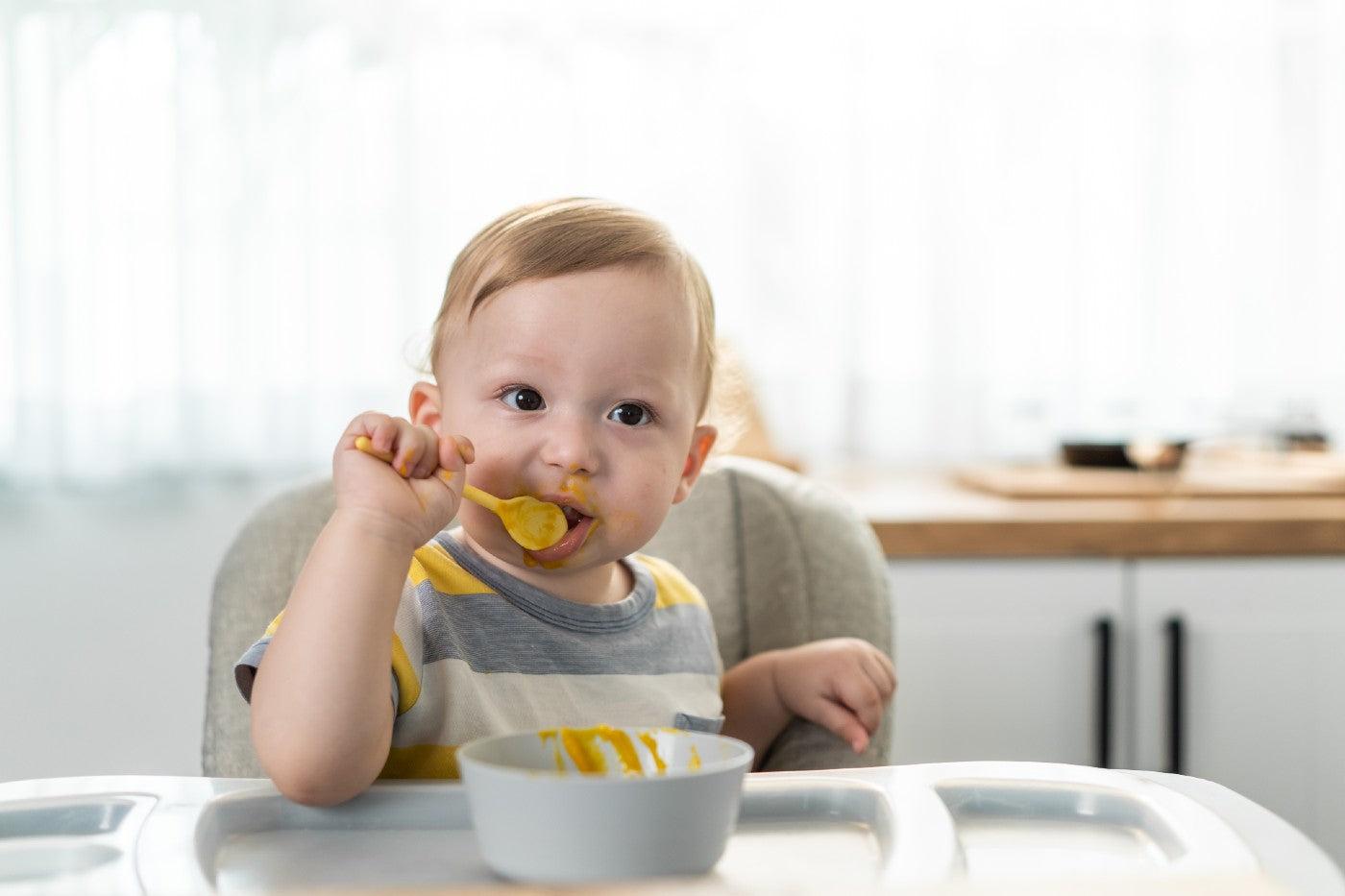
Brains are built in the womb and continue growing substantially from birth to age 3, undergoing structural and chemical changes that will shape a young child’s future. Your child’s ability to smell, hear, see, problem-solve, interact socially, coordinate movement, and speak depends on a healthy brain. While warm, loving relationships and caring, engaging environments are critical to support learning, language, and skill-building, nutrition matters too. What we feed our little ones eat can give them stable ground or a shaky starting point for which their learning, behavior, and health will stand.
Ready to nourish your child’s growing intellect? Keep reading to discover how good nutrition can boost your baby or toddler’s rapidly developing mind.
Key Nutrients for Healthy Brain Development
Countless nutrients benefit your child’s health, but 11 promote healthy brain growth, learning, and development in early childhood, according to the AAP. These nutrients are protein, zinc, iron, choline, folate, iodine, long-chain polyunsaturated fatty acids (PUFAs), and vitamins A, D, B6, and B12. Babies and toddlers with nutrition gaps in their diet who don’t get enough of these critical nutrients have fewer chances for optimal brain anatomy and development.
Here’s how each nutrient contributes to your little one’s mental sharpness:
- Protein is essential to brain growth, size, and formation.
- Zinc influences white matter growth (deep tissues of the brain) and helps nerve cells “talk” to one another.
- Iron is a mineral necessary for healthy development of the brain’s anatomy and may help prevent learning disorders.
- Choline is a nutrient vital to lifelong memory and aids in producing neurotransmitters.
- Folate contributes to processes that foster healthy brain development and may influence brain structure.
- Iodine helps prevent problems with growth, speech, and hearing.
- PUFAs like DHA, EPA, and other omega-3 fats help with the movement of neurons, healthy brain development, and the growth and development of nervous tissues.
- Vitamin A is needed for growth, development, and vision health.
- Vitamin D may prevent inflammation which can keep the brain in good shape.
- Vitamin B6 may help improve brain function.
- Vitamin B12 is necessary for cell division and growth in the brain, DNA formation, and helping nerve impulses to travel quickly.
Brain-Boosting Foods for Babies and Toddlers
There’s no need to overthink what to offer your baby for better brain power. Remember the rule, “what’s good for the heart is good for the brain”! Here are seven foods to offer your baby or toddler.
Hemp seeds
Tiny in size but mighty in nutrition, hemp seeds are excellent sources of calories and protein to support your child’s growth spurts and baby muscle gains. Fats make up significant parts of hemp seeds, especially linoleic acid, a type of PUFA babies and toddlers depend on for healthy noggins. But worry not! While hemp seeds come from cannabis plants, they won’t get your baby high because they don’t have THC! They are also free of CBD, as seen in CBD oil. For safe and easy eating, ground hemp seeds into a powder you can stir into yogurts (use full-fat yogurt from 6 months to age 2), soups, pasta sauces, and hot cereals.
Eggs
Packed with protein and brimming with choline, whole eggs are a must-have brain-boosting food for your baby (as long as your sweet pea isn’t allergic!). One egg offers 98% of your baby’s daily choline needs and 74% of your toddler’s. Choline is present in the egg yolk, so be ready to scramble up the entire egg (no egg-white-only omelets here!). Eggs also help your child’s eyesight and bone health since one egg has 14% of your baby’s daily vitamin A needs and 9% of their vitamin D needs.
Salmon
It’s no surprise that salmon is a top pick for brain-enhancing foods for babies. Salmon is a nutrition powerhouse, providing your tot with DHA, EPA, protein, choline, and vitamin D. Too much fish can be unsafe for the brain and nerves; therefore, moderation is vital. Best practices are to feed your child low-mercury fish (light tuna, sardines, and cod, for example) one to two days per week, according to the AAP.
Lentils
Legumes, like lentils, are pillars of brain-enhancing diets like the Mediterranean and MIND diets. They offer plenty of mind-nourishing vitamins and minerals such as iron, folate, magnesium, and zinc. Let’s not forget that they also contain lots of protein to ensure your baby’s brain grows to its full potential. Two tablespoons of lentils offer 7% of your baby’s iron needs and 12% of your toddler's. Compared to other bean types, lentils are small in size and simple to nosh, them easy to work into meals for littles.
Kale
Chock-full of folate, iron, calcium, potassium, vitamin K, and vitamin A, dark leafy green vegetables like kale make excellent brain foods…and foods for overall health! While kale is safe for babies and toddlers, its texture is tough, so cook it first to soften it. You can easily blend kale into your baby's purees or offer finely chopped kale into egg muffins for toddlers. Just ½ cup of cooked kale gives over 100% of a baby’s folate needs per day and 50% of a toddler’s!
Avocado
Is there anything avocados can’t do? While there’s no magic genius-making food, avocados sure do provide a lot of brain-enhancing nutrients. They pack ample choline, folate, vitamin A, and PUFAs to help nourish your tyke’s memory bank!
Sweet Potatoes
Closing our round-up is a vitamin-A-rich root veggie to help power up your babe’s night vision! Sweet potatoes also contain many complex carbohydrates, which break down into glucose when digested, making them a source of baby brain fuel. That’s right! Glucose is the brain’s primary energy source, so carbs in your baby’s diet fuel their thinking, learning, playing, and focus.
More Healthy Foods for Babies:
- Iron-Rich Foods to Power Up Your Tot's Plate
- Amazing Grains for Babies
- Healthy Fats to Add to a Baby's Diet
- Yummy Breakfast Ideas for Babies
- Best Proteins for Babies
***
REFERENCES
- Resting State Functional Networks in 1-to-3-Year-Old Typically Developing Children, Developmental Cognitive Neuroscience, October 2021
- Mayo Clinic: Functions of the Brain
- The American Academy of Pediatrics: ‘Feeding’ Brain Development: Key Nutrients Essential During First 1,000 Days
- Advocacy for Improving Nutrition in the First 1000 Days to Support Childhood Development and Adult Health, Pediatrics, February 2018
- The Role of Nutrition in Brain Development: The Golden Opportunity of the “First 1000 Days,” The Journal of Pediatrics, August 2016
- The Influence of Early Nutrition on Brain Growth and Neurodevelopment in Extremely Preterm Babies: A Narrative Review, Nutrients, September 2019
- Role of Zinc in Neonatal Growth and Brain Growth: Review and Scoping Review, Pediatric Research, October 2020
- Gestational Iron Deficiency Differentially Alters the Structure and Function of White and Gray Matter Brain Regions of Developing Rats, The Journal of Nutrition, July 2014
- Association of Anemia with Neurodevelopmental Disorders in a Nationally Representative Sample of US Children, The Journal of Pediatrics, January 2021
- Choline: Critical Role During Fetal Development and Dietary Requirements in Adults, Annual Review of Nutrition 2006
- The Importance of Maternal Folate Status for Brain Development and Function of Offspring, Advances in Nutrition, May 2019
- Perinatal Dietary Polyunsaturated Fatty Acids in Brain Development, Role in Neurodevelopmental Disorders, Nutrients, April 2021
- National Institutes of Health Office of Dietary Supplements: Vitamin A and Carotenoids
- Vitamin D and Immunity in Infants and Children, Nutrients, May 2020
- Harvard School of Public Health, The Nutrition Source, Vitamin B6
- Vitamin B-12 and Cognition in Children, Advances in Nutrition, September 2016
- Brain Foods - The Role of Diet in Brain Performance and Health, Nutrition Reviews, June 2021
- The Seed of Industrial Hemp (Cannabis sativa L.): Nutritional Quality and Potential Functionality for Human Health and Nutrition, Nutrients, July 2020
- U.S. Food and Drug Administration: FDA Regulation of Cannabis and Cannabis-Derived Products, Including Cannabidiol (CBD
- National Institutes of Health Office of Dietary Supplements: Choline
- Natural Choline from Egg Yolk Phospholipids Is More Efficiently Absorbed Compared with Choline Bitartrate; Outcomes of A Randomized Trial in Healthy Adults, Nutrients, November 2019
- U.S. Department of Agriculture, FoodData Central: Salmon
- National Institutes of Health Office of Dietary Supplements: Omega-3 Fatty Acids
- Fish, Shellfish, and Children’s Health: An Assessment of Benefits, Risks, and Sustainability, Pediatrics, June 2019
- U.S. Department of Agriculture, FoodData Central: Lentils
- U.S. Department of Agriculture, FoodData Central: Kale
- National Institutes of Health Office of Dietary Supplements: Folate
Disclaimer: The information on our site is NOT medical advice for any specific person or condition. It is only meant as general information. If you have any medical questions and concerns about your child or yourself, please contact your health provider.






SHARE THIS ARTICLE




More on Baby


About Gabrielle McPherson, MS, RDN, LDN
Gabrielle McPherson, MS, RDN, LDN is registered dietitian in Missouri who specializes in community and pediatric nutrition. Gaby is passionate about encouraging families to eat well in simple, practical ways that are realistic...and delicious! When not working, Gaby loves cooking, baking, and making messes and memories with her sous-chef/preschooler Charlotte.