PARENTS
How to Clean Bath Toys
Is Baby’s ducky looking icky? Follow these tips!

Written by
Jenny Studenroth Gerson
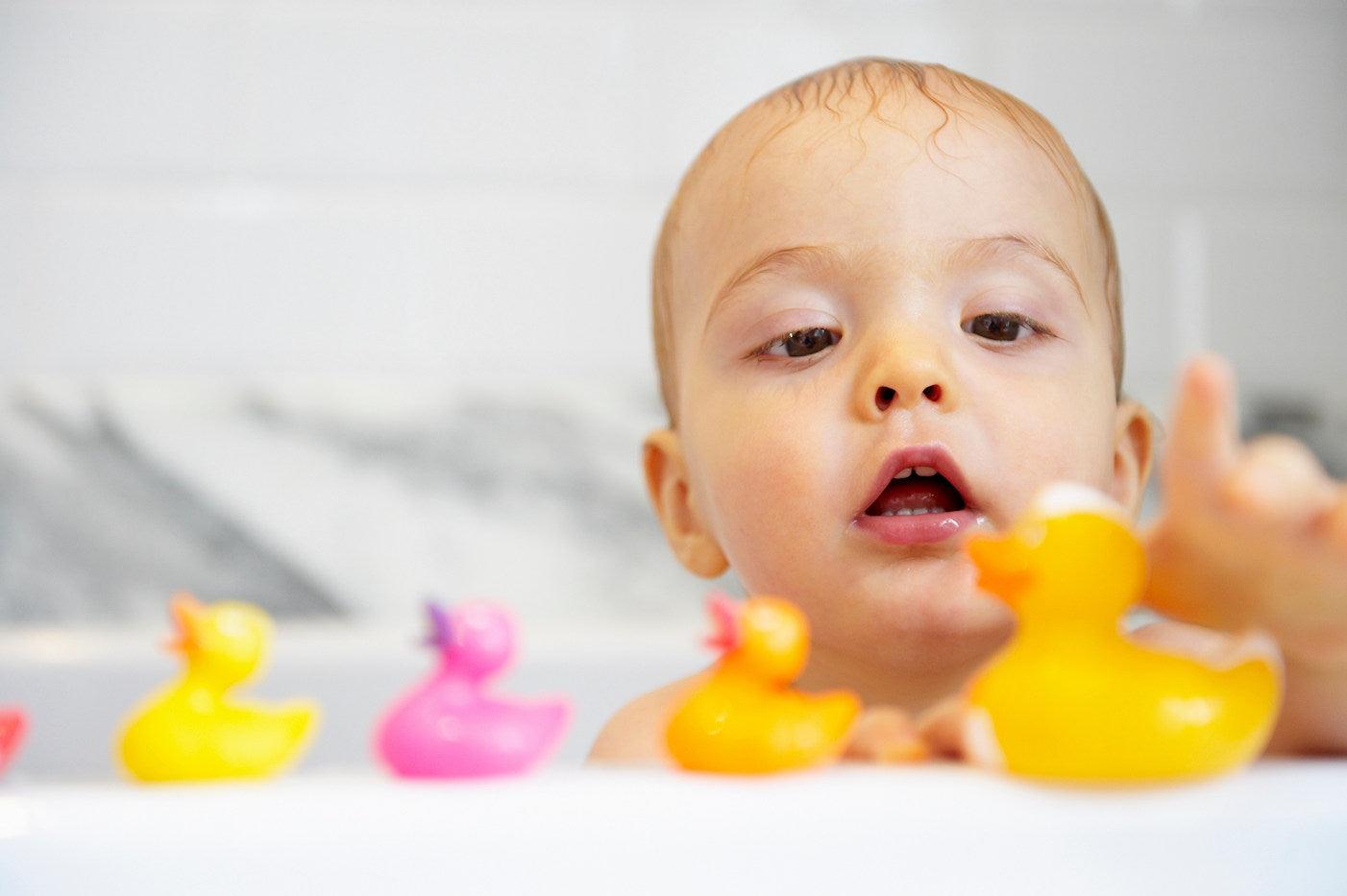
Bath time with Baby is the perfect way to unwind at the end of the day, to while away some time on a rainy afternoon, or to start the morning off right. And when your kiddo is in there getting all soaped up, of course they want to play. Did you know, though, that your child’s bath toys may contain harmful bacteria buildup and even fecal matter… and that they’re prone to developing mold?
But you can keep your little one’s duckies and other bath time favorites squeaky-clean and safe for use with a variety of cleaning techniques, detailed below. It’s also important to do frequent inspections, including holding toys up to a light source to check for shadows that indicate deposits inside. And yet another way to keep your bath toys free of dangerous germs and growth is to purchase specific ones that resist them. We’ll gear you toward those options as well, but first…the dirt on how to clean bath toys!
How to Keep Bath Toys Clean
Let’s start the process before toys get gross. The best way to keep bath toys clean is to help prevent dirt and bacteria growth to begin with. After each bath, squeeze toys out as fully as possible and dry them on the edge of the tub, on a towel, or on a flat counter top nearby. Better yet, run the fan or a dehumidifier to help dry toys out efficiently.
Do not store bath toys immediately after a bath or until they’re fully dry, even the flat ones that do not have holes or fill with water. Any remaining moisture on the exterior of a toy creates a breeding ground for bacteria and mold, especially when they’re layered on top of each other in a bucket or basket. Use a mesh bag or open-weave container for storing (fully dried) toys. You can also seal the holes of bath toys ahead of use with hot glue, to prevent water from getting inside.
How to Clean Bath Toys
Inevitably, even prevention of dirt and grime buildup will not completely eliminate the need to clean your child’s bath toys. Whether we’re talking about visible dirt, sick-kid germs, or potential growth that the eye cannot see, it’s a good idea to use at least one, if not a few, of the following cleaning methods from time to time, to keep germs and mold at bay.
Bath Toy Cleaning Method #1: Disinfectant Wipes
It doesn’t have to happen after every bath, but it couldn’t hurt either. Keep disinfectant wipes in a cabinet in the bathroom so that toys can get a quick wipe-down before you lay them out to dry after bath time. Of course, this method doesn’t work on the inside of the toys, but it is a good preventative step for anything that likes to live on the outside. If your child is or has recently been sick, disinfectant wipes are a must right after bathtime.
Bath Toy Cleaning Method #2: Boiling Water
It’s old-school, but sometimes the tried-and-true methods are the best fit. A big pot of boiling water is the ideal cleaning method when you don’t want to use harsh chemicals, especially for hard plastic toys or foam forms (like the shapes and letters that stick to the tub wall). Simply dump the bath toys in a large stock pot filled with water, and bring it to a rolling boil. Let them soak for several minutes and then drain the pot and air-dry the toys on a towel. Consider checking the manufacturer’s website before implementing this method, but most bath toys are designed for warm water use, so hot shouldn’t be a problem.
Bath Toy Cleaning Method #3: Bleach
A 1:10 bleach-to-water ratio can work wonders on killing germs before they become a problem for the bath toys. Make sure to do this when your child is sleeping or elsewhere in the home, because the fumes are a lot for their little bodies to handle. Submerge the toys one by one in the bleach solution, making sure to squeeze any with openings so they fill up with it and get an interior rinse. Then, pull each toy out of the bleach soak and squeeze the hollow ones fully to expel the bleach solution before rinsing in water. You’ll want to make sure your children do not ingest the bleach solution at their next bath, so follow this process up with two pure water rinses, then wipe them and lay flat to dry.
Bath Toy Cleaning Method #4: Vinegar
Bleach isn’t for everyone. If you’d like to start with something more natural and minimalistic, try vinegar. A full-strength (not diluted) white vinegar soak can be performed with the same process outlined above for the bleach, yielding similar results. You can do the vinegar soak more frequently, using the bleach only after an illness or as a once-a-month deep clean.
Bath Toy Cleaning Method #5: Dishwasher
Busy parents know that the path of least effort is always a welcome plan. Most bath toys should fare just fine in the top rack of the dishwasher on a hot cycle, and the heat acts to sterilize the toys, killing germs on contact. Just check the manufacturer’s website first in case they warn against dishwasher use, but the dishwasher is actually an ideal cleaning option for these (and lots of their other hard plastic toys)! Use a mesh laundry bag to wash smaller bath toys in the dishwasher as this will keep them from slipping out of the rack. As with all other cleaning methods, make sure to lay out the toys flat afterward to allow them to dry completely, inside and out.
How to Shop for Easy-to-Clean Bath Toys
When your child is already attached to a certain ducky, you and Quackers are in it for the long haul. But not all bath toys are created equal, and it would behoove you to save time and stress later by buying easier-to-clean toys now. The best bath toys to invest in for long-term use are those that cannot get water—thus mold—inside.
Even the handy hot glue trick mentioned above is not full-proof, and unfortunately if water can get in even the tiniest hole, mold can form there. It’s not always visible to the naked eye, either. If you do purchase those fun toys with holes inside, you’ll want to do the above cleaning practices often, and replace toys every six months or more for the safest bath environment for the littles.
Consider also stocking up on toys that are easier to clean because the only surface is their outside one – like foam shapes and letters, stacking cups, finger “paint” soap, bath books, and “fishing” sets. And finally, when it comes to passing the safety standards for your little one’s bathtime lineup, keep in mind the old adage for food and apply it to these water time playthings: When in doubt, throw it out!
More Cleaning Tips:
- How to Clean a Baby’s Room
- How to Get Playdough Out of Carpet
- Genius Hacks for Organizing Your Car
- Corral Toy Clutter in Your Kid’s Room
- Closet Organizing Tips
Disclaimer: The information on our site is NOT medical advice for any specific person or condition. It is only meant as general information. If you have any medical questions and concerns about your child or yourself, please contact your health provider.




SHARE THIS ARTICLE
MOST LOVED
Sleepytime Sidekicks