PARENTS
Microplastics Are Everywhere—Here’s How to Cut Your Family’s Exposure
And no, you don’t have to live in a plastics-free bubble!
Written by
Happiest Baby Staff
A few decades ago, many of us learned (the hard way) that “everyday” products can have surprising environmental consequences—like aerosol sprays that once used chlorofluorocarbons (CFCs), chemicals that helped damage the ozone layer. Strong policies and global action (including the Montreal Protocol) phased out many of those ozone-depleting substances, but it’s a powerful reminder: sometimes we don’t realize the downsides of a material until it’s already everywhere.
Today, plastic is having a similar moment.
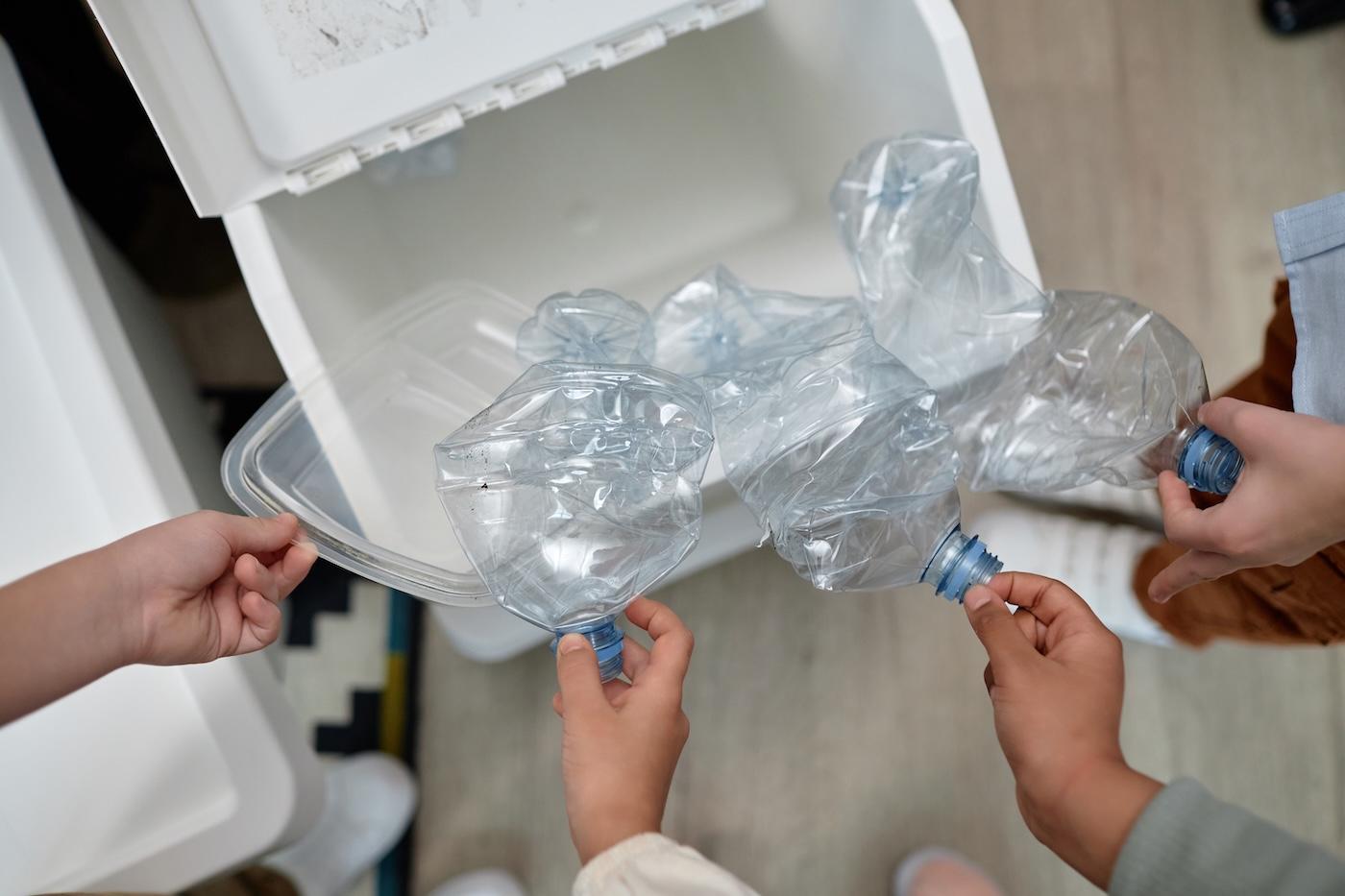
Plastic can seem harmless—light, convenient, “clean.” But as plastic breaks down, it sheds tiny fragments (microplastics) and even tinier ones (nanoplastics). Those particles can also carry or release chemicals used in plastics manufacturing (like certain phthalates and bisphenols). Scientists are still working out what all of this means for long-term health—but the evidence is growing that reducing exposure is a smart move, especially for families.
What are microplastics?
Microplastics are plastic pieces generally smaller than 5 millimeters. Nanoplastics are even smaller (often under 1 micrometer), and they raise extra concern because their size may make it easier for them to interact with cells and tissues. Researchers have reported finding plastic particles in parts of the human body—including placentas and blood—which tells us exposure is widespread.
Micro- and nanoplastics are common in the environment and in the food/water/air pathways that reach humans. Laboratory and animal studies suggest plausible biological effects like inflammation, oxidative stress, and cellular disruption.
However, we don’t yet know exactly how much microplastic exposure causes specific diseases in humans. This is still an active research area, and many studies show associations, not proven causation.
Still, when the potential stakes are high—and safer swaps are easy—many experts recommend taking a “reduce where you can” approach.
The Health Signals That are Getting Scientists’ Attention
Heart and Blood Vessel Concerns
One of the most attention-getting human studies so far was published in The New England Journal of Medicine. Researchers examined plaque removed from carotid arteries and reported that patients with micro- and nanoplastics detected in plaque had a higher risk of heart attack, stroke, or death during follow-up (an association—not proof of cause).
Inflammation, Cell Stress, and Organ Effects
In animal and cellular research, microplastics have been linked with changes consistent with inflammation and cell stress, among other biological effects—important, because chronic inflammation can contribute to a range of health issues over time.
Pregnancy and Early Development
Microplastics have been detected in human placentas in published research, and that’s one reason scientists are particularly focused on prenatal and early-life exposure.
There’s also emerging animal research suggesting possible developmental effects. For example, one study in Environment International explored microplastic exposure in mice and reported ASD-like traits in certain exposure scenarios—this does not mean microplastics “cause autism” in humans, but it does underline why researchers are taking the topic seriously.
Exposure “Hot Spots” You Can Tackle Right Now
Plastic-Lined Paper Cups
Many disposable “paper” cups are lined with a thin plastic film (often polyethylene) to prevent leaks. When hot liquid sits in the cup, that lining can degrade and shed plastic particles. A report in Nature India highlighted research finding that a paper cup could release around 25,000 tiny plastic particles into hot water after 15 minutes.
Try this instead:
- At home: ceramic or glass mugs
- On the go: stainless steel travel mug (bonus: keeps drinks warmer longer)
Plastic Tea Bags
Some tea bags are made with plastic materials (like nylon or PET), especially certain “silky” pyramid-style bags. McGill University summarized research published in Environmental Science & Technology reporting that steeping one plastic teabag at brewing temperature released billions of micro- and nanoparticles into a single cup.
Try this instead:
- Switch to loose-leaf tea + a metal or glass infuser
- Look for plastic-free tea bags (and remember: some “paper” bags may still use plastic sealants)
Bottled Water and Plastic Bottles Generally
If you’re trying to reduce plastic exposure, bottled water is one of the most impactful places to start. NIH summarized a 2024 PNAS paper reporting that a liter of bottled water contained, on average, about 240,000 plastic particles (mostly nanoplastics).
Try this instead:
- Use a stainless steel or glass bottle
- Drink filtered tap water (a simple pitcher or under-sink filter can help)
When plastic is everywhere, what matters most?
You don’t need to live in a plastic-free bubble to make meaningful changes.
Additionally, not all plastics are the same—and not all risks come only from the plastic particles themselves. Certain chemicals used to make plastics flexible or durable (like some phthalates) have raised health concerns, particularly for kids. In fact, U.S. law restricts specific phthalates in children’s toys and other items for kids under the Consumer Product Safety Improvement Act (CPSIA).
Focus on the swaps that likely reduce exposure the most:
- Avoid heating food in plastic (heat speeds shedding and chemical migration)
- Replace bottled water with filtered tap + reusable bottle
- Ditch plastic tea bags
- Skip plastic-lined disposable cups for hot drinks
- Store leftovers in glass when possible
The research is expanding quickly, the risks are still being clarified, and it’s reasonable to reduce exposure where it’s easiest—especially in everyday food and drink habits.
The Bigger Picture
Plastic pollution isn’t just a human health conversation—it’s also an environmental one. Microplastics are now being studied in places as remote as clouds, where researchers suggest they may even influence how ice crystals form and how clouds behave (an emerging area of research).
That can feel overwhelming, but remember, family-level changes are powerful because they’re repeatable, teachable, and often contagious (in the best way). When parents normalize small swaps, kids grow up seeing “reusable” as the default.
Small changes add up—especially when they’re the kind you can keep doing on your busiest, most chaotic days.
Learn More:
- The Dark Side of Black Plastics: What Every Parent Should Know
- Plastics Parents Should Avoid (and What to Do Instead!)
- How to Reduce Your Family’s Plastic Use
***
REFERENCES- NOAA Chemical Sciences Laboratory: A Class of Ozone-Depleting Chemicals Is Declining, Thanks to the Montreal Protocol
- Health Impacts of Microplastic and Nanoplastic Exposure, Nature Medicine, September 2025
- The Guardian: Microplastics Found in Human Blood for First Time
- Harvard Medicine Magazine: Microplastics Everywhere
- Stanford Medicine News Center: Microplastics and Our Health: What the Science Says
- Microplastics and Nanoplastics in Atheromas and Cardiovascular Events, New England Journal of Medicine, March 2024
- Microplastics and Human Health: Exposure Pathways, Toxicity Mechanisms, and Future Research Challenges, Journal of Environmental Chemical Engineering, October 2025
- Plasticenta: First Evidence of Microplastics in Human Placenta, Environment International, January 2021
- Pre/post-natal Exposure to Microplastic as a Potential Risk Factor for Autism Spectrum Disorder, Environment International, March 2022
- Nature India: Disposable Paper Cups Release Tiny Plastic Particles, Harmful Ions
- U.S. Consumer Product Safety Commission: Phthalates
- Electronic Code of Federal Regulations: 16 CFR Part 1308—Prohibition of Children’s Toys and Child Care Articles Containing Specified Phthalates: Determinations Regarding Certain Plastics
Disclaimer: The information on our site is NOT medical advice for any specific person or condition. It is only meant as general information. If you have any medical questions and concerns about your child or yourself, please contact your health provider.





SHARE THIS ARTICLE
MOST LOVED
Sleepytime Sidekicks