PARENTS
Postpartum Hair Loss: Everything You Need to Know
Postpartum hair loss may be common, but that doesn’t mean it’s not distressing! Here, how to deal with your shedding strands.

Written by
Happiest Baby Staff
For better or worse, all new parents expect some sleep loss after their baby arrives, but not many expect hair loss...but that’s exactly what 68% of new moms experience, according to a 2021 report. Postpartum hair loss is not only common, it’s the most common dermatologic complaint after delivery. While losing a bit of hair after pregnancy may seem to pale in comparison to losing precious ZZZs, postpartum hair loss can be an emotional experience, especially when unanticipated. To head off this after-baby surprise, read all about what to expect with postpartum hair loss.
What causes postpartum hair loss?
To understand hair loss after pregnancy, it’s important to first understand the lifecycle of your hair and how that changes not only during pregnancy but after pregnancy too.
Normal Hair Cycle
During non-pregnant times, your hair moves through four distinct phases—the growing, transitional, resting, and then the shedding phase. Here are the details:
-
Growing phase: This phase is also dubbed the anagen phase and up to 90% of your hair is in this phase at any given time. - Transitional phase: The transitional or catagen phase lasts a few weeks and is when your hair follicles shrink.
- Resting phase: During the resting phase (aka telogen phase), your hair follicles are, essentially, dormant, which means they experience no growth. About 10% to 15% of all the hairs on your body are in this resting phase no matter when. This phase can last from a few weeks for eyelashes to nearly a year for the hair on your head.
- Shedding phase: This phase is also called the exogen phase and it’s when your resting hair falls out. On average, you’ll shed up to 100 hairs a day.
Pregnancy Hair Cycle
When you’re expecting, the normal four-phase hair cycle stalls at the growth phase, often leaving you with thicker, healthier-looking hair. (You can thank your pregnancy hormones for that.) Less exciting: This same phenomenon is why some moms-to-be experience hair growth in less desirable spots, like the belly, face, or back.
Postpartum Hair Cycle
Fast forward to your baby being born and another round of hormone fluctuations—namely, your estrogen levels plummet. This estrogen dip suddenly pushes all the hairs on your head alarmingly fast into the resting phase. Your hair will remain in that hair purgatory for up to a few months, and then…shed-a-palooza! All the excess hair you did not shed during pregnancy is now ready to leave your scalp and be replaced. This postpartum hair loss is called telogen effluvium.
Who is at an increased risk for postpartum hair loss?
While most new moms will lose some hair after baby, for some, postpartum hair loss can be further aggravated by an underlying issue, including:
-
Hypothyroidism - Hyperthyroidism
- Gestational diabetes
- Anemia
- Stress
- Hormonal imbalances
What does postpartum hair loss look like?
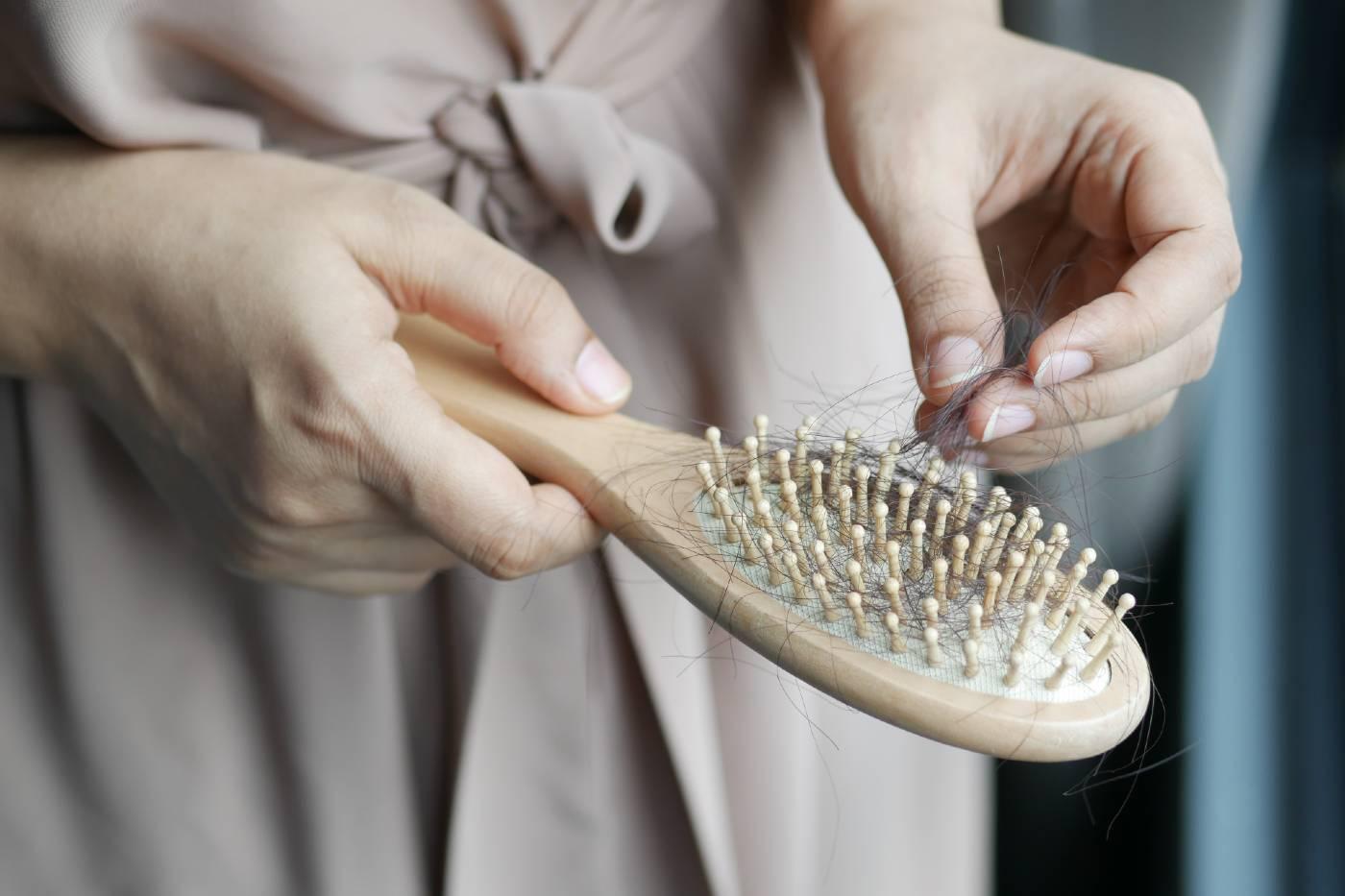
While everyone is different, oftentimes, when postpartum hair loss begins you might find yourself pulling handfuls of hair out in the shower, which can be quite noticeable for those with longer hair. Hair might fall out all around your head and/or you may see more loose hair than usual on your brush or pillow. You may also notice more stray hairs stuck to your clothing.
When does postpartum hair loss occur?
Postpartum hair loss, or postpartum shedding, isn’t a right-away occurrence. Postpartum hair loss has a sneaky way of happening after you’ve already waved good-bye to most other postpartum symptoms—and just as you and your little one really start hitting your groove between four to five months postpartum. (Not fair, right?)
How long does postpartum hair loss last?
Don’t worry! Postpartum hair loss is not considered “true hair loss,” according to the American Academy of Dermatology Association. Overall, the giant post-baby shed-a-thon usually lasts for six months or less. However, postpartum hair loss has been known to linger as long as 18 months for some. That said, your hair most likely will go back to its original pre-pregnancy state by your little one’s first birthday. PS: Some experience unexpected layers as the hair regrows, which some refer to as “baby bangs.”
Is postpartum hair loss ever worrisome?
If you continue to lose hair for more than six months—or if your hair hasn’t returned to normal after a year—it’s not a bad idea to bring it up with your healthcare provider. There’s a possibility that your postpartum shedding is connected to something beyond pregnancy, such as an iron deficiency or thyroid disease.
Can postpartum hair loss be treated?
While you cannot prevent postpartum hair loss, there are things you can do if your postpartum shedding is bothers you, including:
-
Use volumizing products. Volumizing shampoo and mousse contain ingredients like protein that coat your hair, making your mane appear fuller. - Try a fine-hair conditioner. These conditioners contain lighter formulas that won’t weigh hair down,
- Avoid certain hair products. Conditioning shampoos and intensive conditioners weigh down your hair, making it look limp.
- Use less heat. Lower the heat settings on your hair dryer and your curling or flat iron to help prevent damage and more hair loss.
- Use conditioner sparingly. Applying conditioner to your scalp and all your hair tends to weigh down hair. Instead, use it primarily on the ends of your hair.
- Continue taking prenatal vitamins. The extra folic acid can be helpful in helping with further hair and nail growth.
- Ditch the tight ponytail. Any hairstyle that pulls on your strands increases fall out.
- Take care of your health. Research shows that the frequency of postpartum hair loss was markedly higher in those with anemia, gestational diabetes, and a history of hypothyroidism.
Will postpartum hair loss affect my baby?
Postpartum hair loss is 100% normal and won’t affect your baby. With that, it is important to keep a keen eye on the fallen hair that lands on your little one. That’s because loose hairs can wrap tightly around your baby’s fingers, toes, penis, or other body parts causing pain and possibly cutting off blood supply. This is called a hair tourniquet, and postpartum hair loss is one of the most common culprits behind it. While the average age of a hair tourniquet diagnosis is 5 months, no matter their age, if your baby is crying excessively and you notice redness or swelling on a finger, toe, or another body part it may be due to a hair tourniquet. To help prevent this from happening…
-
Brush your hair often to help keep loose strands off your - Loosely tie your hair back in a scrunchie when taking care of your baby.
- Frequently check your little one’s fingers, toes, penis, and other appendages for loose hairs.
More postpartum info
- Weird Things That Happen to Your Body After Birth
- 411 on Postpartum Shaking
- What’s a Postpartum Doula?
- What to Expect at Your Postpartum Checkup
***
REFERENCES
- Investigating the prevalence of postpartum hair loss and its associated risk factors: a cross-sectional study. Iranian Journal of Dermatology. December 2021
- Cleveland Clinic: Postpartum Hair Loss
- StatPearls: Physiology, Hair
- American Hair Research Society: Exogen, The Shedding Phase Of The Hair Cycle
- Kaiser Permanente: Pregnancy: Hair Changes
- Cleveland Clinic: How To Deal With Hair Loss After Pregnancy
- Penn Medicine Lancaster General Health: The Truth about Postpartum Hair Loss
- American Academy of Dermatology Association: Hair Loss in New Moms
- Cleveland Clinic: Hair Tourniquet Syndrome
Disclaimer: The information on our site is NOT medical advice for any specific person or condition. It is only meant as general information. If you have any medical questions and concerns about your child or yourself, please contact your health provider.
SHARE THIS ARTICLE
MOST LOVED
Sleepytime Sidekicks