PREGNANCY
Can I Have Caffeine During Pregnancy?
Pregnant folks often give up so much. Do you have to forgo your morning brew too? Not necessarily!
Written by
Happiest Baby Staff
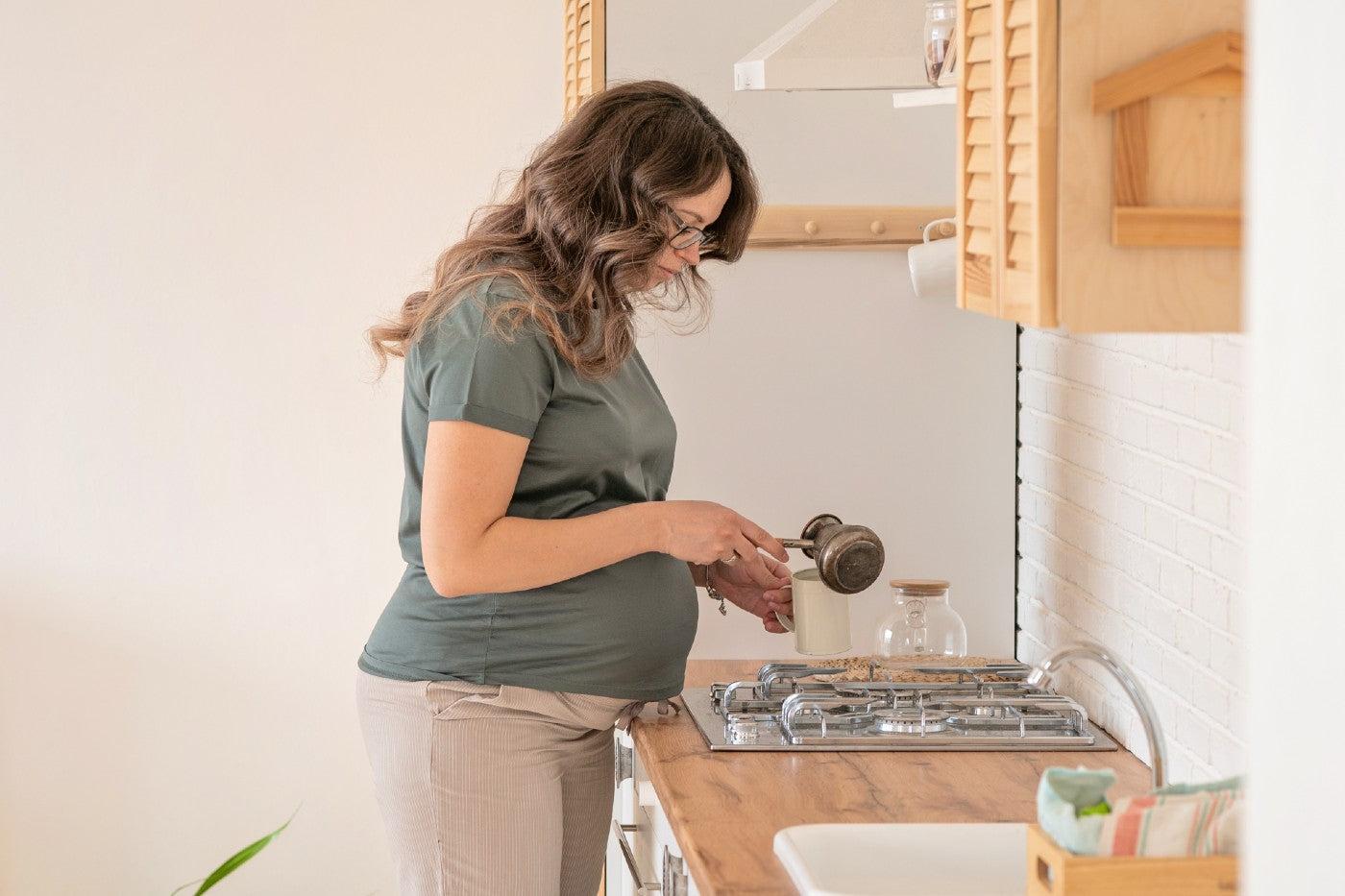
Pregnant folks often give up sushi, cocktails…and most of their wardrobes. Do you have to forgo your morning coffee too? Not necessarily!
Caffeine is a stimulant found in many popular beverages and foods like coffee, tea, energy drinks, sodas, and chocolate. As anyone who’s gratefully chugged a cup of Joe the morning after a late night knows, ingesting caffeine can make us feel more alert, awake, and focused. And, since exhaustion is almost as much a hallmark of pregnancy as a baby bump is, the thought of going nine long months without a drop of java might be enough to make you want to hibernate until Baby arrives.
While it’s true that you can no longer throw back latte after latte with abandon, fortunately, evidence that suggests that you may not need to abstain from your precious morning cup of coffee or tea. Here’s what to know about caffeine during pregnancy.
Is caffeine safe during pregnancy?
During pregnancy, caffeine can pass through the placenta and enter a baby’s bloodstream. We’re not quite sure how fetuses experiences caffeine, but some research has shown that large quantities of caffeine can be risky, as its been linked to miscarriage, preterm birth, low birth weight and even childhood behavioral disorders.
But when we say large quantities, we’re often talking more than a meager cup or two. For example, a 2017 Danish study that found a connection between caffeine during pregnancy and behavioral issues in kids examined women who drank eight or more cups of coffee a day. Similarly, with miscarriage risk, research suggests risk grows with increased caffeine intake (200 mg or more a day—roughly the equivalent of more than two cups of coffee). Due to those negative potential outcomes, the World Health Organization advises that folks with high caffeine consumption (more than 300 mg) lower their daily intake during pregnancy.
The good news is there’s plenty of research that suggests a moderate amount of coffee does not substantially boost the risk of miscarriage, preterm birth, or low birth weight. That’s why after combing through all of the evidence, the American College of Obstetricians and Gynecologists has concluded that consuming up to 200 mg of caffeine (about two 6-ounce cups) per day is safe during pregnancy.
Does caffeine during pregnancy increase miscarriage risk?
One of the fears that weighs most heavily on expecting parents’ hearts is the risk of miscarriage, which is the highest in the first trimester. And true, there is research that links high doses of caffeine intake to early pregnancy loss. Couples who are struggling to conceive are often advised to avoid caffeine as well. Some research suggests that couples who consume more than two caffeinated beverages a day in the weeks before pregnancy are at higher risk for miscarrying and that women who consume more than two caffeinated beverages a day.
Okay, now time to exhale, because once again, the amount of caffeine appears to be a factor. Additionally, ACOG notes that these kinds of studies tend to be limited by small sample size and the ones that collect data after a pregnancy or loss could be influenced by recall bias.
Of course, if you have a history of miscarriage or it’s been challenging to conceive, it may give you peace of mind to avoid all caffeine, at least before week 12. And that’s okay! But if you do need that jolt of java to pull yourself through those exhausting first weeks of pregnancy, know that ACOG has deemed it safe to drink about 12 ounces of coffee a day.
How much caffeine is safe during pregnancy?
It’s safe to drink up to 200 mg of caffeine a day, according to ACOG. As they note, that’s usually about two 6-ounce cups of coffee. But be aware that different brews pack slightly different caffeine amounts. Take Starbucks for example, a tall (12 oz) Pike’s Place Roast has 235 mg of caffeine, while a tall Dark Roast contains 195 mg and a tall Veranda Roast has 270 mg. Caffeine hides in other places, so check labels to keep your total intake under that 200 mg benchmark.
How much is 200 mg of caffeine?
Here are the estimated quantities of caffeine in popular foods and drinks:
- Single shot espresso (1 oz): 63 mg
- Decaf coffee (8 oz): 2.4 mg
- Black tea (8 oz): 48 mg
- Green tea (8 oz): 28 mg
- Hot cocoa (8 oz): 5 mg
- Chocolate bar: 10-30 mg
- Energy drinks: 80-200 mg
How can caffeine affect you when you’re pregnant?
There are a few ways that caffeine can affect pregnant people:
- Caffeine increases heart rate and blood pressure. If you already have high blood pressure and are at risk for conditions like preeclampsia, your doctor may suggest switching to decaf.
- Caffeine is a diuretic, meaning it makes you have to pee more frequently. It’s important to stay hydrated, so if you are kicking back with a hot one, make sure you’re gulping plenty of H2O too!
- If you’re struggling with pregnancy heartburn, caffeine may make it worse.
- On the plus side? A little caffeine can help when you’re pregnant, exhausted, and needed at work or home. And some caffeinated drinks, like coffee and green tea, contain healthy antioxidants.
What’s the best way to reduce your caffeine intake during pregnancy?
If you’re in the habit of swigging coffee all day long and you need to cut back, don’t go cold turkey—you’ll only get a headache! Reduce your daily consumption by a half cup per day until you’re down to a safe level. And you don’t have to give up your soothing coffee break ritual—just replace your high-octane beans with decaf tea. Just keep in mind that some herbal teas should be avoided in pregnancy, such as chicory root, fenugreek, and licorice. Some safe-for-pregnancy brews include ginger, lemon balm, and peppermint tea.
You can also work on ways to improve your energy without relying on caffeine. Focus on logging eight hours of sleep at night and napping when possible. Get plenty of fresh air and sunlight first thing in the morning. Stay hydrated and eat nutrient-dense foods, not sugar-loaded treats. All of this will perk you up and help your baby too.
Final Thoughts on Caffeine During Pregnancy
Coffee lovers can take heart knowing that research—and expert organizations like ACOG—suggest that moderate caffeine consumption won’t likely harm your babe-to-be. Of course, every pregnancy and every pregnant person is different. If you have any questions about how caffeine could affect you or your little one, please don’t hesitate to contact your physician.
More Pregnancy Questions—Answered:
- The Tdap Vaccine: What Parents-to-Be Need to Know
- Early Signs of Labor That Mean It's Go Time
- Smoothie Add-Ins for a Healthier Pregnancy
- Nutrients You Need While Pregnant
***
REFERENCES
- Passage of Caffeine Into Human Gonadal and Fetal Tissue, Biochemical Pharmacology, February 1962
- Association Between Maternal Caffeine Consumption and Metabolism and Neonatal Anthropometry: A Secondary Analysis of the NICHD Fetal Growth Studies–Singletons, JAMA Network Open, March 2021
- Maternal Caffeine Consumption during Pregnancy and Behavioral Disorders in 11-Year-Old Offspring: A Danish National Birth Cohort Study, The Journal of Pediatrics, July 2017
- Maternal Caffeine Consumption During Pregnancy and the Risk of Miscarriage: A Prospective Cohort Study, American Journal of Obstetrics and Gynecology, March 2008
- World Health Organization: WHO Recommendation on Caffeine Intake During Pregnancy, August 2021
- American College of Obstetricians and Gynecologists: Committee Opinion on Moderate Caffeine Consumption During Pregnancy, August 2010 (reaffirmed 2020)
- National Institutes of Health: Couples’ Pre-Pregnancy Caffeine Consumption Linked to Miscarriage Risk, March 2016
- U.S. Department of Agriculture: FoodData Central Search Results
- Starbucks Menu: Hot Coffee
- NIH National Center for Complementary and Integrative Health: Fenugreek
- Safety Classification of Herbal Medicines Used Among Pregnant Women in Asian Countries: A Systematic Review, BMC Complementary and Alternative Medicine, November 2017
Disclaimer: The information on our site is NOT medical advice for any specific person or condition. It is only meant as general information. If you have any medical questions and concerns about your child or yourself, please contact your health provider.

SHARE THIS ARTICLE
MOST LOVED
Sleepytime Sidekicks