PREGNANCY
Is Licorice Root Tea Safe to Drink in Pregnancy?
Why that warm drink may be risky for expecting parents.

Written by
Happiest Baby Staff
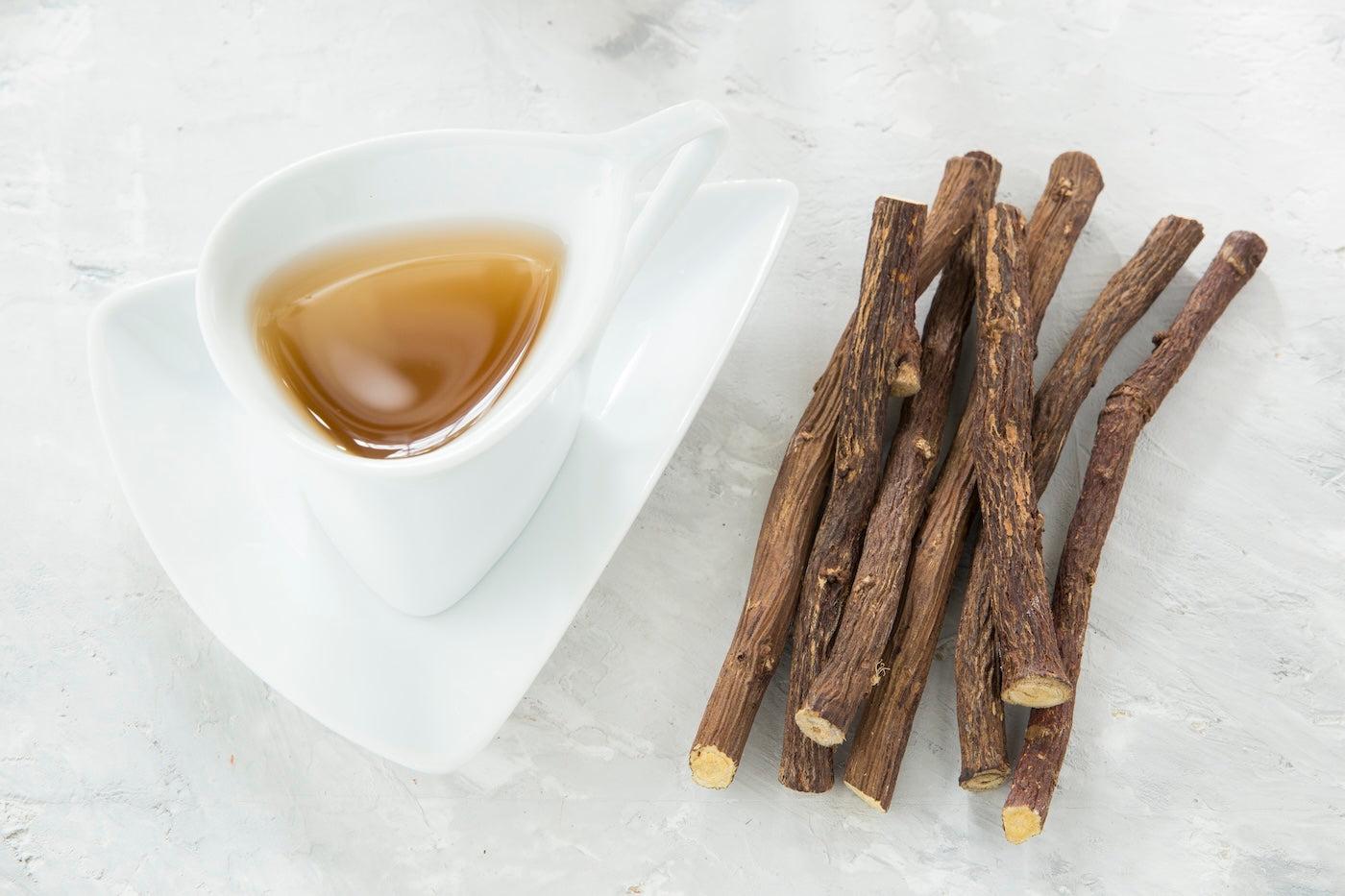
Licorice root tea is an herbal tea made by steeping the dried root of the licorice plant (Glycyrrhiza glabra) in hot water. The root naturally tastes very sweet (much sweeter than sugar), which is why it’s often used to flavor candies, herbal teas, and some traditional remedies. People commonly drink licorice root tea for things like soothing a sore throat or cough, easing digestive discomfort (such as heartburn or mild upset stomach), or simply as a naturally sweet, caffeine-free herbal drink.
So, while the prospect of a sweet, warm, cozy, caffeine-free beverage may be tempting during pregnancy—is it safe?
Is licorice root tea safe to drink while pregnant?
Short answer: It’s best to avoid licorice root tea in pregnancy.
Licorice root contains a compound called glycyrrhizin (glycyrrhizic acid). In large or long-term amounts, glycyrrhizin can cause serious side effects, including high blood pressure, low potassium, swelling, and even heart rhythm problems. The National Center for Complementary and Integrative Health (NCCIH) notes that high intakes of licorice in pregnancy (about 250 grams of licorice candy per week) have been linked with an increased risk of delivery before 38 weeks of pregnancy and advises caution with oral licorice products during pregnancy.
The Merck Manual also states that licorice may have steroidal and estrogen-like effects in pregnancy, may increase the risk of preterm delivery, and concludes that pregnant women should avoid licorice.
Because herbal teas often contain concentrated plant extracts and the amount of glycyrrhizin isn’t usually listed, most experts recommend skipping licorice root tea in pregnancy and choosing other herbal options instead.
Why Licorice Root Is a Concern in Pregnancy
How Licorice Affects Blood pressure and Electrolytes
Glycyrrhizin interferes with an enzyme (11β-HSD2) that normally protects your body from excess cortisol. When that enzyme is blocked, cortisol can act like the hormone aldosterone, leading to:
- Sodium and water retention
- Potassium loss
- High blood pressure (hypertension)
A condition called “pseudo-hyperaldosteronism,” which can cause edema, muscle weakness, and abnormal heart rhythms
NCCIH warns that even relatively small amounts of glycyrrhizin can lead to severe side effects in people who consume a lot of salt or who have high blood pressure, heart disease, or kidney problems. A large review of licorice-induced pseudo-hyperaldosteronism describes multiple cases of hypertension and low potassium from licorice products, underscoring its potent effect on blood pressure regulation. Case reports also document licorice-induced hypokalemia (low potassium), edema, and hypertension due to glycyrrhizin’s effect on this enzyme system.
Because high blood pressure and electrolyte issues are already important concerns in pregnancy, especially for people at risk of preeclampsia, licorice root is considered too risky as a routine drink.
Possible Pregnancy and Baby Risks
Evidence in pregnancy is based mainly on observational studies, so we can’t say licorice causes these problems, but there are enough concerning associations that multiple medical and government bodies advise pregnant people to avoid large amounts. Beyond the risks of a preterm delivery associated with licorice root, a Finnish observational cohort found that women who ate more than 250 g of licorice per week had children who, on average, showed differences in some physical and mental development measures compared with children whose mothers ate little or no licorice. These findings led the authors to recommend warning pregnant women against eating licorice.
Why Licorice Root Tea Is Especially Tricky
With herbal teas, you usually don’t know exactly how much licorice root—or glycyrrhizin—you’re getting. Herbal products are regulated as dietary supplements, not drugs. That means there are no standardized potency requirements, and products may vary widely in strength and composition. Plus, herbs used as teas, infusions, and extracts may contain high and variable amounts of active ingredients as well as contaminants (like heavy metals or microbes) or unlabeled ingredients.
What about licorice in blends, candies, or DGL products?
Blended Herbal Teas
If licorice root appears in the ingredients list—even in a blend meant for digestion or sore throat—the drink can still deliver glycyrrhizin. Given the potential for blood pressure changes and pregnancy complications, it’s reasonable to avoid teas that list licorice root as an ingredient while pregnant, unless your healthcare provider specifically okays them.
Candy Labeled Licorice
Many “licorice” candies in the U.S. are actually flavored with anise oil, not true licorice root, and therefore don’t carry the same glycyrrhizin-related risks! Real licorice candies, however, can cause the same blood pressure and electrolyte problems seen with licorice supplements if eaten regularly.
Deglycyrrhizinated Licorice (DGL)
DGL products have most of the glycyrrhizin removed, so they might be safer for short-term use for some conditions. Still, there’s very little pregnancy-specific data, so pregnant people should only use DGL under the guidance of their healthcare provider.
Who should be especially careful to avoid licorice root tea?
Avoid licorice root tea (and other oral licorice products containing glycyrrhizin) in pregnancy, especially if:
- You have high blood pressure, preeclampsia, kidney disease, or heart disease, or you take medicines that affect potassium or blood pressure (like certain diuretics, digoxin, or blood pressure meds).
- Your provider has asked you to avoid herbs that impact hormones or blood pressure.
- You drink herbal blends that list licorice root among the ingredients. Even if it’s not the main herb, the amount of glycyrrhizin is unknown.
Safer Sips to Try Instead
For a pregnancy-friendly cuppa, ask your healthcare provider about herbal teas that have better safety data in pregnancy (and are not combined with licorice), such as:
- Ginger tea: often used as a morning sickness remedy and appears to be reasonably safe in pregnancy in typical amounts.
- Peppermint tea: commonly used for digestion and generally considered low-risk in pregnancy.
- Rooibos: naturally caffeine-free and often used as a gentle alternative, though formal pregnancy data are limited.
When to Call Your Healthcare Provider
Reach out to your provider if:
- You drank licorice root tea and now feel dizzy, weak, very tired, or notice leg cramps, swelling, or pounding heartbeats (possible signs of blood pressure or potassium changes).
- You have high blood pressure, preeclampsia, kidney disease, or heart disease and accidentally had licorice root tea or candy with real licorice.
- You’re unsure whether a tea or supplement contains licorice root or glycyrrhizin.
- An accidental small amount is unlikely to cause harm on its own, but it’s always smart to loop in your prenatal provider so they can decide whether any monitoring is needed.
The Bottom Line
Licorice root tea is not recommended during pregnancy thanks to its active compound (glycyrrhizin), which can raise blood pressure, lower potassium, and cause serious side effects. For a warm mug in pregnancy, skip licorice root tea and choose a pregnancy-safe herbal option—like ginger, peppermint, or rooibos—cleared by your healthcare provider instead.
More on Drink Safety During Pregnancy:
- Can I Have Caffeine During Pregnancy?
- Is Matcha Safe During Pregnancy?
- Is Chamomile Tea Safe During Pregnancy?
- Can Red Raspberry Leaf Tea Help During Labor?
***
REFERENCES
- National Center for Complementary and Integrative Health: Licorice Root
- Merck Manuals: Licorice — Dietary Supplements
- Pseudohyperaldosteronism Due to Licorice: A Practice‑Based Learning from a Case Series, International Journal of Molecular Sciences, July 2024
- Licorice‑Induced Hypokalemia, Edema, and Thrombocytopenia, Human & Experimental Toxicology, 2012
- Federal Institute for Risk Assessment (BfR): Does the Consumption of Liquorice by Pregnant Women Impair the Mental and Physical Development of Children?
- Office of Dietary Supplements, NIH: Pregnancy — Fact Sheet for Health Professionals
- MotherToBaby: Herbal Products & Pregnancy — Fact Sheet
Disclaimer: The information on our site is NOT medical advice for any specific person or condition. It is only meant as general information. If you have any medical questions and concerns about your child or yourself, please contact your health provider.






SHARE THIS ARTICLE
MOST LOVED
Sleepytime Sidekicks