TODDLER
An Age-by-Age Guide to Your Child’s Attention Span
Here’s what to expect from your toddler or preschooler’s attention span—and how to bolster your kiddo’s focus!

Written by
Happiest Baby Staff
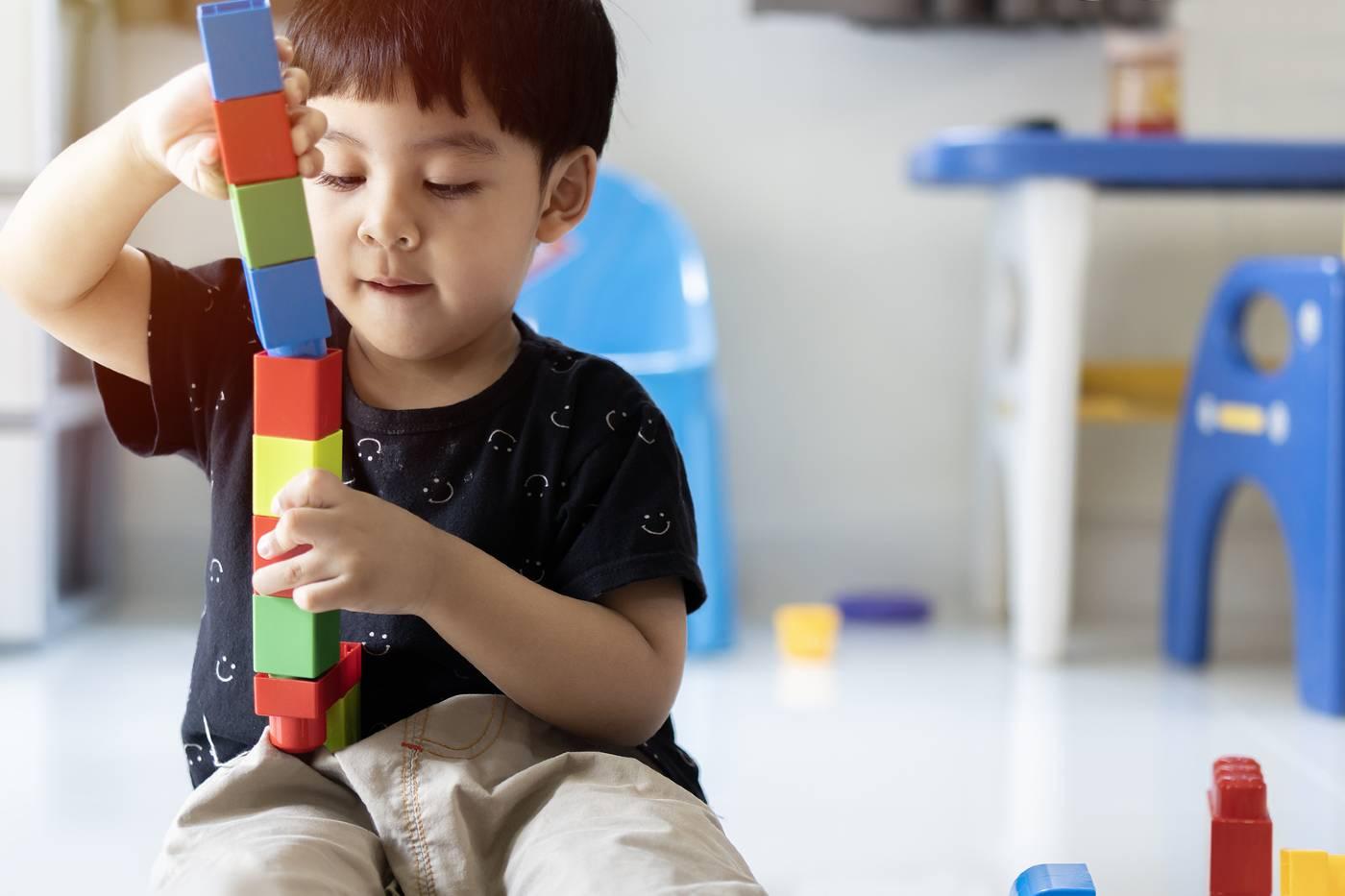
There are many reasons why your toddler can’t do the same puzzles and games that, say, your grade schooler can. And it’s not just about their not-quite-there motor skills. Toddlers simply don’t have the attention span to tackle big-kid activities yet! So, you might be wondering: What is the attention span of a toddler? How long should my 2-year-old be able to focus? What is a normal attention span for a 2 year old, 3 year old, and beyond? Before we lose your attention, we’ve got the answers! Read on for our age-by-age guide to attention span.
What is “attention span?”
A child’s attention span is their ability to pay attention (focus or concentration) on either a person, an object, or an activity while also being able to ignore other interesting (and even not-so-interesting) things that are going on simultaneously. In the brain, attention span is mainly controlled by the frontal lobe. So, as the frontal lobe matures, so does a kiddo’s attention span. (Experts note that a child’s attention span is closely related to their developing ability to learn and to remember.) Attention span not only varies by age it varies depending on type of task, setting, emotional state, and more.
What’s the average attention span for a toddler?
Does it seem like your tot can only focus for a few minutes—at best? Well, it’s probably true! And that’s 100% age-appropriate! The average attention span of a 2-year-old falls between 4 and 6 minutes and that bumps to 6 and 8 minutes for 3-year-olds. That means, most toddlers can play on their own for short periods of time, but they require support and encouragement from a grownup to stick with an activity for longer. And if you ask your 2-year-old to do something simple, they can…as long as it’s a one-step direction! (By 30 months, your tot should be able to follow two-step instructions, such as “Put the toy down and close the door.”)
What’s the average attention span for preschoolers?
Again, as children grow, so does their ability to pay attention! At 4 years old, your child’s attention span will stretch to roughly 8 to 12 minutes. Come age 5 and 6, their attention span will again grow to somewhere between 12 and 18 minutes. By 4 years old, most children can easily shift their attention away from what they’re doing when asked, and they start to automatically look at you while you’re giving instructions. By 5, your munchkin will most likely be able to focus on what you’re saying even when they’re not looking at you—and while they’re doing another activity.
Children’s Attention Span By Age
If you’ve even been to a library read aloud or a toddler’s birthday party, you know: Children’s attention spans are all over the map! But there are some general ranges where a child’s attention span will likely fall:
- 2-year-old attention span: 4 to 6 minutes
- 3-year-old attention span: 6 to 8 minutes
- 4-year-old attention span: 8 to 12 minutes
- 5- to 6-year-old attention span: 12 to 18 minutes
- 7- to 8-year old attention span: 16 to 24 minutes
- 9- to 10 -year old attention span: 20 to 30 minutes
- 11- to 12-year-old attention span: 25 to 35 minutes
- 13- to 15-year-old attention span: 30 to 40 minutes
- 16-year-old+ attention span: 32 to 50+ minutes
Why is it hard for my toddler to focus?
It’s always important to have age-appropriate expectations when it comes to a toddler’s attention span. For example, your 3-year-old isn’t being defiant if they leave a floor puzzle before it’s complete. They’re simply a toddler with an 8-minute concentration level for puzzles! But age isn’t the only thing that affects how long a tot can focus. Here are some factors that contribute to a short—or fluctuating—attention span:
- Your child simply isn’t interested. Attention spans often get longer when your child is super interested in the task at hand—and then shrink back down when they’re less into the task. That’s why your kid may be able to sit in rapture during an entire Disney movie, but fuss and fidget in church.
- They’re in a chaotic environment. Being in a space with lots of distractions, like loud noises and flashing lights is very distracting, which chips away at attention.
- Your child is hungry. Research shows that children who are hungry are simply unable to focus, resulting in a short attention span.
- They’re stressed. Chronic stress overloads the attention system in the brain, which hinders one’s ability to stay focused, according to research. (Chronic stress in children can come from such situations as abuse, neglect, and poverty.)
- Your child is tired. When children don’t get enough sleep, they can have problems with memory, problem-solving—and attention. (Learn more about why toddlers won’t sleep and how to help them.)
How do I help my toddler or preschooler pay attention?
Attention span has been likened to a muscle, which means it’s something that needs regular exercise to strengthen! Experts attest that all children can learn tips, tricks, and strategies to help bolster their ability to sustain their attention. Here, some easy ways you can help your kiddo get more focused:
- Time your asks right. Allow your kiddo to finish what they’re doing before trying to capture their attention. To get their attention, use their name or gently touch their shoulder.
- Play this Allow your child to take the lead during playtime. Doing so forces their brain to take time to think of what to do, which helps develop their attention span. Engage in warm and responsive play, peppered with much encouragement.
- Encourage movement. Research shows that children have an easier time focusing and learning after they’ve exercised.
- Try these games. Play games like Simon Says, I-Spy, and Red Light Green Light to help your child develop their listening, memory, and following-directions skills. And stock the playroom with age-appropriate puzzles, books, and simple toys that don’t have flashing lights and sounds.
- Use your hands! Use gestures, pictures, and objects to help hold your bub’s attention.
- Bolster memory with song. Sing songs with your toddler, but leave out some words for them to fill in! Then praise their good listening and memory skills.
- Do activities together. Practice joint attention, which is when you and your bub both focus on an object or event and interact with each other while doing so. For example, sharing storytime, watching a silly YouTube video together, or both playing with blocks.
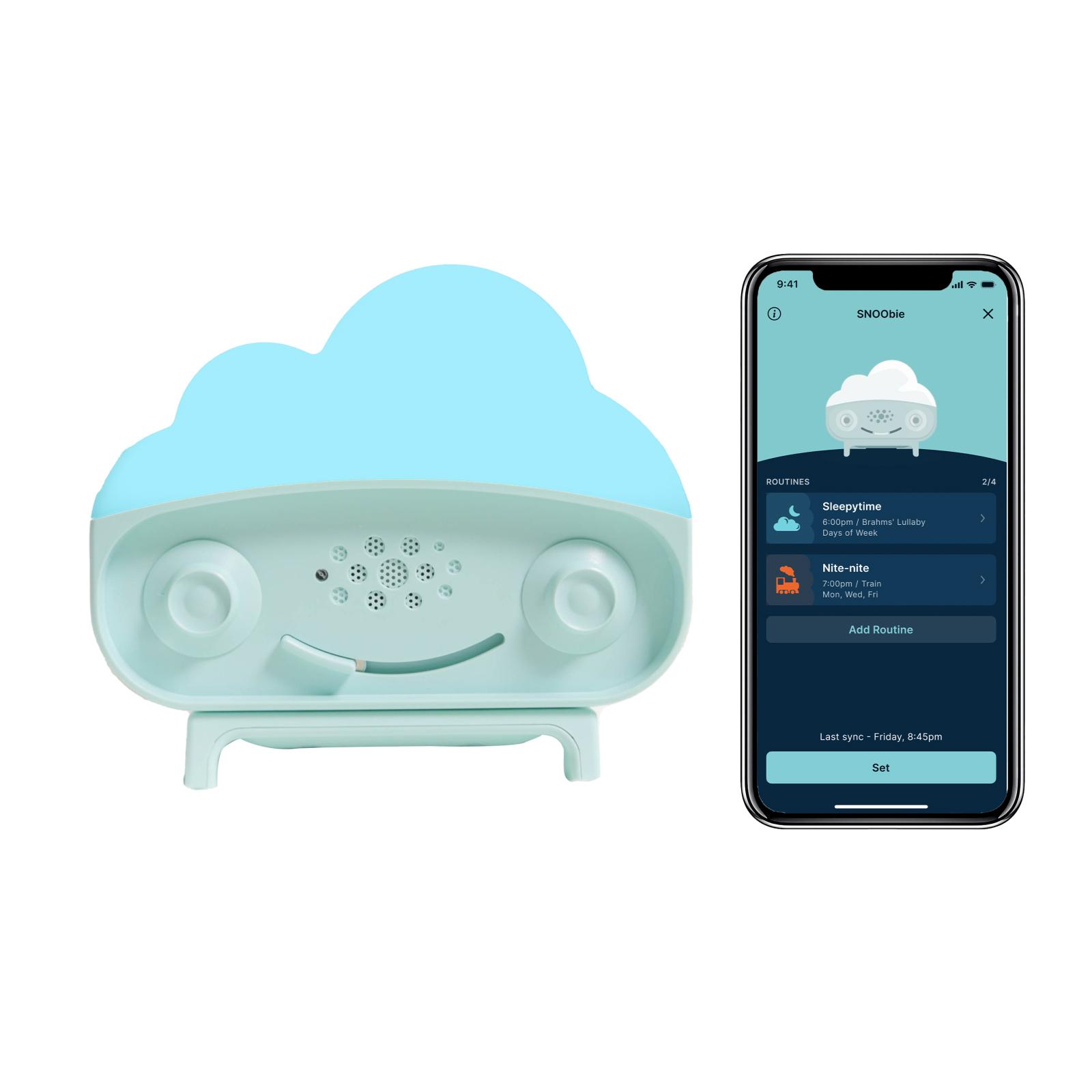
- Practice Magic Breathing. Mindful belly breathing is a great way to help kids clear their mind so they can concentrate. Check out Dr. Harvey Karp’s kid-centered instructions for mindful breathing and learn all about SNOObie! Dr. Karp’s all-in-one white noise machine and nightlight features two Magic Breathing tracks that use synchronized light and sound to show families how to use his calm-down technique.
- Announce when it’s time to listen. Arm your child with “listening rules,” like look at the person who’s speaking and wait for your turn to speak.
Could my toddler have ADHD?
Prior to age 4, it’s nearly impossible to distinguish between typical kiddo behavior and ADHD, notes the American Academy of Pediatrics. After all, almost all little ones are easily distracted, and they change very rapidly. If you suspect your child’s attention span issues may be a hallmark of ADHD, consult your pediatrician or a developmental pediatrician for guidance.
You May Also Be Interested In…
- Toddler Milestones
- How to Speak to Toddlers: Speaking Toddler-ese
- Help Your Toddler Thrive With Special Time
- Sensory Activities for Curious Babies and Toddlers
***REFERENCES
- California Childcare Health Program: Paying Attention: What does it mean for infants and toddlers?
- Understood: When do kids learn to focus?
- Centers for Disease Control and Prevention: Important Milestones: Your Baby By Thirty Months
- CNLD Testing & Therapy: How Long Should a Child’s Attention Span Be?
- University of Virginia: Brain Food: Exploring The Connections Between Nutrition and Learning
- Impact of Chronic Stress on Attention Control: Evidence from Behavioral and Event-Related Potential Analyses. Neuroscience Bulletin. November 2020
- Sleep Foundation: Improve Your Child’s School Performance With a Good Night’s Sleep
- PBS Kids: Tips for Helping Your Child Focus and Concentrate
- National Health Service (NHS): Attention and Listening Developmental Milestones
- The Development of Attention Systems and Working Memory in Infancy. Frontiers in Systems Neuroscience. March 2016
- Sustained Attention Development during the Toddlerhood to Preschool Period: Associations with Toddlers' Emotion Regulation Strategies and Maternal Behavior. Infant and Child Development. November 2011
- UCLA Health: PE classes vital to children's physical and mental health
- Edutopia: 7 Ways to Increase a Student’s Attention Span
- American Academy of Pediatrics: Diagnosing ADHD in Children: Guidelines & Information for Parents
- Child Mind Institute: Preschoolers and ADHD
Disclaimer: The information on our site is NOT medical advice for any specific person or condition. It is only meant as general information. If you have any medical questions and concerns about your child or yourself, please contact your health provider.




SHARE THIS ARTICLE
MOST LOVED
Sleepytime Sidekicks