TODDLER
New Technology Helps Children with Autism
No, we’re not talking about more screen time. Today, there’s a lot more technology than smart phones and tablets. There’s a specially designed AI robot making waves in the world of autism. Here’s what you need to know.

Written by
Happiest Baby Staff
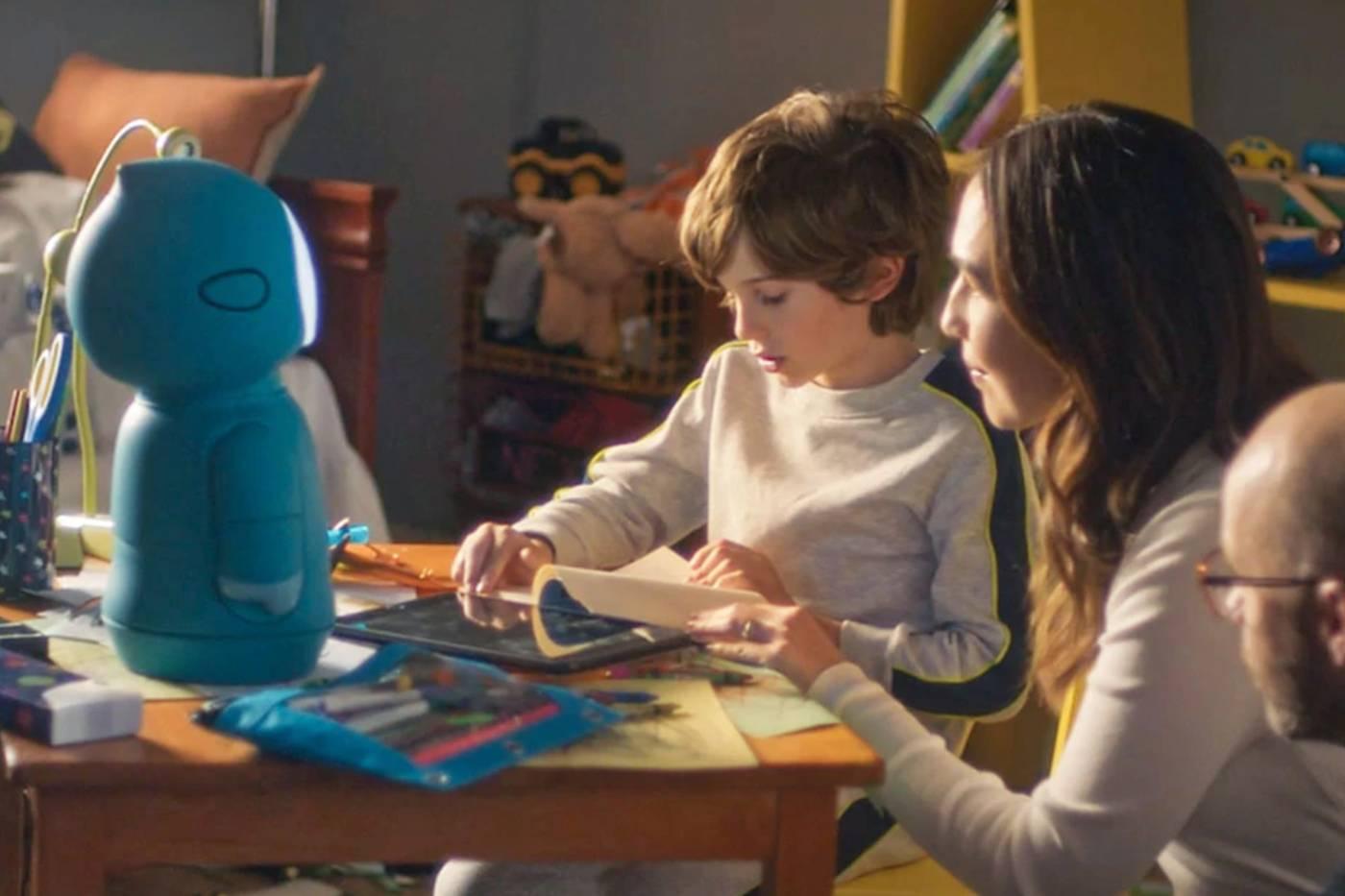
Approximately 1 in 44 children in the U.S. is diagnosed with autism spectrum disorder (ASD), according to a 2021 report from the Centers for Disease Control and Prevention. And that diagnosis often goes hand-in-hand with kids having trouble understanding social and emotional cues. But the thing is, children with an autism diagnosis often want to interact with others, but they may get overwhelmed by the experience, or they may simply not know how to engage with their peers. And parents are keenly aware of this. That’s likely why 44% of family members engage in some sort of social skills training at home with their children who are on the spectrum. For the most part, children with autism learn social skills from the likes of special education teachers, speech pathologists, social skills groups—and, of course, their loved ones. And now, thanks to innovative technologies, there’s another social-skills learning tool in the chest: Robots! (How cool is that!?)
How Social Robots Help Kids with Autism
To put it simply, social robots are designed to support a child’s social, emotional, and cognitive development through play-based learning that emphasizes skills like making eye contact and turn-taking. Paolo Pirjanian, Ph.D., founder and CEO of Embodied, the creator of the award-winning social robot Moxie, notes that children really take a shine to AI pals like Moxie because, “they have a playful side, they’re non-judgmental, and they have an encouraging disposition that kids love.” And mounting research shows that these robotic friends are really helping. For example, children with ASD who interacted with a special robot designed to model eye contact and other social behaviors for 30 minutes every day for 30 days showed noticeable improvement with their own eye contact and communication initiation, according to a Yale University study. Another study found that after regularly interacting with Moxie for six weeks, school-aged children with autism experienced improved eye contact, self-esteem, and emotional regulation.
And these special robots work not just because they’re automatically programmed to remind kids to, say, make eye contact. Instead, robots like Moxie allow natural interactions, thanks to the robot’s facial expressions, conversation abilities, and body language skills, all of which evokes trust, empathy, and motivation in kiddos. Plus, social robots are designed to truly “listen” to your child. Moxie, for instance, created by a team of child development experts for children ages 5 to 10, is fitted with microphones, a camera, and sensors that all work together to personalize your child’s experience. Moxie continuously measures how your child is doing and then uses the data to make decisions about which activities to encourage your child to participate in next, at what pace, and when. (This info is also shared with parents via the accompanying app.) Over time, Moxie learns to recognize your child’s face and their specific learning needs and style, customizing the experience to best help your tyke grow. Moxie even gets “tired” and goes night-night if it senses that your child is trying to do too much at once!
Robots Keep Learning Fun
The truth is, kids (and parents) are less likely to stick with a toy, a therapy, anything, that’s not enjoyable. And these robots, well, they’re fun. (Researchers involved in the Yale study above noted that study participants emphasized that they enjoyed the robot play.) Moxie, for instance, looks like a Pixar character come to life, complete with oversized, saucer eyes and a big ol round head. Plus, “Moxie is non-judgmental,” says Pirjanian. “So, children mastering language skills have an increased likelihood of interaction and are happy to practice communication techniques with their new robot friend.”
Moxie also churns out new games and stories for kids, which works wonders at sustaining interest. Right now, Moxie’s equipped with 52 weeks of content and each week features a new theme, like empathy, kindness, and friendship—and accompanying activities. During play sessions, kiddos talk with Moxie, play games, draw, listen to stories, practice mindfulness exercises, and more—all of which helps to buoy a child’s social emotional development. Pirjanian notes that children should aim to interact with Moxie about once daily for 15 to 20 minutes, then over about six months, the interactions can roll back to three to five times a week. (PS: Children who are non-verbal or dealing with speech delays below the developmental age of 5 may find Moxie frustrating.)
Not Just for Autism
“Parents choose Moxie for various reasons,” says Pirjanian. “I’d say, Moxie is most enjoyed by neurodiverse and neurotypical children who have difficulty with social skills, conversational skills, or who struggle to make friends.” Children who are experiencing social isolation or those who are grappling with anxiety, stress, high sensitivity, managing emotions, and/or coping skills benefit from Moxie, too. “And, of course, Moxie is a great complement to traditional developmental therapy,” says Pirjanian. Amazingly enough, Moxie is even being used in hospitals to help children cope with diagnoses and procedures! “We started a pilot program with the University of Rochester Medical Center and Golisano Children’s Hospital where we provide Moxies to kiddos recently diagnosed with diabetes, with expansion plans to help with post-operative pain management and stress management of procedures like MRIs,” says Pirjanian. “We know medical treatment can be a stressful experience for children, especially in a hospital setting, and Moxie can help these littlest patients with education about a diagnosis, provide them with coping strategies, and encourage improved long-term health outcomes.”
Our very own Dr. Harvey Karp is among the many esteemed advisors working to share their expertise with the innovative team behind Moxie. To learn more about Moxie, visit embodied.com.
Disclaimer: The information on our site is NOT medical advice for any specific person or condition. It is only meant as general information. If you have any medical questions and concerns about your child or yourself, please contact your health provider.






SHARE THIS ARTICLE
MOST LOVED
Sleepytime Sidekicks