TODDLER
How Kid Sleep Is Different from Adult Sleep
Understanding the science of sleep can better prepare you as a parent to get your little one sleeping better through the night.

Written by
Dr. Harvey Karp
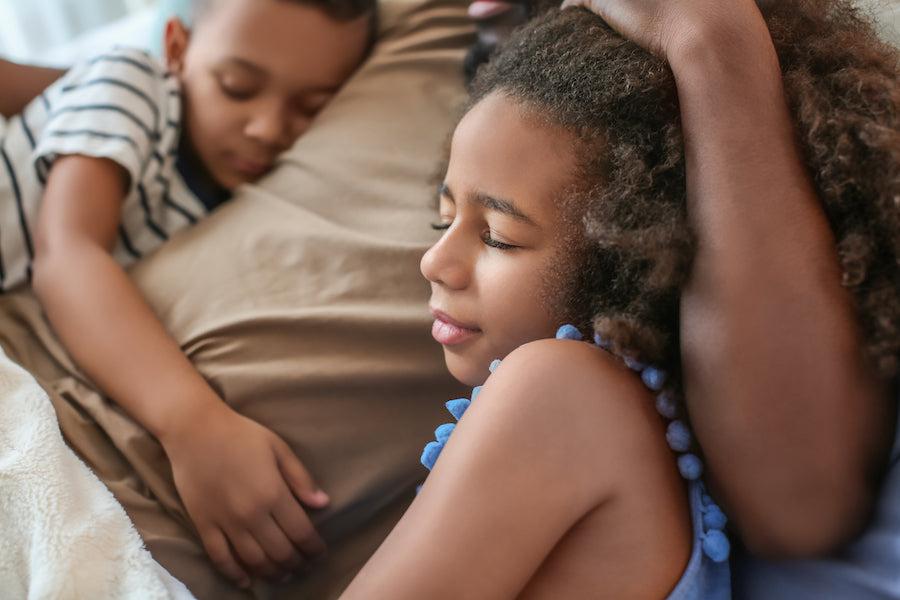
It’s time for a little lesson on how kid sleep differs from adult sleep. How is this relevant to your life? Understanding the science of sleep can better prepare you as a parent to get your little one sleeping better through the night.
Of course, kids and adults have lots of sleep similarities. For instance, we both:
- Yawn when we’re tired.
- Have accidents when we’re exhausted.
- Prefer sleeping at night (okay…this one may take a little time to happen).
- Love our own personal sleep cues (from swaddling, white noise, and teddy bears to favorite pillows and cozy flannel sheets).
But there are also key differences between adult and childhood sleep.
Why Do Babies Need More Sleep Than Adults?
For one thing, kids sleep a lot more. Babies rack up 14 to 18 hours of slumber, although it’s sprinkled in little bits throughout the night and day. Somewhere between the second and sixth month, day sleep coalesces into 1 to 2 hour naps and night sleep forms blocks of 6 to 10 hours.
During the toddler years, total daily sleep gradually drifts down to 11 or 12 hours (with naps of 1 to 2 hours) for a two-year-old. And then drops to 10 or 11 hours (with no naps) for a five-year-old.
Kids also doze off earlier than grown-ups. Babies fall asleep between 9 and 10 p.m., and from 6 months to 6 years of age, infants sack out between 8 and 9 p.m. (the earliest bedtimes belong to 18- to 23-month-olds, who often get tucked in around 8 p.m.)
Another pivotal difference is that a single adult sleep cycle lasts 90 minutes, while, as you can see in the next graph, young children zip through a cycle (from light to deep sleep and back to light, with a bit of REM tacked on) in just 60 minutes.
These shorter cycles will have a huge impact on your life. Why? Because speedier cycles mean that your child will return to very light–easily disturbed sleep every hour. No wonder little kids are so easily disturbed by a little hunger or teething.
![[object Object]](https://cdn.sanity.io/images/301lhh0a/production/990819362b3805a441fd37be3edcc9eddcaa63bc-480x332.jpg?w=1080&auto=format&q=75&fit=max)
Finally, as shown in the graph above, your mix of NREM and REM is very different from your child’s. We spend about 85% of the night in restorative NREM while babies spend just 50% in NREM (this is when kids can snooze through roaring basketball games). On the other hand, babies spend a massive 40-50% of their sleep in dream/memory boosting REM (versus about 15% in adults).
In other words, infants have 5 times more REM sleep than adults (8 hours versus 1.5). This gives them enough time to sift through all the day’s chaotic happenings to figure out which new memories to file away and which to forget.
REM Sleep, Explained
Adults probably need much less REM (rapid eye movement) sleep because our lives are pretty routine. Most of the things we encounter each day—like finding which grocery store aisle has dog food—are either not new to us or just too trivial to remember. But for babies, everything is new and fascinating.
In fact, our babies’ brains quickly fill to the brim with all the cool things they want to remember (like the bell on the cat’s neck, the first swing ride, the ceiling fan, and the smell of fresh cookies.) No wonder infants need to nap every few hours. Unlike adults, who first enter restorative sleep before we move on to REM, young kids dive immediately into REM to process their inbox of memories.
Improving Your Child's Sleep
In the beginning, the best things you can do for your baby is create a safe sleeping environment and a consistent sleepy-time routine. And you will want to begin teaching your baby the important skill of self-soothing (or learning to sleep on her own) from day one.
Disclaimer: The information on our site is NOT medical advice for any specific person or condition. It is only meant as general information. If you have any medical questions and concerns about your child or yourself, please contact your health provider.




SHARE THIS ARTICLE