TODDLER
Mucus Color Meaning: Decode Your Tot’s Snot!
Turns out, there’s a lot you can learn from your bub’s boogies!

Written by
Dr. Harvey Karp

Boogies, snot, phlegm, mucus—no matter what you call the gooey (or crusty) bits that seem to fill your toddler's nose every cold and flu season, it all serves the same purpose: To keep icky germs, allergens, and dust out of your child’s nose! But that doesn’t mean all mucus is the same. Learn why it’s important to tune into your child’s different snot colors—and what they mean.
What is mucus made of?
All nasal mucus, no matter the color, is mostly water, with a mix of salt, and antiviral and antibacterial proteins. Boogers are made up almost entirely of dried mucus.
Mucus vs. Phlegm
Mucus can be made anywhere in the body (yes, your nose and throat, but we also have mucus in the urinary and genital tracts!). Phlegm (or sputum, its scientific name) is a special kind of thick mucus made in your respiratory system and designed to protect your airways and lungs. Its extra-gooey texture helps trap foreign substances (like bacteria or fungi). Then, the tiny hairs lining your airways (called cilia), work to push phlegm out through the mouth through coughing.
Why do we have boogers?
It’s helpful to think of mucus as the body’s flypaper! I know that image is kind of gross, but mucus is actually there to catch dust, allergens, and germs that may be “buzzing” around, trying to get into your little one’s system….and make them sick. That’s not all nasal mucus does! Boogers and snot contain antiviral and antibacterial proteins designed to fight germs—and it keeps little noses moist, which makes the nose less likely to get cracked, irritated, and susceptible to infection. The drier the nasal lining, the more prone to infection your bub’s nose becomes.
What does clear mucus mean?
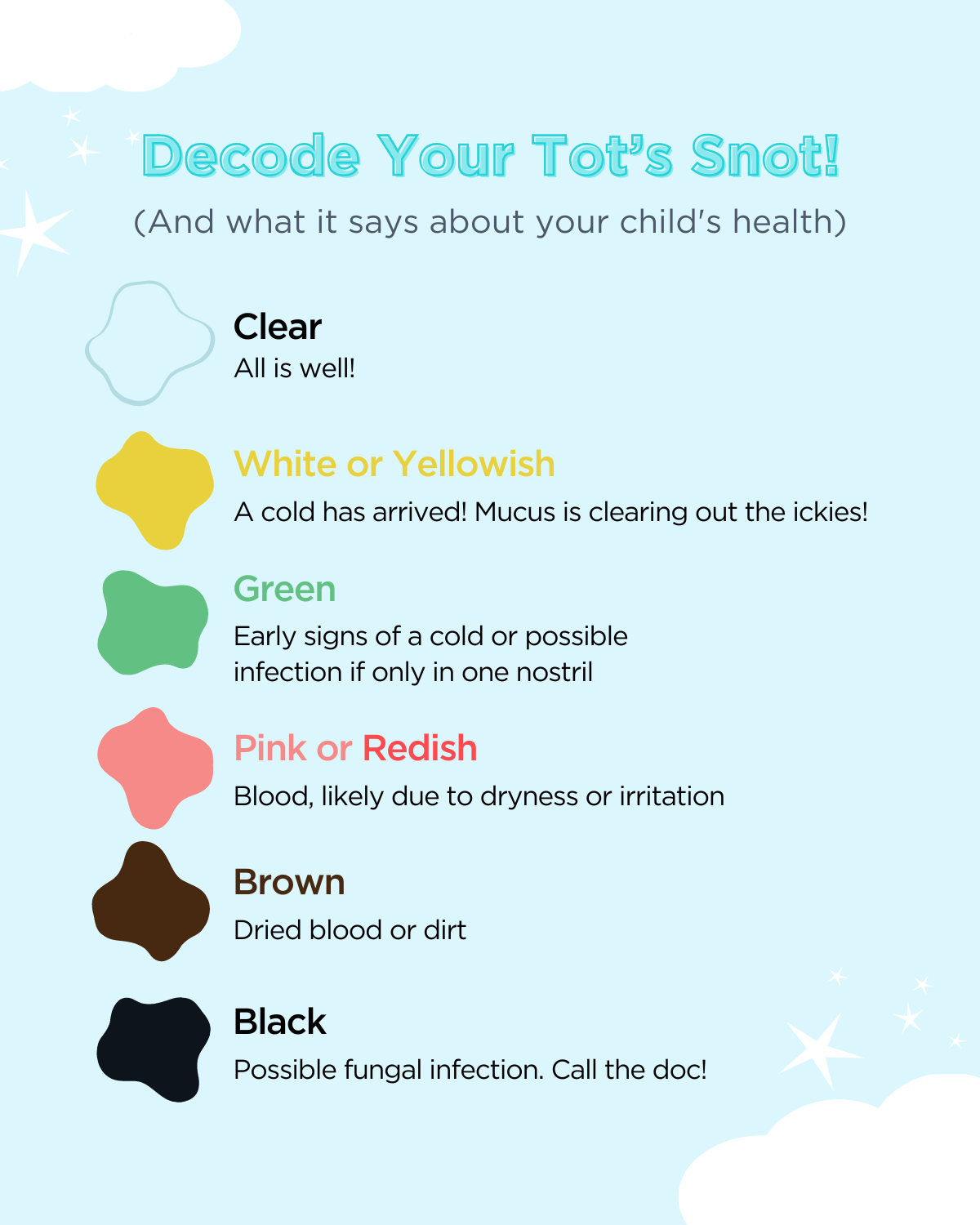
Whether you’re a kid or a grownup, your body churns out clear mucus around the clock to keep nasal tissues moist and to filter out dust, pollen, and other allergens. But since boogies can’t keep every little thing out, clear mucus can also appear when you have a cold or allergies. When cold germs or other viruses first invade the nose, the body naturally makes clear colored mucus to try to wash them away in a “little tide” of body fluid. At the same time, your little one’s mucus may be clear simply because it’s very cold outside! Cold, dry air can irritate the nasal lining, causing the glands inside the nose to produce excess mucus to keep tiny noses moisturized.
What does white or yellow mucus mean?
When your child is battling a cold, the mucus in their wee noses may become white, cloudy, or yellowish. That’s because after a few days of fighting the infection, the body’s immune cells fight back with proteins that can get stuck in the mucus (aka dead white blood cells) and change its color, giving it a cloudy or yellowish appearance. This is where yellow colored mucus comes from. The change in color simply means the mucus is doing its job and clearing the ickies out of the body.
What does green mucus mean?
Many parents wonder, Does green snot mean an infection? And the answer is…sometimes! While a lot of folks believe that green mucus means your child has a bacterial infection, that’s not always the case. Instead, snots, boogers, and mucus can turn greenish early in a viral infection (a cold) when there’s a lot of dead germs, white blood cells, and other debris present, which is totally normal. But if your tot had a bacterial infection (requiring antibiotics), there’s a good chance that green mucus would come from just one nostril—or they’d have other symptoms, too, such as headache and congestion.
What does pink or red mucus mean?
At times, your child’s mucus will feature tiny streaks of pink or red, which tends to mean there’s a bit of blood in the nose. Typically, children have pink or red-tinged mucus when nasal tissue is irritated due to, say, a dry air, lots of nose-blowing…or an honest-to-goodness nosebleed. But a few specks of blood—or pinkish boogies—are usually nothing to worry about.
What does brown or black mucus mean?
While it may be pretty disturbing to spy brown or black-ish boogers in your little one’s nose, it often just means they inhaled something of the same color, like dirt or dust. Brownish mucus can also indicate dried blood. In rare cases, however, black boogies can mean a serious fungal infection, most often in folks with diabetes or a weakened immune system. If you see black mucus, it’s a good idea to reach out to your healthcare provider.
Mucus Color Chart
Below is a simple-to-use chart on the various snot colors you may encounter:
Why does my child’s snot change colors?
If after a few days, your child's nasal mucus color goes from white to green/yellow, you should call your child’s pediatrician. This shift in snot color might indicate a sinus infection. You should also reach out if your child is having trouble breathing, sleeping, or if they develop a fever, headache, or pain.
Can boogers be harmful?
Remember, hard, squishy, and slimy boogers and mucus are filled with dirt, dead skin cells, other particles…and germs. So, if your toddler or preschooler is picking their nose and wiping their boogers on themselves, the furniture, their stuffed toys, anything, they’re spreading germs, which can make others sick. That’s why it’s important to teach kids to use tissues and to wash their hands…and for you to wash stuffed animals!
Mucus Color and Health
Mucus and snot color alone are not enough to make any kind of diagnosis. Factors like how your tyke is feeling, how long they’ve had symptoms, and their overall health always need to come into play when assessing what a child’s snot color really means. My advice:
- Get a nasal aspirator. If your tot is 1, 2, or 3 years old, you may want to consider using a nasal aspirator, bulb syringe, or an electronic version to gently clear boogies.
- Use saline drops. To help break up mucus, use a dropper to put some saline in your bub’s nose, then remove it with a snot sucker. (Again, this is for the 3-and-under set.)
- Crank the humidifier. A cool-mist humidifier helps to loosen nasal mucus and moisturizes irritated noses. They’re great to use overnight while your child snoozes!
- Teach nose-blowing. Kids aren’t born knowing how to blow their nose. You must teach them! During a non-stuffy-nose time, ask your tot to close their mouth and feel the air come out of their nose. (Closing their lips tight is key!) Next, tell them to purposefully blow air out of their nose while keeping their mouth shut. After they get the hang of that, bring the tissue into play, and repeat the process. Finally, show them how they can use the tissue to block one side of the nostril and blow out the other, which is especially helpful for tricky boogies!
- Call the doc if concerned. If your little one’s mucus color has changed from white to green/yellow or if their mucus is black, call the pediatrician. Your little one might have a sinus or a fungal infection. It’s also smart to call the doc if your bub has had a cold for 10 to 14 days, is having trouble breathing or sleeping—or if they develop a fever, headache, or pain. Sometimes the doc will recommend a decongestant syrup or nose drops. Since medicated nose drops can be a little irritating, I recommend alternating nostrils.
More on Sniffle Season
- Never Give Your Baby These Cold Medicines
- Your Cold, Flu, and RSV Toolkit
- Dr. Harvey Karp’s Flu Shot Need-to-Know
- SNOO Leg Lifters: For Babies Whose Docs Recommend Elevating the Head
Disclaimer: The information on our site is NOT medical advice for any specific person or condition. It is only meant as general information. If you have any medical questions and concerns about your child or yourself, please contact your health provider.






SHARE THIS ARTICLE
MOST LOVED
Sleepytime Sidekicks