TODDLER
What to Do If Your Toddler Refuses to Poop
Get the 411 on your tot’s "number 2" woes.

Written by
Happiest Baby Staff
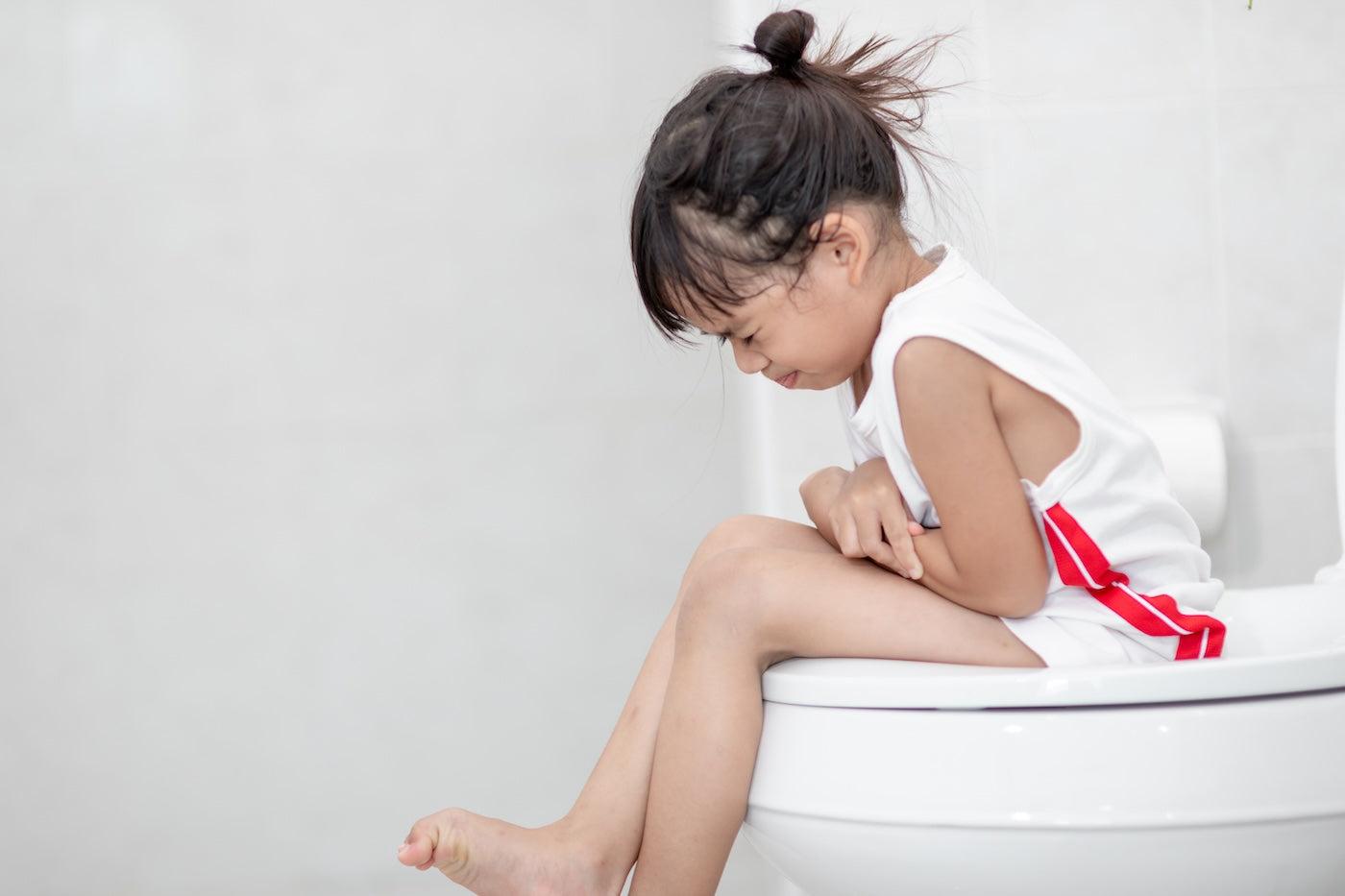
As a parent, you quickly get used to putting up with some amount of crap…both literal and figurative. And then sometimes—usually during potty training—there’s an alarming lack of literal crap. This common (figuratively!) crappy situation is known as poop withholding.
What is poop withholding?
Poop withholding happens when a child consciously resists having a bowel movement, even when they feel the urge to do a “number 2”. Toddlers may clench their bottom, cross their legs, hide, or cry when they need to poop—but still won’t go.
This behavior can quickly lead to constipation. The longer stool sits in the colon, the harder and more painful it becomes to pass, which only amps up a kiddo’s fears and hesitation. Poop withholding is a common cause of functional constipation, with up to 30% of kids experiencing constipation at some point in childhood
Why do toddlers withhold poop?
1. Fear of Pain
Tots who’ve had painful bowel movements—especially big or hard stools—may start to associate pooping with pain. In response, they withhold stool to avoid those ouchies, which only worsens constipation. This cycle is a well-known cause of chronic withholding.
2. Toilet Anxiety
Some toddlers fear the potty. They may worry about tumbling into the toilet or flinch at the loud sound of flushing. To help your tot overcome their worries, bring the potty down to their level with a a child-size toilet or a toddler insert with a footstool.
3. Desire for Control
Pooing is one of the few things in life tots have control over! Withholding those number 2s can be a way for them to assert their independence, especially during stressful transitions.
4. Big Life Changes
Events like starting daycare, moving to a new home, or welcoming a baby sib can cause disruptions in routine and increase anxiety—both of which can trigger withholding behaviors.
What to Do When Your Toddler Refuses to Poop on the Potty
Set a routine.
Encourage your kiddo to sit on the potty after meals for 5 to 10 minutes. This timing makes use of the gastrocolic reflex, a natural body response that stimulates the urge to poop after eating.
Make the potty comfortable.
Use a child-sized potty or a toilet seat insert with a footstool. Feeling physically secure can make a big difference in how relaxed a child feels when trying to poop.
Use encouragement, not pressure.
Avoid punishments or pressure. Praise your child for trying, even if they don’t poop. Stickers, small rewards, or verbal encouragement can help make the process feel more positive.
Fill up on high-fiber foods and water.
Offer plenty of fiber-rich foods (like fruits, vegetables, and whole grains) and water to help keep bowel movements soft and regular. (More foods to help constipated toddlers go!)
Ask your pediatrician about OTC meds.
If constipation continues or stool withholding persists, your pediatrician may recommend a stool softener, such as a laxative powder that can be added to your tot’s favorite drink, to help break the cycle. (Always talk to a doc before dosing your kiddo with meds, though!). Another option: aloe vera juice or prune juice, which have a natural laxative effect.
Is poop withholding a potty training red flag?
Poop withholding doesn’t necessarily mean your child isn’t ready for potty training. Many children go through this phase, especially if they’ve had a painful experience or are feeling overwhelmed.
That said, if withholding continues and leads to stool accidents, belly pain, or emotional distress, it could be a sign that your child needs additional support. Chronic withholding can sometimes lead to encopresis, a condition where softer stool leaks around hard stool in the rectum. And getting in touch with your doctor about it early, can help you side-step long-term complications.
When to Call the Doctor About Poop Withholding
Contact your pediatrician if your child:
- Hasn’t had a BM in four or more days
- Passes hard, large, or painful stools
- Shows signs of abdominal pain, bloating, or loss of appetite
- Has blood in the stool
- Soils their underwear after being potty trained
- Is in significant distress about using the potty
Your care provider can check for constipation, offer support strategies, and suggest treatment if necessary.
As frustrating as it is to have a toddler who just. won’t. go., try to keep in mind that poop withholding is common. And with your patience and encouragement (and possibly an assist from your doc), your little one will get through this crappy phase!
More Help With Potty Probs:
- Prep Your Toddler for Potty Training
- Potty Training Books for Toddlers
- How to Potty Train at Night
- Why Does My Potty-Trained Tot Wet the Bed?
- How to Stop Bedwetting
***
REFERENCES
- American Academy of Pediatrics. Constipation in Children. HealthyChildren.org. 2017.
- North American Society for Pediatric Gastroenterology, Hepatology and Nutrition (NASPGHAN); European Society for Paediatric Gastroenterology, Hepatology and Nutrition (ESPGHAN). Evaluation and Treatment of Functional Constipation in Infants and Children: Evidence-Based Recommendations. Journal of Pediatric Gastroenterology and Nutrition. 2014.
- American Academy of Pediatrics. AAP Guide to Toilet Training. American Academy of Pediatrics Press. 2003.
- National Institute of Diabetes and Digestive and Kidney Diseases (NIDDK). Eating, Diet, & Nutrition for Constipation. U.S. Department of Health and Human Services. 2018.
- American Academy of Family Physicians. Constipation in Children and Adolescents: Evaluation and Treatment. American Family Physician. 2022;105(5):469–476.
Disclaimer: The information on our site is NOT medical advice for any specific person or condition. It is only meant as general information. If you have any medical questions and concerns about your child or yourself, please contact your health provider.
SHARE THIS ARTICLE