BABY
When Do Babies Eat Solid Food?
When it comes to babies, there’s no shortage of opinions on when, how, and what kinds of foods to feed them.

Written by
Dr. Harvey Karp
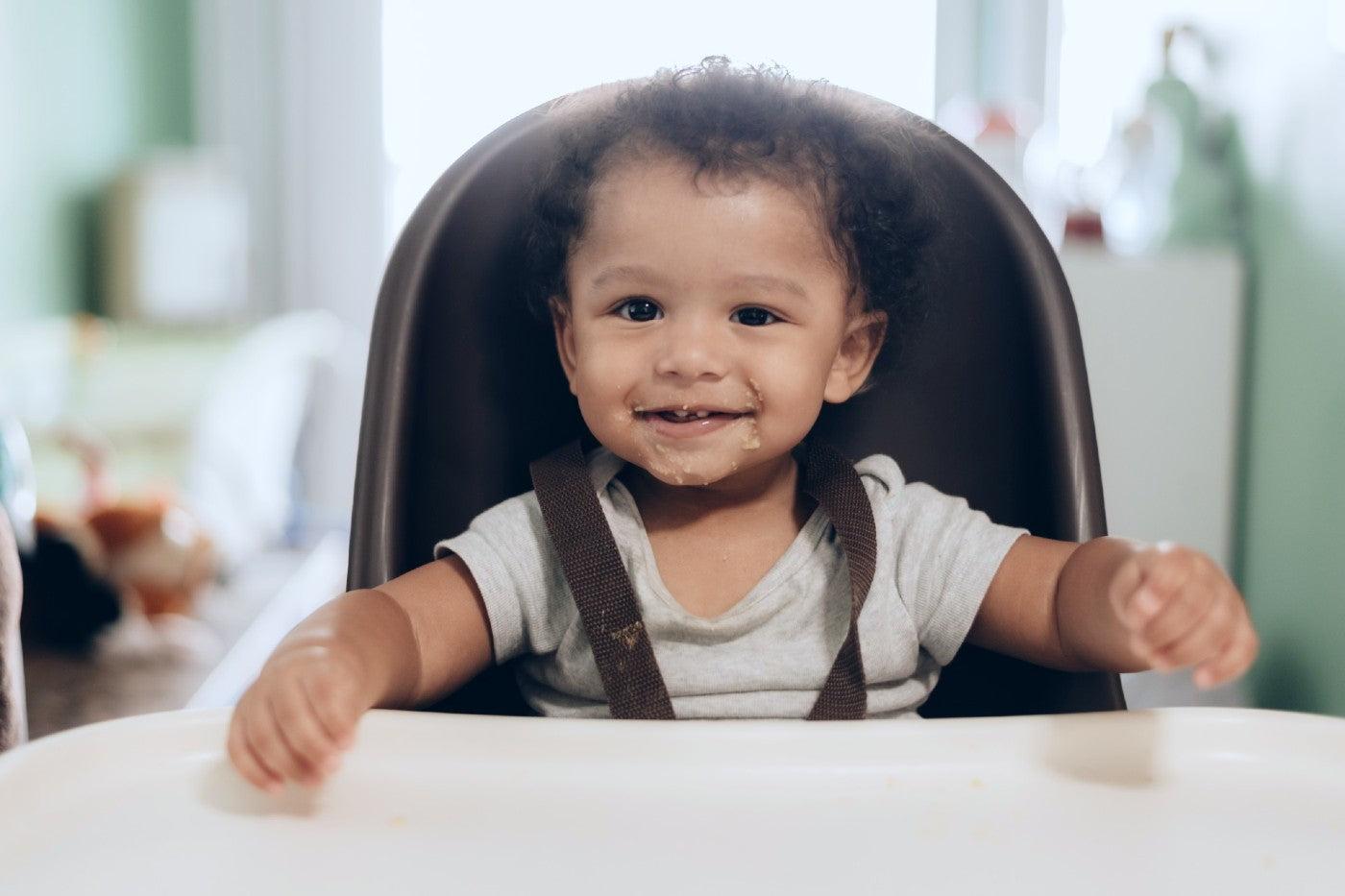
When it comes to feeding babies, there’s no shortage of opinions on what kinds of foods to offer them—or when and how to do it. And the advice always seems to be changing! For example, in the 1960s, Dr. Walter Sackett famously told parents that babies should be eating eggs and bacon as young as 10 days old! Then in the 1980s, pediatricians advised parents to avoid introducing eggs until their babies reached 1 year of age for fear of triggering allergies. Now we now know that early exposure to eggs and other allergenic foods leads to fewer allergies, not more!
So, if you’re confused about starting solids, you’re not alone. To help, here are a few common-sense ideas about when and how to start introducing your little one to solids that’ll make mealtime easier for all!
How long should I feed my baby breastmilk or formula?
Starting solids does not mean it’s time to give up on infant formula or breastmilk! Even at 6 months, breastmilk and/or infant formula still makes up 95% of your infant’s nutrition. By 9 months, it’s about 75% and it only reaches 50% by their first birthday. If you’re formula-feeding, you can switch to whole cow’s milk when your bub is 12 months old. Nursing? The American Academy of Pediatrics (AAP) encourages exclusively breastfeeding for the first 6 months and, if possible, continuing it as part of your child’s diet until they are about 2 years old. Of course, this isn’t possible for all families. (Learn more about introducing cow’s milk to your tot.)
At what age should you introduce solid foods to your baby?
While all little ones are a bit different, babies typically begin eating solids around 6 months. Introducing foods before 4 months old is not recommended. If you’re unsure if your baby is ready for solids, look for some tell-tale signs that indicate your child is!
What are signs your baby is ready for solid foods?
Before you start filling your baby’s highchair tray with solids, it’s important that your baby shows you they’re up for the challenge. While they may not have too many questions for the chef about what’s on the menu, they will be able to show you that they’re ready, willing, and able to handle solids.
Signs your baby is ready for solids include:
- The ability to sit upright and hold their head up without assistance
- They no longer automatically “tongue thrust,” or push food out of their mouth when you try to feed them.
- Milk alone no longer seems to be enough to keep them full.
- Your baby starts smacking their lips and reaching out to grab your fork when they see you eating.
- Your baby opens their mouth when presented with a spoon.
Do babies need solid food at 6 months?
It is recommended to introduce solids around 6 months. While breastmilk and baby formula contain protein, fats, perfectly designed carbohydrates, and so much more…your kiddo’s breakneck growth and development simply requires more calories and nutrients than breastmilk or formula alone can provide. For example, when babies are born, they tap the iron stored in their bodies from when they were in the womb. But by 6 months old, babies—especially breastfed babies—are usually running low on iron, which is so important for your little one’s brain, blood, immunity, and more!
What solid foods should babies eat first?
Did you know that the AAP says that—for most babies—you don’t need to give first foods in a specific order? It’s true! So, you’ll want to offer your mini gourmand tastes from a variety of food groups, including veggies, fruits, meat, whole grains, dairy products (such as pasteurized yogurt and cheese), eggs, and fish. It’s important to serve a heathy array, including foods that are rich in iron, zinc, and vitamin C. Just be sure all foods are soft or pureed to prevent choking.
When possible, it’s a good idea to try and offer organic food. Buying organic can be cost prohibitive, but if you can avoid offering your baby foods that were sprayed with chemicals, do so. For more info about the safest food containing the fewest pesticides, check out the Environmental Working Group’s “dirty dozen and clean 15.”
[ Learn more: Your Quick Start Guide to Homemade Baby Food & What to Look for in Store-Bought Baby Food ]
Should rice cereal be my baby’s first food?
Not necessarily. For decades, parents have been told to offer rice cereal fortified with iron to their babies as a first food, but that’s no longer the case. The amount of iron in these products is small…and cereals are mostly just starch. Plus, brown rice has been shown to have increased levels of arsenic, a carcinogenic chemical. So, it’s a much better to stick with barley, millet, farro, or amaranth. (Learn more about rice cereal.)
How do I introduce solids to my baby?
It’s a good idea to introduce just one single-ingredient food to your baby every three to five days. This will help you figure out the cause of any potential reactions, like diarrhea, constipation, or rash. Remember to introduce potentially allergenic foods in this manner, too. That includes soft and baby-safe dairy, eggs, fish, peanut products, and soy. (If your bub has severe eczema and/or an established egg allergy, check with your child’s pediatrician about when and how to proceed.)
Reduce your little one’s risk of choking by only giving small pieces of food, avoiding hard bits, and only allowing eating while sitting. And now is a good time to refresh your memory about how to help a choking child.
Baby’s First Foods: A Timeline
Looking for an age-by-age guide to introducing solids? You’re in luck! Follow this feeding advice for healthy and happy meal time:
First Foods: 0 to 6 months
- Breastmilk and/or infant formula exclusively
First Foods: 4 to 6 months
- Breastmilk and/or formula
- The AAP recommends introducing high-allergy foods, like eggs and totally mashed peanuts, between 4 months and 6 months to help prevent allergies. If your child has eczema requiring cortisone cream, consult your doctor before giving allergenic foods.
- At around 6 months, let your baby explore with a spoon, but don’t expect them to use it to feed themselves!
First Foods: 6 to 8 months
- Breastmilk or baby formula
- Pureed fruit and vegetables, like banana, pear, peeled apple, avocado, steamed yellow squash, and carrots. (Hard fruits and vegetables usually need to be cooked before they’re mashed or pureed.)
- Iron-containing food—mashed lentils, finely pureed meat. (Cooking food in a cast iron skillet boosts the iron level in food.)
- Consider mixing a bit of fresh banana, a drop of lemon juice, or infant vitamin C drops into the iron-rich food to boost iron absorption.
- Mix whole grain cereals and mashed cooked grains with breastmilk or infant formula to make it smooth and easy to swallow.
- Continue to introduce other potentially allergy-triggering foods like dairy (a bit of yogurt), eggs, soy, strawberries, citrus, and fish.
First Foods: 9 to 12 months
- Now is a great time to introduce foods that are slightly coarser that require more chewing than strained purees.
- Babies are often excited to start using a fork and spoon independently around 10 to 12 months old. (Learn more about how to help your bub use utensils.)
- Small, soft finger foods that are chopped, mashed, or ground. Finger foods can include bananas, ripe pear, steamed apple, sweet potato, avocado, egg, yogurt, and soft or mashed vegetables.
- When you give meat, make sure it is minced finely…meat is a common cause of choking.
- Usually, cow’s milk is introduced around 12 months. It’s best to use full fat, organic, grass-fed milk.
Which foods should you avoid giving to your baby in the first year?
As exciting as it might be to introduce your little foodie to all of your faves, there are some foods that are not safe for your baby’s plate…no matter how ready your kiddo seems. Those foods include:
- Honey: The sweet stuff can carry a nasty form of food poisoning called botulism that can cause temporary paralysis…even death. You should not introduce honey to your baby until they’re a year old.
- Choking hazards: Easy-to-choke-on foods, such as hard candy, ice cubes, hotdogs, whole grapes, dried fruits (such as raisins or dried cranberries), hard vegetables (such as raw carrot sticks or stringy celery stalks), popcorn, corn chips, seeds, and nuts. It’s wise to avoid these until 3 to 4 years of age.
- Milk: Cow’s milk and milk alternatives lack the nutrition babies need to thrive and shouldn’t be served until your baby is a year old.
- Juice: Babies don’t need juice. While it’s okay to introduce 100% fruit juice after 12 months, juice is not necessary. (Between 1 and 3 years old, serve no more than 4 ounces a day.)
How will my baby’s poop change after they start solids?
When a fully breastfed baby starts solid food, be prepared for their poop smell to switch from sort of sweet…to something more like a sewer! If your baby is formula-fed, their stool will have a much stronger odor, too. And all babies’ poop will become more solid once they start solids. Stools may also contain undigested bits of food, like tomato skins. The color of your bub’s poop will vary as well. For example, a meal of peas can turn your bub’s diaper contents into a deep-green color.
Baby Meal Ideas:
- Breakfast Ideas for Baby
- Easy Dinner Ideas for Babies
- 10 Best Proteins for Babies
- Healthy Fats to Add to Your Baby’s Diet
Disclaimer: The information on our site is NOT medical advice for any specific person or condition. It is only meant as general information. If you have any medical questions and concerns about your child or yourself, please contact your health provider.


SHARE THIS ARTICLE