PREGNANCY
7 Common Pregnancy Nutrition Myths to Ignore
Surprise: Several commonly held beliefs about pregnancy nutrition are wildly inaccurate! Learn to separate fact from fiction.

Written by
Holly Pevzner
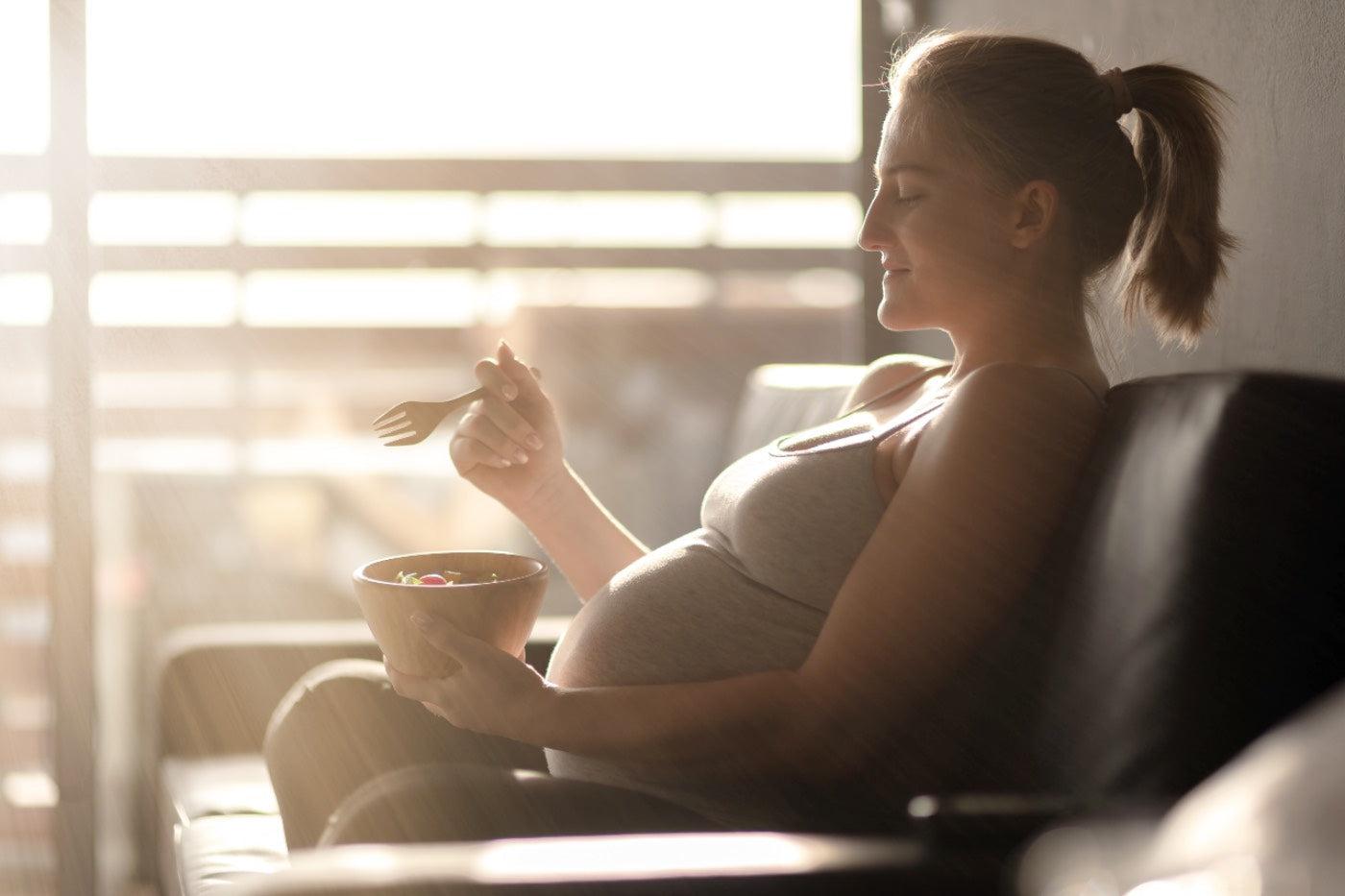
Eating healthy during pregnancy seems like it should be easy, right? Eat more good stuff and less “bad” stuff and—voila!—your pregnancy diet is 100% figured out. Alas, it’s not that easy! Between morning sickness robbing your appetite, your growing baby demanding more calories, and traditionally healthy eats (Sprouts! Sushi!) suddenly off the table, it’s hard to know what’s what. Adding to the confusion: Research featured in the journal Maternal & Child Nutrition found that approximately 60% of pregnancy-related nutrition web pages contain total or some inaccurate information. Yikes! Here, we debunk seven common pregnancy diet misconceptions so you can start eating better for your pregnancy right now!
Pregnancy Nutrition Myth #1: You’re eating for two!
The notion that you should “eat for two” while pregnant is one of the most common pregnancy nutrition myths out there…and it’s an unhealthy one! In fact, the American College of Obstetricians and Gynecologist (ACOG) warns that eating for two can be downright dangerous. That’s because consuming twice your usual amount of food during pregnancy can increase your risk for exceeding recommended weight gain—or gaining weight quickly—which may increase your risk for complications like gestational diabetes, preeclampsia, and fetal macrosomia, which is when your baby weighs more than 8 pounds, 13 ounces at birth.
You definitely need more daily calories throughout your second trimester (about 340 more) and third trimester (about 450 more) of pregnancy, but not twice as many—and you actually don’t need any extra calories during your first 12 weeks of pregnancy. But the best way to eat while expecting? Replace the notion of “eating for two” for eating twice as healthy! Focus on eating nutrient-dense foods eating all that good-for-you food mindfully (don’t eat while distracted, focus on the sensory aspects of eating, and tune into your hunger and fullness cues). Learn more about the difference—and how to eat twice as healthy during pregnancy.
Pregnancy Nutrition Myth #2: Prenatal vitamins have all the nutrients I need.
It’s important to take prenatal vitamins before—and during—pregnancy. That’s because prenatal vitamins are designed to deliver the recommended daily vitamins and minerals you need to help ensure your baby-to-be gets what they need to grow and develop. Plus, prenatal vitamins help lessen the chance your little one will develop certain birth defects. For example, during pregnancy, you need more folic acid than usual to help prevent neural tube defects.
However, prenatal vitamins are supplements, which means they are meant to supplement your pregnancy diet—not replace healthy eating! As ACOG notes, taking a prenatal vitamin every day and eating healthy foods should supply you with all the vitamins and minerals you need during pregnancy. (Learn how to choose a prenatal vitamin.)
Pregnancy Nutrition Myth #3: Avoid eating nuts during pregnancy.
On the contrary, nuts are a fantastic pregnancy snack. They’re packed with protein, fiber, healthy fat, and minerals that pregnant folks—and their growing babies—need! While older studies did, indeed, suggest an increased risk of childhood peanut allergies when moms–to-be ate peanuts, that theory has since been disproven. So, you can rest assured that your love of cashews, peanuts, almonds, and other nuts will not create any food allergies in your baby. At the same time, there’s no solid evidence that eating nuts while pregnant protects children from developing nut allergies, either, according to a 2023 report in The Lancet Child & Adolescent Health. (Find out the best time to offer peanut butter to your baby.)
Pregnancy Nutrition Myth #4: It’s best to skip seafood during pregnancy.
As long as you’re not allergic to seafood, there’s no reason to swear it off during pregnancy. In fact, experts urge you to gobble up the right kinds of fish while expecting. After all, seafood offers so many nutrients that expecting parents and developing babies need, like lean protein, healthy fats, vitamin D, and more. Just make sure you’re selecting pregnancy-safe seafood and consuming the recommended amount. The Food and Drug Administration recommends pregnant individuals strive for 2 to 3 servings a week of a variety of low mercury fish, which amounts to 8 to 12 ounces in total. Some top picks include canned light tuna, shrimp, salmon, tilapia, and cod. Learn more about what fish is safe to eat during pregnancy.
Pregnancy Nutrition Myth #5: Caffeine isn’t safe during pregnancy.
Don’t worry! Even though pregnancy causes your body to metabolize caffeine more slowly than usual, that morning cuppa is totally okay. The only caveat: ACOG recommends that pregnant individuals limit their caffeine intake to less than 200 milligrams a day, which is about two, six-ounce cups daily. However, not all cups of coffee, tea, and other caffeinated beverages are the same, so be mindful (and do your research) before sipping. For example, a tall (12 oz) Pike’s Place Roast at Starbucks has 235 milligrams of caffeine, while a tall Dark Roast clocks 195 milligrams. Also know that caffeine slightly increases heart rate and blood pressure, so if you already have high blood pressure—and are at risk for conditions like preeclampsia—your healthcare provider may suggest switching to decaf. (Find out more about caffeine in pregnancy and caffeine while breastfeeding.)
Pregnancy Nutrition Myth #6: It’s risky to be a vegetarian when pregnant.
Vegetarian diets are super-healthy and they can be safe during pregnancy and lactation, according to a 2019 study in the journal Nutrients. The key, of course, is ensuring your vegetarian pregnancy diet is “well-planned.” That’s because folks practicing a vegetarian or vegan diet during pregnancy very often have low intakes of critical nutrients, such as protein, calcium, iodine, omega 3 fats, zinc, vitamin D, vitamin B 12, and iron‚ which is why nutrient deficiencies tend to be common in vegetarians and vegans. If you’re planning on following a vegetarian diet during pregnancy, let your healthcare provider know. They can either work with you to create a healthy and balanced vegetarian nutrition plan—or recommend a registered dietitian who can. At the same time, your provider may want you to take additional supplements beyond a prenatal vitamin. (Learn how to get essential nutrients into your vegetarian pregnancy.)
Pregnancy Nutrition Myth #7: It’s too late to start eating healthy now!
It’s always a good time to improve your diet—and that includes pregnancy! A 2020 report notes that pregnancy is often regarded as an ideal time for improving your diet. So, take heart, it’s not too late to change your dietary habits for the better. In fact, studies show that micronutrient supplementation starting in pregnancy can correct important maternal nutrient deficiencies.
To help get you on the right nutritional path, consult with your healthcare provider and read up on the following pregnancy nutrition advice:
- The Nutrients You Need When Pregnant
- Healthy Pregnancy Meal Plans and Recipes
- Good-For-You Foods to Satisfy Pregnancy Cravings
- Smoothie Add-Ins for a Healthier Pregnancy
- Straight Talk on Foods to Avoid in Pregnancy
- What to Eat When You’re Expecting Multiples
***
REFERENCES
- American College of Obstetricians and Gynecologists (ACOG): Nutrition During Pregnancy
- Gestational Weight Gain and Risk of Gestational Diabetes Mellitus. Obstetrics & Gynecology. March 2010
- March of Dimes: Weight gain during pregnancy
- Office of Disease Prevention and Health Promotion: Eat Healthy During Pregnancy: Quick Tips
- Food Insight: 5 Nutrition and Food Safety Pregnancy Myths
- Johns Hopkins Medicine: 5 Snack Foods to Eat While Pregnant
- Maternal peanut consumption and risk of peanut allergy in childhood.
- CMAJ. July 2018
- Prevention of food allergy in infancy: the role of maternal interventions and exposures during pregnancy and lactation. The Lancet Child & Adolescent Health. March 2023
- Food and Drug Administration (FDA): Advice about Eating Fish
- ACOG: Moderate Caffeine Consumption During Pregnancy
- UC Davis Health: Q&A: What effect does caffeine have on your heart?
- The Effects of Vegetarian and Vegan Diet during Pregnancy on the Health of Mothers and Offspring. Nutrients. March 2019
- Johns Hopkins Medicine: How to Maintain a Balanced Diet as a Vegetarian or Vegan
- March of Dimes: Vitamins and other nutrients during pregnancy
- Dietary Interventions for Healthy Pregnant Women: A Systematic Review of Tools to Promote a Healthy Antenatal Dietary Intake. Nutrients. July 2020
Disclaimer: The information on our site is NOT medical advice for any specific person or condition. It is only meant as general information. If you have any medical questions and concerns about your child or yourself, please contact your health provider.



SHARE THIS ARTICLE


More on Pregnancy
About Holly Pevzner
Holly Pevzner is Happiest Baby’s Staff Writer. She specializes in creating parenting, pregnancy, health, nutrition, and family travel content. Her work—including essays, columns, reported features, and more—has appeared in outlets such as EatingWell, Family Circle, Parents, Real Simple, and The Bump. Before becoming a full-time writer, Holly held senior staff positions at Prevention, Fitness, and Self magazines, covering medical health and psychology. She was also a contributing editor at Scholastic Parent & Child magazine and a regular kids-health columnist for Prevention and First For Women magazines. Holly lives in Los Angeles with her husband, two boys, and terrier mix.