BABY
Paced Bottle Feeding: How to Do It—and Why You Should!
Whether your baby is drinking formula, expressed breastmilk, or both, paced bottle feeding puts your little one in control.

Written by
Gabrielle McPherson, MS, RDN, LDN
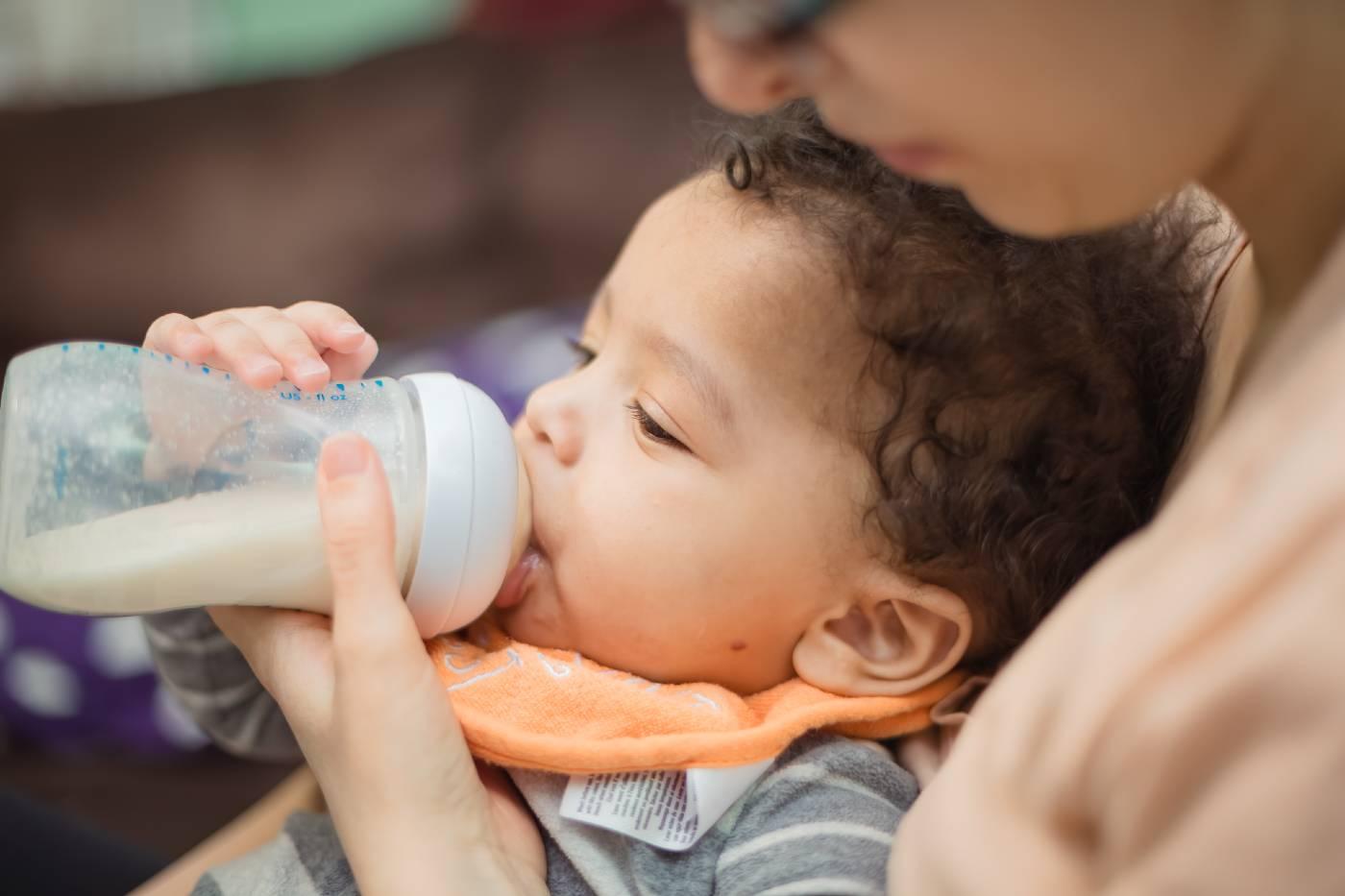
When you picture yourself bottle feeding your baby, you may imagine gently cradling your lovebug close to your body with their sweet head nestled in the crook of your arm. They’re mostly reclined, sleepy-eyed, and happily guzzling their milk or formula until the bottle runs dry.
But here’s the rub: That style of feeding—no matter if your baby is drinking breastmilk, formula, or a combination of both—may increase their gas, tummy upset, and reflux, which makes feedings stressful and challenging. To help, experts recommend trying paced bottle feeding. (This is sometimes referred to as responsive bottle feeding.) Curious what paced bottle feeding is—and how to do it? Here’s our quick-start guide.
What’s paced bottle feeding?
Paced bottle feeding (PBF or pace feeding) is a slow-paced baby feeding method that, essentially, puts your little one in the driver’s seat, allowing Baby to determine the rate at which they drink a bottle of breastmilk or formula. Unlike traditional bottle feeding where Baby reclines as milk steadily streams into their mouth, paced bottle feeding demands that your bub is positioned more upright. This posture slows milk flow, encouraging Baby to take breaks and eat more deliberately. Feeding your baby in this manner not only helps them better communicate with you when they’ve eaten enough or want more, it helps parents feed their babies more responsively, too.
What are the benefits of paced bottle feeding?
Whether Baby is consuming expressed breastmilk, baby formula, or a combination of the two, there are many benefits of paced baby feeding, such as:
Paced bottle feeding helps prevent overfeeding compared to traditional feeding.
Before looking at how paced feeding helps prevent overfeeding, it helps to look at how traditional bottle feeding can contribute to the issue. When babies are fed in an inclined position, they tend to devour several ounces of milk or formula fairly quickly...but a fast guzzle doesn’t necessarily mean they’re super-hungry. Instead, it may indicate that your baby was simply trying to keep up with gravity and a quick flow of milk or formula. Essentially, the traditional bottle feeding position can easily override your baby’s ability to stop taking the bottle when they’re full, which can lead to overfeeding, which can cause discomfort and possibly obesity later in childhood.
With paced bottle feeding, however, gravity and a fast flow is removed from the equation. Here, Baby is more upright, which slows feeding down, allowing your little one more power to eat when hungry and stop when full…. cues that are crucial to living a healthy life.
Paced bottle feeding reduces gas, tummy trouble, and choking.
Does pace bottle feeding reduce gas? You know how if you scarf down a meal too quickly you can get gassy? The same holds true for a baby who drinks their bottle at lightning speed. In both cases, swallowed air can lead directly to a buildup of gas in the GI tract, resulting in uncomfortable bloating and toots. The same time, the American Academy of Pediatrics notes that traditional bottle feeding, with Baby lying down, increases the risk of choking and spitting up—and allows milk to run into the baby’s eustachian tubes, possibly causing middle ear infections.
Because paced feeding tamps the flow of milk or formula, babies tend to eat more slowly, taking in less air, making them less prone to gassiness compared to babies who recline to drink. And Baby’s more upright position helps them better digest their milk or formula, safely helping to prevent tummy troubles.
Paced bottle feeding eases the breast-to-bottle transition.
Paced bottle feeding is great for any baby who eats from a bottle—and it’s super-important for breastfed babies who are hitting the bottle, too. That’s because once your nursing baby experiences the ease and speed at which milk or formula flows from a bottle, they may resist returning to the breast, which takes way more effort to feed from. Enter: Paced bottle feeding, which more closely mimics nursing than traditional bottle feeding because they both require Baby to work for their supper—and Baby remains in control of their feeding from start to finish.
What are the steps in paced bottle feeding your baby?
Don’t worry! It’s not complicated at all. Simply follow these six rules when feeding your baby, and you’re golden.
- Step #1: Prepare a 2- to 4-ounce bottle with a slow-flow nipple. (Research has shown that even among nipples labeled “Slow” or “Newborn,” the flow rates vary significantly, so consider asking your pediatrician for guidance.)
- Step #2: Hold your baby as upright as possible in your arms while still comfortably supporting their head and neck.
- Step #3: Offer the bottle flat (horizontal to the floor), so it’s not tilted like traditional bottle feeding. This makes it so your baby must actively suck to get the milk, as babies do when breastfeeding.
- Step #4: Brush the bottle nipple over your baby’s top lip and wait for them to open their mouth to accept the bottle.
- Step #5: First, allow Baby to suck on the nipple without milk—then tip the bottle just enough to fill the nipple roughly halfway with breastmilk or formula and let your little one suckles for about three to five steady swallows (about 20 to 30 seconds), then take a break.
- Step #6: Continue the “tip, three to five swallows, and a break” pattern, and burp when necessary. Continue to monitor Baby's cues to see if they want more or they’ve had enough to eat. Babies drink from a bottle for 15 to 20 minutes.
How to know if your baby is hungry
Whether breastfeeding or bottle feeding, hunger cues are the same. Your baby is saying, “I’m ready to eat!” when they:
- Move their hands to their mouth
- Pucker their lips
- Root (turn head toward anything that touches their face) or search for a nipple
- Clench their fists over their chest or belly
- Flex arms and legs
- Make smacking or sucking sounds
- Cry (This is often a late sign of hunger.)
How to know if your baby is full
Research shows that it’s harder for parents to recognize “I’m full” cues than “I’m hungry” cues. Your baby is likely trying to tell you, “I’m full now!” when they:
- Start and stop eating often
- Slow down their sucking
- Ignore or push the bottle away
- Turn their face away from the breast
- Seal their lips
- Fidget or get distracted easily
- Relax their hands
- Fall asleep
More baby feeding advice:
- Baby Feeding Schedule for the First Year
- How to Store and Prepare Formula
- What to Do if Breastfeeding Is Hard
- What’s Nipple Confusion—And How to Avoid It
- Can Babies Be Allergic to Breastmilk?
- When Do Babies Eat Solid Food?
Disclaimer: The information on our site is NOT medical advice for any specific person or condition. It is only meant as general information. If you have any medical questions and concerns about your child or yourself, please contact your health provider.





SHARE THIS ARTICLE
More on Baby


About Gabrielle McPherson, MS, RDN, LDN
Gabrielle McPherson, MS, RDN, LDN is registered dietitian in Missouri who specializes in community and pediatric nutrition. Gaby is passionate about encouraging families to eat well in simple, practical ways that are realistic...and delicious! When not working, Gaby loves cooking, baking, and making messes and memories with her sous-chef/preschooler Charlotte.