BABY
Roseola: Why This Icky Red Rash Is Usually No Big Deal
Fever followed by rash? It’s probably roseola. Here’s all you need to know about this common childhood illness.

Written by
Happiest Baby Staff
Pick a rash, any rash and there’s a good chance your baby or toddler will get it. Not only is your little one’s skin extra sensitive to irritations, their still-developing immune system makes them more susceptible to viral rashes, too. In fact, up to 30% of children will experience the sudden and startling rash that goes hand-in-hand with the viral illness roseola, aka sixth disease. Find out if your kiddo is at risk—and how to spot and treat roseola.
What is roseola?
Roseola infantuma is a common viral illness in childhood that’s mostly caused by the human herpesvirus 6 (HHV-6). At times, the human herpesvirus 7 (HHV-7) is behind roseola. too. While both viruses fall under the herpes simplex viruses (HSV) umbrella, they are not the same viruses that cause cold sores or genital herpes. Roseola is also known as sixth disease, baby measles, and three-day fever.
Who’s at risk for roseola?
Roseola is very much a childhood illness, typically affecting little ones between 6 months and 12 months old. In all, 90% of all roseola cases occur in children younger than 2 years old, but children up to 4 years old can be infected. It’s very rare for an older child or adult to come down with roseola. Roseola infections are most likely to strike in the spring and fall.
What are roseola signs and symptoms?
If your child is infected with roseola, you may not know it for about a week or two—if you find out at all! That’s because some children show zero signs of illness, and for others, it can take up to 15 days for roseola symptoms to appear after being infected. When symptoms of roseola do strike, they don’t occur all at once. Instead, there’s a predictable progression of symptoms that indicate your child is dealing with a roseola infection.
Roseola Symptoms
- High fever: Roseola begins with a sudden high fever of 102 to 105 degrees Fahrenheit that lingers for roughly 3 to 7 days, then rapidly decreases back to normal. Roseola is behind up to 45% of all fevers in American infants—and accounts for 12% of all infant fevers that land in the ER. (Learn how to properly take your baby’s temperature.)
- General malaise: During the fever portion of roseola, many kiddos feel totally fine, while others experience under-the-weather symptoms, like fatigue, swollen glands (neck or back of the scalp), decreased appetite, mild diarrhea, slight cough, and/or runny nose. Your child’s upper eyelids may become slightly swollen or droopy and two-thirds of children also wind up with spots on their uvula, which is the fleshy bit that dangles at the back of the soft palate, above the throat.
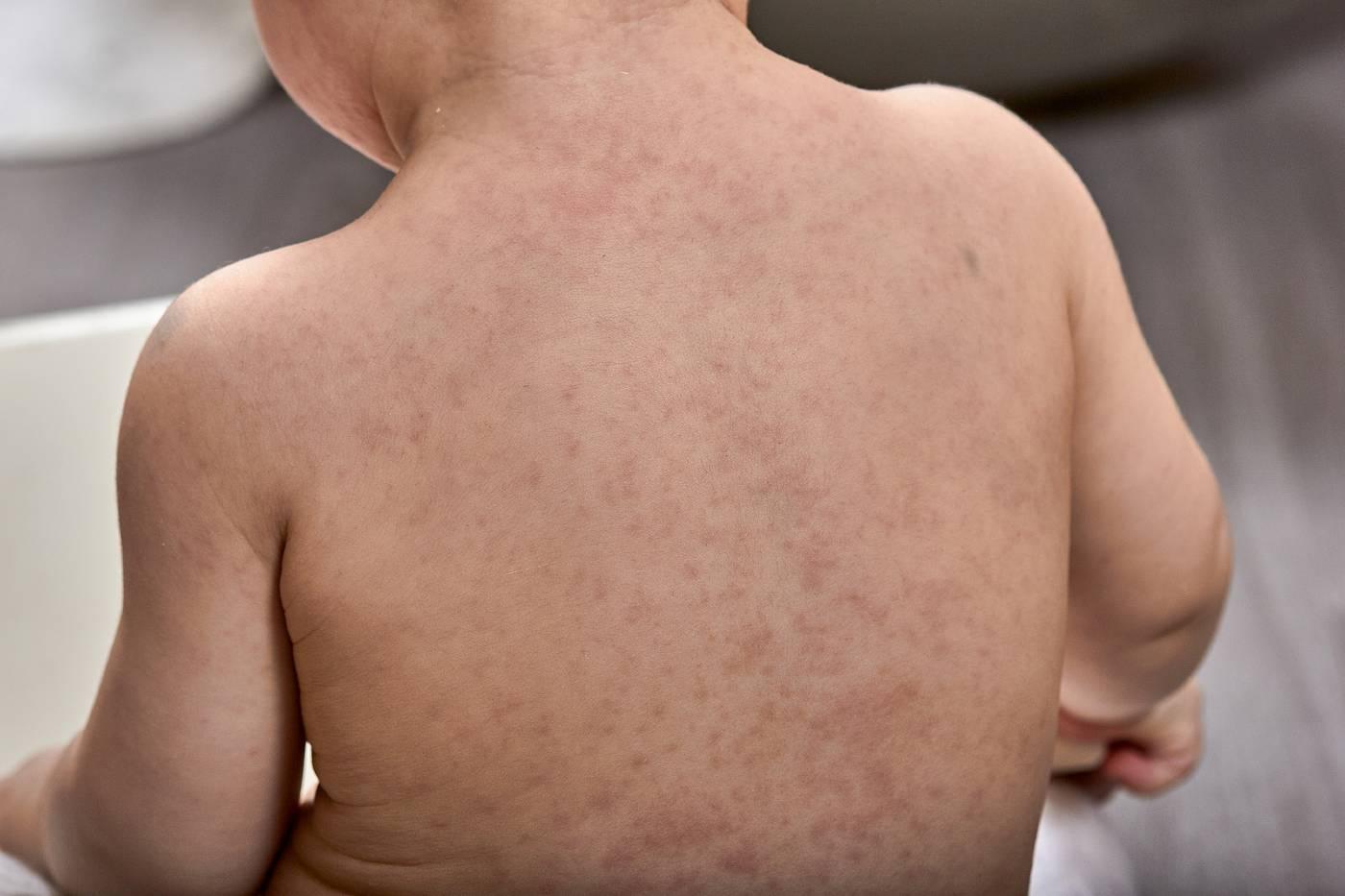
- Rash: Between 12 to 24 hours after your child’s fever and other symptoms fade, a roseola rash will appear on your bub’s chest and stomach, possibly spreading to their face and arms later. At times, the rash may appear on your child’s neck, legs, and bum, too. On light-colored skin, the rash will look like slightly raised pink- or red-colored spots. On darker skin, the roseola rash will be more difficult to see. Either way, the rash is usually not itchy and will fade within about 1 to 3 days.
How is roseola diagnosed?
Because of the signature high-fever-then-rash nature of roseola, your child’s healthcare provider can typically diagnose roseola based on a physical exam and/or a telemedicine visit. Lab tests to diagnose roseola are unlikely, but sometimes blood tests are ordered to rule out other diagnoses.
Is roseola contagious?
Yes, roseola is contagious. The infection spreads through saliva particles, sneezes, and coughs that launch teeny, contaminated droplets into the air—or onto surfaces—that others can breathe in or touch. However, roseola is no longer contagious after the fever has been gone for 24 hours—even when the rash is still in play. That means, it’s totally safe to send your little one back to daycare or preschool once their fever is gone for 24 hours, according to the American Academy of Pediatrics (AAP).
When to Worry About Roseola
While roseola is rarely serious, it can spike some seriously high temperatures. If your baby is younger than 3 months old and has a fever of 100.4 degrees Fahrenheit or higher, call your doctor right away. Do the same thing if your older baby or child’s fever repeatedly rises above 104 degrees Fahrenheit. The fast-rising fever associated with roseola can also trigger febrile seizures in 10% to 15% of 6- to 18-month-olds—typically on day 1 of the fever.
Here are the signs of a febrile seizure:
- Your child’s body shakes, stiffens, or tenses up.
- Jerking or twitching in the arms, legs, or face lasts for 2 to 3 minutes.
- Your child passes out—or their eyes roll back in their head.
- They lose control of basic body functions, and may suddenly vomit, drool, pee, or release their bowels.
If your child has a febrile seizure, place them on the floor or bed—away from any hard or sharp objects. Next, turn their head to the side, so they won’t accidentally inhale any would-be vomit. But don’t put anything in their mouth! The AAP assures that your child will not swallow their tongue.
Febrile seizures are terrifying to witness, but normally cause no lasting harm to your child. Regardless, call 911 if your child experiences a febrile seizure. Medical pros will thoroughly examine your child to make sure their seizure wasn’t due to anything more serious.
Rare Complications of Roseola
Children who have weakened immune systems due to, say, cancer or an autoimmune disease are at a greater risk for other complications related to roseola, like:
- Pneumonia
- Aseptic meningitis (inflammation of tissue surrounding the brain and spinal cord)
- Encephalitis (inflammation of their brain)
How is roseola treated?
There’s no special roseola treatment you can pick up at the local pharmacy. Instead, the best way to treat roseola is to keep your child comfortable and hydrated. That means…
- Offer a fever-reducer, if advised. Your doctor may suggest acetaminophen or ibuprofen to help lower your bub’s temperature. It’s important to follow your pediatrician’s fever-reliever advice, because exceeding the recommended dose can lead to liver or kidney damage. (Learn more about the best fever-reducers for babies.)
- Dress your child in lightweight, breathable clothing while they’re feverish.
- To help combat dehydration associated with fever in babies younger than 6 months, offer more breastmilk or formula than usual.
- If your child is between 6 and 12 months, you can offer 4 to 8 ounces of water a day to help counter dehydration related to fever. (Learn more about babies drinking water.)
Can roseola be prevented?
There’s no way to fully prevent roseola. In fact, roseola is considered unavoidable for most children. Since there’s no vaccine for roseola, the best you can do to help keep roseola at bay is to teach your toddler good hand-washing habits. Experts note that this is one of the best ways to prevent viral infections. (Learn how to teach toddlers to wash their hands.)
More About Common Childhood Illnesses
- Learn How to Prevent RSV Hospitalizations in Babies
- Dr. Harvey Karp’s Hand-Foot-Mouth Disease Primer
- Pink Eye in Babies and Toddlers
- Your Guide to Baby Ear Infections
- Croup Need-to-Know
***
REFERENCES- Medscape: Roseola Infantum in Emergency Medicine
- The Nemours Foundation, KidsHealth: Roseola
- Cleveland Clinic: Roseola
- Roseola Infantum. StatPearls. July 2023
- American Osteopathic College of Dermatology: Roseola Infantum
- Boston Children’s Hospital: What is roseola?
- MedlinePlus: Roseola
- American Academy of Pediatrics (AAP): Roseola Infantum
- AAP: Roseola-Viral Rash
- AAP: Fever Without Fear: Information for Parents
- AAP: Febrile Seizures in Children
Disclaimer: The information on our site is NOT medical advice for any specific person or condition. It is only meant as general information. If you have any medical questions and concerns about your child or yourself, please contact your health provider.
SHARE THIS ARTICLE
MOST LOVED
Sleepytime Sidekicks