BABY
13 Common Baby Sleep Myths—Debunked!
You may be surprised how many nutty ideas about infant sleep are still around.

Written by
Dr. Harvey Karp

The last thing parents need is to get tripped up by baby sleep myths. But sometimes, we accept crazy things as fact. In the 1960’s, doctors thought newborns felt no pain (even during a circumcision!) and that crying was good exercise for little lungs. Physicians even prescribed opium drops to babies to stop colicky crying! Yikes!
Fast forward to today: You may be surprised how many nutty ideas about infant sleep are still around. Here are 12 truly unhelpful baby sleep “myth-conceptions:”
Baby Sleep Myth 1: It takes months for babies to learn to sleep well at night.
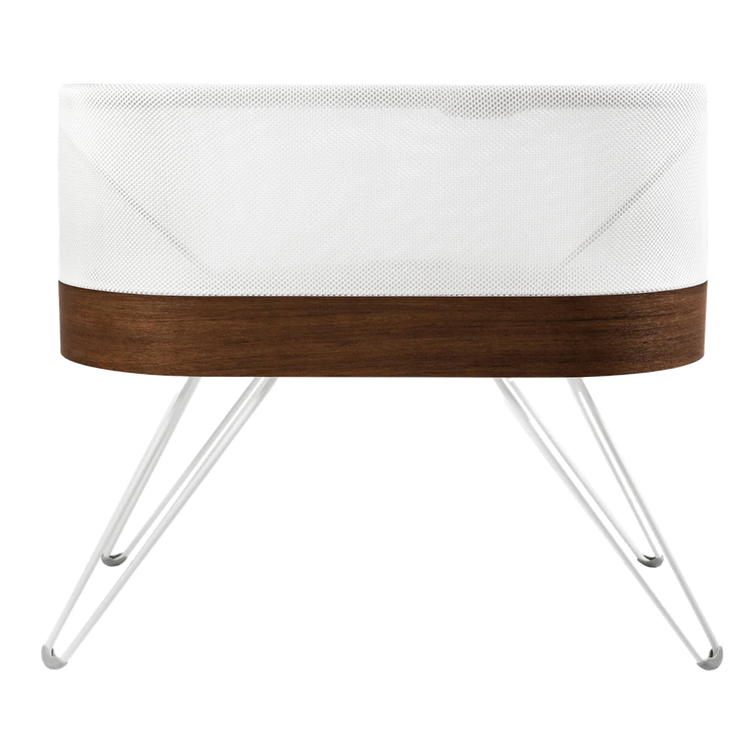
No. Actually, it can take only a few weeks—that is, if you use the right sleep cues. Try swaddling and rumbly white noise, or SNOO Smart Sleeper, which has advanced smart technology that gives your baby the right combo of the two, to help your bub nod off easily.
Baby Sleep Myth 2: Sleeping babies need complete quiet.
Huh? Did you ever see a baby fall deep asleep at a noisy party or sporting event? Remember, the womb is loud, 24 hours a day! So, a quiet, still room is actually a sensory desert to your baby.
Baby Sleep Myth 3: Rocking or nursing your baby to sleep every night creates a dependency.
Well…yes, it will! But it’s a myth that that’s a bad thing!
Let me explain: We all have sleep associations to help us relax into slumber. Think of your own habits. Do you prefer a dark room? Special pillow? Favorite sheets? Reading?
Long before delivery, your baby got used to the sensations in the womb—jiggly motion, rumbly sound, and snug cuddling. That’s why rocking babies to sleep works so well. It’s also why car rides help. And it’s a reason nursing puts a baby to sleep—sucking is another baby sleep cue. My 5 S’s technique pulls together all these concepts.
But, problems arise because rocking and nursing to sleep: 1) are very hard to wean—you can’t really do either a little less every day, and 2) they undermine your baby’s learning to self-soothe, or the ability to fall back asleep.
The good news is that with the help of the wake-and-sleep technique, you can rock and nurse your baby to sleep AND still help them learn self-soothing skills. (SNOO’s smart sleeper technology actually draws from the principles of the 5 S’s and has an automatic weaning feature that helps make for an easy transition to the crib by 6 months. It’s pretty amazing!)
Baby Sleep Myth 4: Swaddling should be stopped at 2 months.
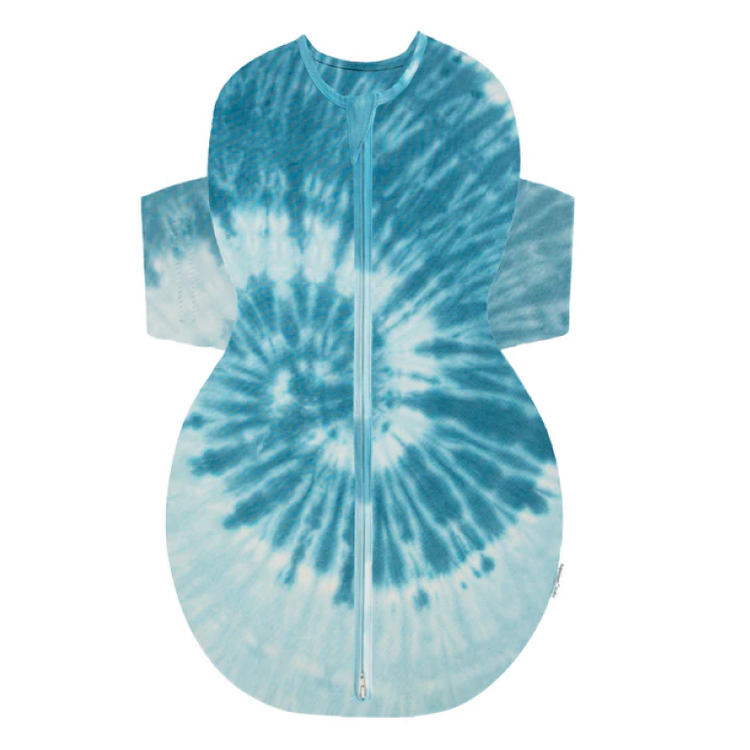
Totally wrong! In fact, 2 months is the WORST time to stop swaddling. Swaddling reduces crying and night waking, which both peak at 2 to 4 months. That’s exactly why marital stress, child abuse, postpartum depression, unsafe sleeping practices, breastfeeding struggles, and car accidents increase around this time. Instead of ditching the swaddle at 2 months, you should stop swaddling when your baby can roll. And, if your little one is in SNOO, they can remain safely and happily swaddled until they graduate to the crib! (Learn more about when to stop swaddling.)
Baby Sleep Myth 5: Never wake a sleeping baby.
Nope. You should ALWAYS wake your sleeping baby…when you place them in a sleeper! The wake-and-sleep method is the first step in helping your little one self-soothe, when a noise or hiccup accidentally rouses them in the middle of the night.
Baby Sleep Myth 6: Letting babies cry themselves to sleep makes them better sleepers.
Some books—and doctors—advise leaving crying babies alone, in the dark until the morning (the so called extinction method of sleep training). Or they say let them cry, but return every few minutes for a couple of seconds of reassurance (the so called controlled crying method of sleep training).
You may have guessed I’m skeptical of those techniques, which is in part why I invented SNOO Smart Sleeper. Its responsive technology responds just as you would.
Ignoring your baby’s nighttime cries goes totally against your mama and papa instincts. I’ll admit that I’ve used controlled crying in rare cases when I’ve worked with parents who desperately needed some life-saving sleep, but it’s really a last resort. (Learn more about "cry it out" and other sleep training methods.)
Baby Sleep Myth 7: Some babies need their arms out for sleep
Nope. Does your baby resist swaddling: Many parents assume that a baby who resists having their arms straightened wants their arms “free.” (We certainly wouldn’t want to be tightly swaddled. But, then again we wouldn’t want to live in a uterus for 9 months, either…and yet babies love it in there.) Wrapping imitates the cuddly confines of the womb and prevents startles that can wake your little one up. So, even if your baby struggles against arms-down swaddling, you will find that they settle pretty fast when you add some other S’s (like sucking, white noise, and motion).
Baby Sleep Myth 8: Babies should sleep in their own rooms.
No. There’s no rush to have your baby “become independent.” In fact, putting your baby in another room is super-inconvenient for nighttime care and feeding. Plus, room sharing reduces your baby’s risk of SIDS.
Baby Sleep Myth 9: By 6 months most babies sleep through the night.
Actually, this one is wrong on two counts. First, even by 6 months 50% of infants still wake once a night…and babies who bed share do it even more often. Second, no baby ever sleeps through the night! (And, neither do older kids or adults.) We all wake—slightly—when we enter the light sleep part of our sleep cycle (2 to 3 times a night). If the room is the same as when we fell asleep (our pillow didn’t fall, we don’t smell smoke, etc.) we dive back into slumber and don’t remember waking. Likewise, once your baby learns to self-soothe they'll be able to fall back to sleep, without assistance…unless, of course, they are hungry or uncomfortable. (Learn more about when babies sleep through the night.)
Baby Sleep Myth 10: Babies must adapt to the family, not the family to the baby.
This one is just silly. Having a baby is a huge change for a family, so of course we all have to make big adjustments. Think of it this way, one of your top goals is to build your baby’s confidence and trust. In fact, during the first 9 months, building that sense of security is much more important than pushing her to be more independent.
Baby Sleep Myth 11: Keeping babies awake during the day makes them sleep more at night.
Nope. Keeping a tired baby awake usually boomerangs…leaving them miserable, overtired, and fighting sleep! On the other hand, babies given lots of sleep throughout the day are more resilient and balanced. They fall asleep faster and easier, as long as they’re put to bed before they get bleary-eyed and exhausted.
Baby Sleep Myth 12: Swaddling is bad for nursing.
Quite the opposite. Swaddling will keep your baby from bringing their hands to the mouth (an early signal of hunger). But, in the middle of the night, you don’t want to respond to early feeding cues. Within 30 minutes, their hunger will increase and they'll send you later hunger cues, like fussing and crying. In fact, by waiting, your baby will get a bit hungrier and take a bigger, fuller feed.
Baby Sleep Myth 13: Putting babies to sleep on their back has solved SIDS.
While the Back to Sleep campaign quickly reduced sleep deaths from 5,500 in 1994 to 3,500 in 1999, for the past two decades, SIDS progress has completely stalled. The tragic truth is that about 3,500 infants die during their sleep every year. Despite the fact that more babies are sleeping on their backs, the rate of accidental suffocation and strangulation deaths among infants has quadrupled since the mid-1990s. What’s to blame for this alarming trend?
Unsafe sleeping practices. Seventy percent of all sudden unexplained infant death victims are found in adult beds, sofas, and other risky locations. One study found that even though most parents plan to follow the ABCs of safe sleep (Alone, on the Back, in a Crib), less than half actually do it. By the end of the night, about 60% of babies have migrated from their bassinet to their parents' bed, according to a study in the Journal of Clinical Lactation.
Disclaimer: The information on our site is NOT medical advice for any specific person or condition. It is only meant as general information. If you have any medical questions and concerns about your child or yourself, please contact your health provider.
SHARE THIS ARTICLE
MOST LOVED
Sleepytime Sidekicks